
Table of Contents
A dog bite needs quick action, even when the wound looks small. Medical care comes first, followed by a report to the right Utah agency and careful proof of what happened.
These steps can protect your health, help public officials address rabies risks, and support a personal injury claim. If you’re hurt, we at LeBaron & Jensen, P.C. can help you understand what to do next.
Step 1: Get Immediate Medical Care and Make the Area Safe
The first step in learning how to report a dog bite is getting away from danger and having the wound checked. Do not delay care while you search for the owner or fill out a report.
Move to a safe place if you can do so without making the injury worse. Ask someone nearby to help if you feel weak, dizzy, or unable to walk. If the wound is severe, bleeding heavily, or on the face, seek emergency care right away.
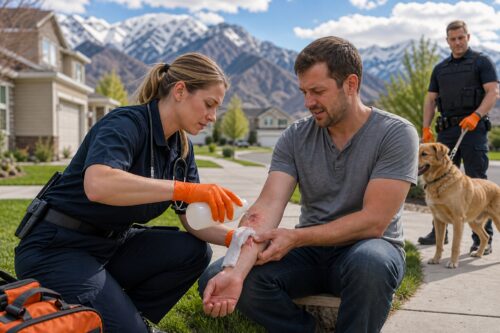
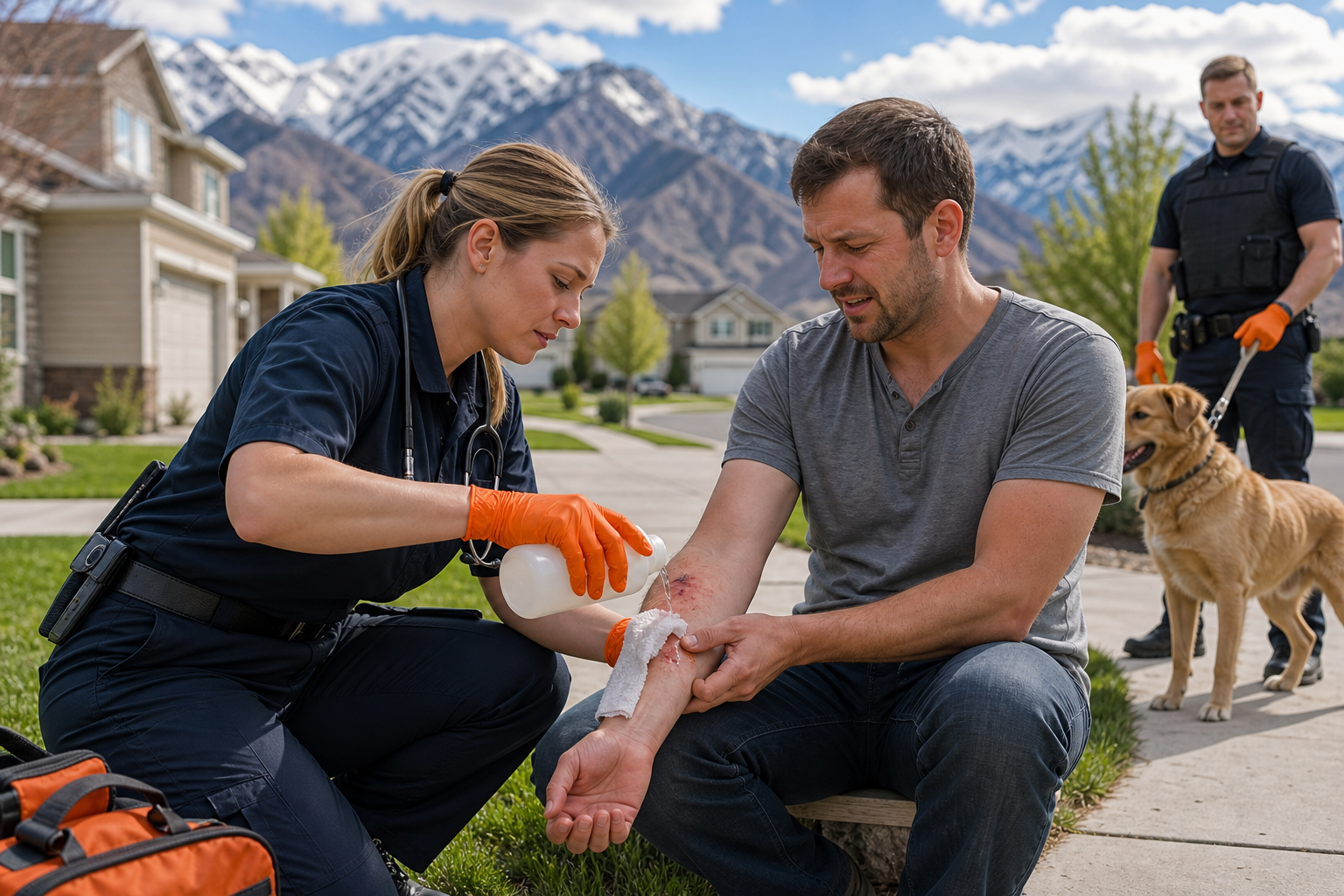
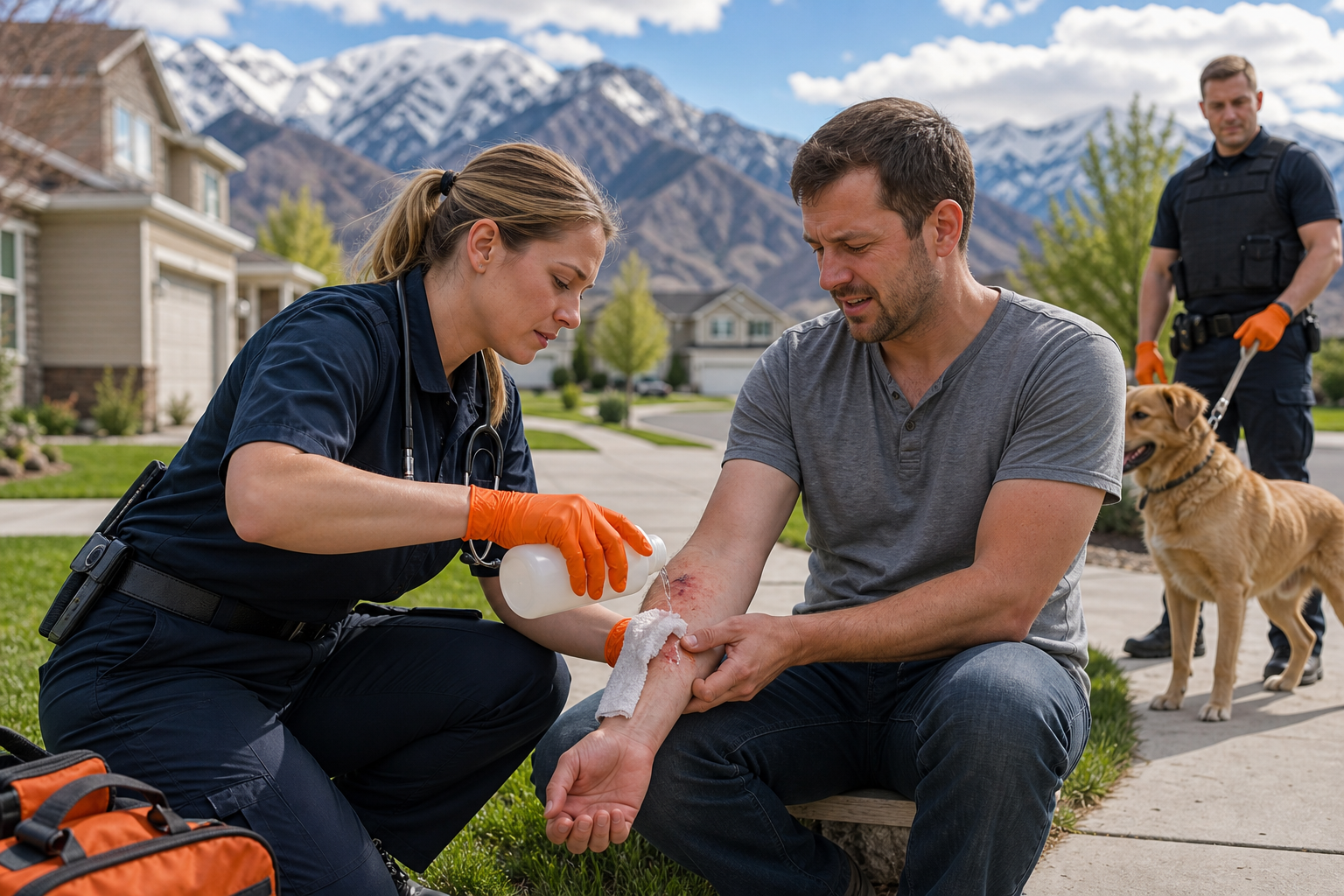
For a minor wound, wash it with clean running water and mild soap. Use a clean cloth to apply gentle pressure if it bleeds. Do not scrub deep punctures or apply harsh chemicals inside the wound.
A health professional can check for infection, tendon damage, nerve damage, and the need for vaccines. Rabies exposure also needs prompt medical review. The basic facts about rabies explain why a bite from an unknown or unavailable animal should be treated seriously.
Tell the provider exactly what happened. Give the date, place, body part injured, and any details you know about the dog. Ask how to care for the wound at home, when to return, and how to spot signs of infection.
Keep every discharge paper, prescription record, bill, and treatment note. Your medical record can connect the bite to the care you needed later.
Step 2: Identify the Dog, Owner, and Witnesses Without Taking Risks
Good identification makes it easier to report a dog bite and helps officials assess the animal. But you should never chase a loose dog or argue with its owner.
If the owner is present, stay calm. Ask for their name and contact details. Ask whether the dog has a current rabies vaccination and whether the owner knows of earlier attacks or bites.
Do not rely on a verbal promise that the owner will send vaccine records later. Write down what the owner says. If the owner refuses to cooperate, leaves, or becomes hostile, stop the conversation and tell animal control or police what occurred.
Look for useful details from a safe position:
- The dog’s breed or mix, size, color, and markings.
- The owner’s name and location, if known.
- The exact place where the bite happened.
- The direction the dog went after the attack.
- Names and contact details for people who saw the bite.
Witnesses may remember details you missed. Ask them to write down what they saw while the event is fresh. Do not coach their account. A simple statement about where they stood and what they observed is more useful than a dramatic version.
Take photos when you can do it safely. Capture the wound, torn clothing, the scene, gates or fences, warning signs, and the path the dog took. Take more than one photo as swelling or bruising changes.
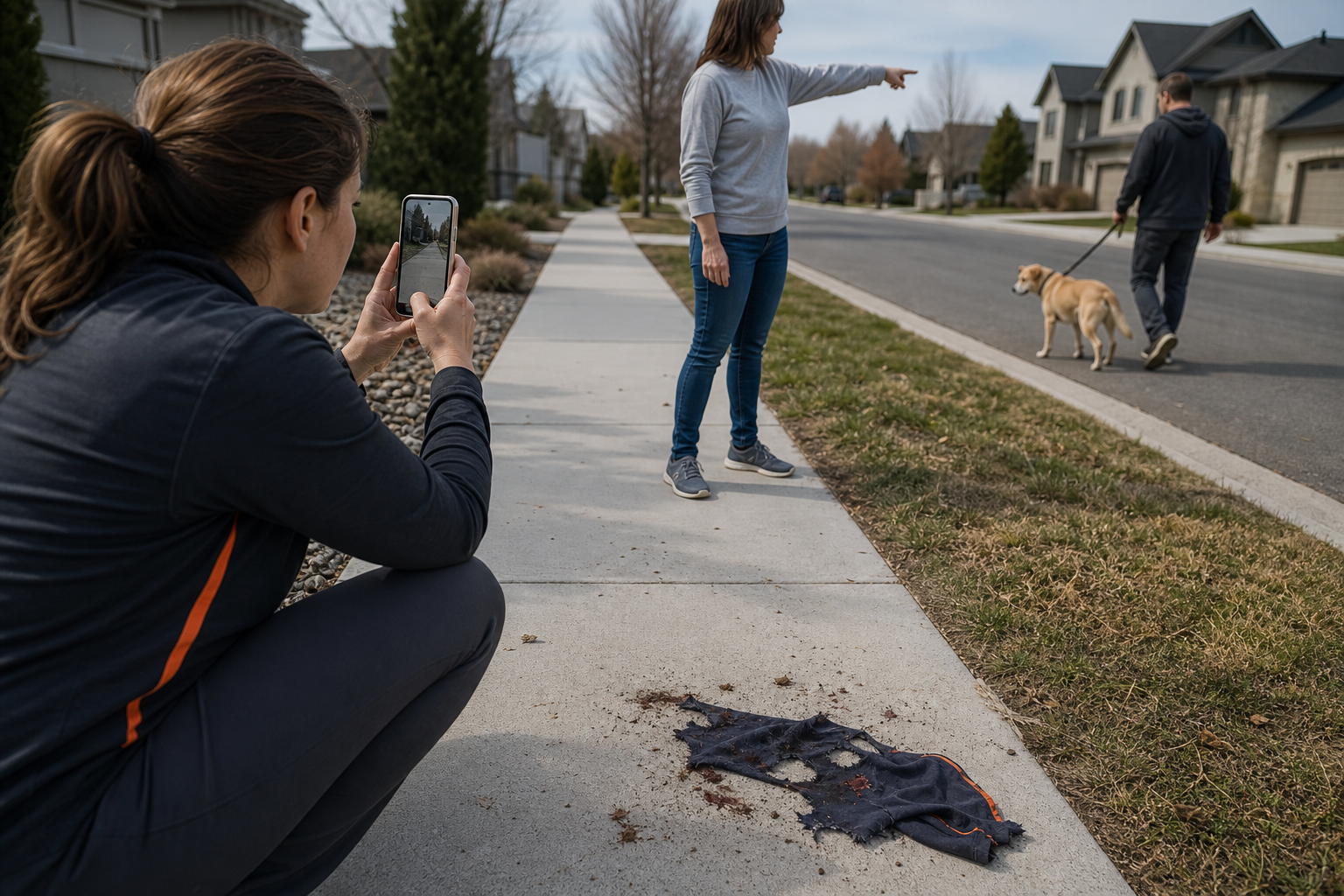
Our Utah dog bite guidance also stresses prompt treatment, owner information, witness details, and an animal control report. Those tasks can feel hard after an attack, so ask a trusted person to help gather them.
Leave the dog alone. Animal control has the tools and authority to handle a loose or threatening animal.
Step 3: Report the Dog Bite to Utah Animal Control or the Local Health Department
To report a dog bite in Utah, start with the animal control agency for the city or county where the bite occurred. A local health department may also direct you to the right reporting process.
Use an emergency channel if the dog is still loose, poses an immediate threat, or someone needs urgent help. For a nonemergency bite, check the city or county website for its animal control reporting instructions. Rules and forms can differ by location.
Give the agency a clear account. Include the date, time, address, circumstances, injury details, owner information, dog description, and witness contacts. State whether the dog is still loose. Tell the officer if the animal’s vaccination status is unknown.
Ask what happens next. The agency may need to locate the dog, contact the owner, check vaccination records, or arrange observation or quarantine under local public health rules. Do not try to decide the rabies risk yourself.
Ask for the report number and the name of the person who took your report. If the agency gives you a form, submit it as soon as you can. Save a copy of everything you send.
Animal control’s role is public safety. Its report may also preserve facts that become harder to prove later, such as where the dog was found and whether the owner had records.
Ask whether there are local fees, fines, or separate forms. Do not assume that filing a report costs money, and do not assume that every Utah community handles the process the same way. The agency can give you the current answer.
If you cannot identify the agency, contact the local health department or law enforcement’s nonemergency office for direction. Keep the focus on facts. You are reporting an injury and a possible public safety risk, not trying to punish someone yourself.
Step 4: Document the Injury, Expenses, and What Happened
A report helps, but it is only one part of the record. Strong documentation shows what happened, what care you needed, and how the bite affected your daily life.
Write a timeline as soon as you can. Record the location, what the dog did, how the contact occurred, what the owner said, and when you sought care. Use plain facts. If you do not remember something, mark it as unknown instead of guessing.
Keep a file with these items:
- Animal control or police report details.
- Medical records and follow-up instructions.
- Photos of the wound as it changes.
- Receipts for care, medicine, travel, and medical supplies.
- Proof of missed work or lost income.
- Notes about pain, sleep problems, fear, and limits on normal tasks.
Save original photo files when possible. Do not edit them in a way that removes the date or location data. Back up copies in a secure place.
Report the incident to your health insurer as needed. If an insurer for the dog owner contacts you, be careful with recorded statements and releases. You can provide basic facts without guessing about fault or the full value of your claim.
A dog bite can cause more than a visible cut. Scarring, nerve injury, infection, and emotional distress may affect the claim. Your medical records should describe each symptom, even when the symptom seems embarrassing or minor.
In legal terms, negligence means a failure to use reasonable care. Liability means legal responsibility for harm. The facts may support a claim against an owner, another person, or an entity, but the answer depends on the evidence and Utah law.
Do not post photos or detailed comments about the bite online. A post meant to update friends can later be read without the context around it.
Step 5: Speak With a Utah Dog Bite Lawyer About Your Legal Options
A lawyer can review the report, medical records, and facts before you make statements that affect a claim. Early advice can also help preserve evidence.
A dog bite claim may involve how the bite happened, who controlled the dog, what injuries followed, and which losses you can document. We can also explain whether a settlement, insurance claim, or lawsuit makes sense.
Bring your report number, photos, witness details, medical papers, bills, and notes. If you do not have all of them, do not wait to ask for help. A lawyer can tell you which gaps matter most.
Do not sign a release before you understand what it covers. A release may end a claim for known injuries and later problems. The first payment offered by an insurer may not reflect your full medical needs or lost income.
Compensation may include medical care, future treatment, lost wages, damage from scarring, pain, and emotional harm. No result is guaranteed. The available recovery depends on proof, insurance, liability, and the details of the injury.
We take the stress off your plate by handling communication and reviewing the claim’s risks. Our goal is a fair settlement when settlement is appropriate, while preparing the case for court if needed.
Utah has deadlines for personal injury claims. The exact deadline can depend on the parties and facts. Do not wait until the deadline is close to seek legal advice, because witnesses and records become harder to locate.
LeBaron & Jensen, P.C. serves Utah clients with personal injury matters, including dog bite claims. A private review can help you choose the next step without committing to a lawsuit.
Frequently Asked Questions About Reporting a Dog Bite in Utah
Who do I report a dog bite to in Utah?
Report the bite to animal control for the city or county where it happened. If you cannot find that office, ask the local health department or law enforcement’s nonemergency office for direction. Use an emergency channel if the dog is loose and dangerous or someone needs urgent medical help.
Do I have to report a minor dog bite?
You should report even a minor bite or scratch that may involve the dog’s teeth. The agency can explain local rules and assess whether the animal needs observation. A report also creates a record if the wound worsens or the dog later injures someone else.
What information do I need to report a dog bite?
Give the agency the date, time, location, dog description, owner details, witness contacts, and a plain account of what happened. Include your injury and medical care. Tell officials if the dog is loose or if you do not know its rabies vaccination status.
Will animal control quarantine the dog after a bite?
Animal control or public health officials may require observation or quarantine, depending on local rules and the facts. Do not handle or hide the dog yourself. Tell officials where the animal is, who owns it, and whether vaccination records are available.
Can I file a dog bite claim without an animal control report?
You may still have a personal injury claim without an animal control report, but the missing report can make proof harder. Medical records, photos, witness accounts, owner information, and messages may still help. Speak with LeBaron & Jensen, P.C. before accepting payment or signing a release.
Conclusion
Get medical care, report the bite to the proper local agency, and preserve every record you can. Then speak with LeBaron & Jensen, P.C. before discussing settlement terms or signing documents. Our team can review your facts and help you take the next step with less stress.