
Table of Contents
Broken legs get much of the attention after a motorcycle crash. But head injuries appear in more than half of the crashes covered by the research reviewed for this article. Lower-extremity injuries follow at 30%, while spinal cord injuries occur less often but can bring life-changing medical costs.
Your next steps should protect your health first. Then build a clear record of what happened, how your injuries affect daily life, and what the crash has cost you.
We reviewed three emergency department head injury studies, a federal motorcycle leg injury analysis, and a 144-patient concussion study. The three ED studies found concussions were missed in 56 to 89 percent of cases at first evaluation. In the concussion study, 24 of 144 patients, 16.7 percent, had symptoms start 15 minutes or later, some up to 12 hours after injury. The federal leg injury analysis found 95 percent of lower-leg fractures involved the tibia and fibula, detail that surfaces only through documentation.
Step 1: Get Immediate Medical Care and Watch for Emergencies
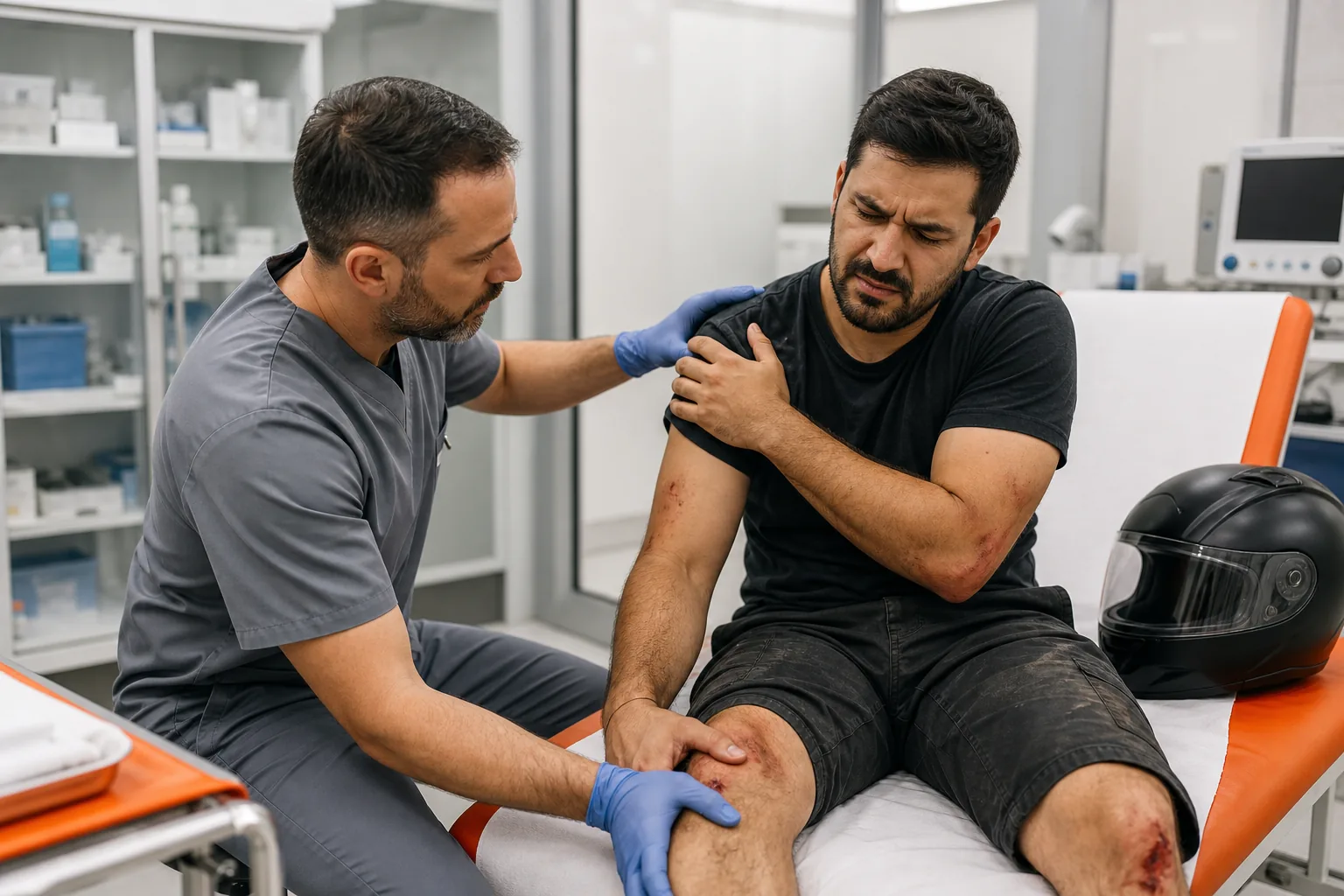
Common motorcycle accident injuries can worsen after the crash. Get medical care as soon as possible, even if you think you only have bruises or road rash.
If you’re still at the crash scene, move away from traffic when you can do so safely. Don’t remove your helmet unless a trained responder tells you to. Ask someone to contact emergency services if you have trouble breathing, severe bleeding, confusion, or intense pain.
Head trauma needs special care. Warning signs may include:
- Loss of consciousness, even for a short time
- Repeated vomiting
- A worsening headache
- Slurred speech or unusual behavior
- Weakness, numbness, or trouble walking
- Unequal pupils or fluid from the nose or ears
Symptoms can appear hours after a crash. Changes in thinking, mood, sleep, or balance deserve medical attention.
Tell the clinician exactly what happened. Mention whether your head struck the road, another vehicle, or your bike. Report every symptom, including pain that seems mild. A medical record that says “sore” may not explain the full problem later.
Follow discharge instructions before you leave. Ask when you should return, what symptoms require urgent care, and whether you need a specialist. If you cannot drive safely, arrange a ride.
Keep every discharge paper, prescription record, and appointment note. We at LeBaron & Jensen, P.C. can review those records with you when you’re ready to discuss a Utah personal injury claim.
Step 2: Identify and Document the Most Common Injury Types
Common motorcycle accident injuries often affect more than one body part. Write down each symptom before pain medicine or time makes the details harder to recall.
Head and brain injuries
Head injuries rank first in the research reviewed here, with an incidence above 50%. A concussion may happen without a visible wound or a long loss of consciousness.
Track headaches, dizziness, light sensitivity, memory gaps, mood changes, and trouble focusing. Note when each symptom starts. A person who cannot finish a work task or follow a recipe may be showing a meaningful change.
Leg, knee, and foot injuries
Lower-extremity injuries account for 30% in the reviewed figures. These injuries include fractures, torn ligaments, crush injuries, deep bruises, and damage to the hip, knee, ankle, or foot.
Take photos as swelling or bruising develops. Measure changes only if a clinician asks you to. More useful details include whether you can bear weight, climb stairs, stand at work, or sleep through the night.
Spinal cord and back injuries
Spinal cord injuries are less frequent than head injuries, but the possible financial impact is far greater. The same source reports medical costs ranging from $1.2 million to more than $5 million for some spinal cord injuries.
Never try to “walk off” neck or back pain after a serious crash. Numbness, tingling, weakness, loss of balance, or loss of bladder control needs prompt care. Ask your medical team what movement is safe.
Skin, bone, and soft-tissue injuries
Road rash happens when skin scrapes across pavement. It can hide grit, damage deeper tissue, or become infected. Our guide to road rash after a motorcycle accident explains why even a surface wound deserves care.
Other injuries may include broken ribs, shoulder damage, cuts, burns, muscle tears, and internal injuries. Some damage is easy to miss at first. Tell your doctor about chest pain, belly pain, blood in your urine, or shortness of breath.
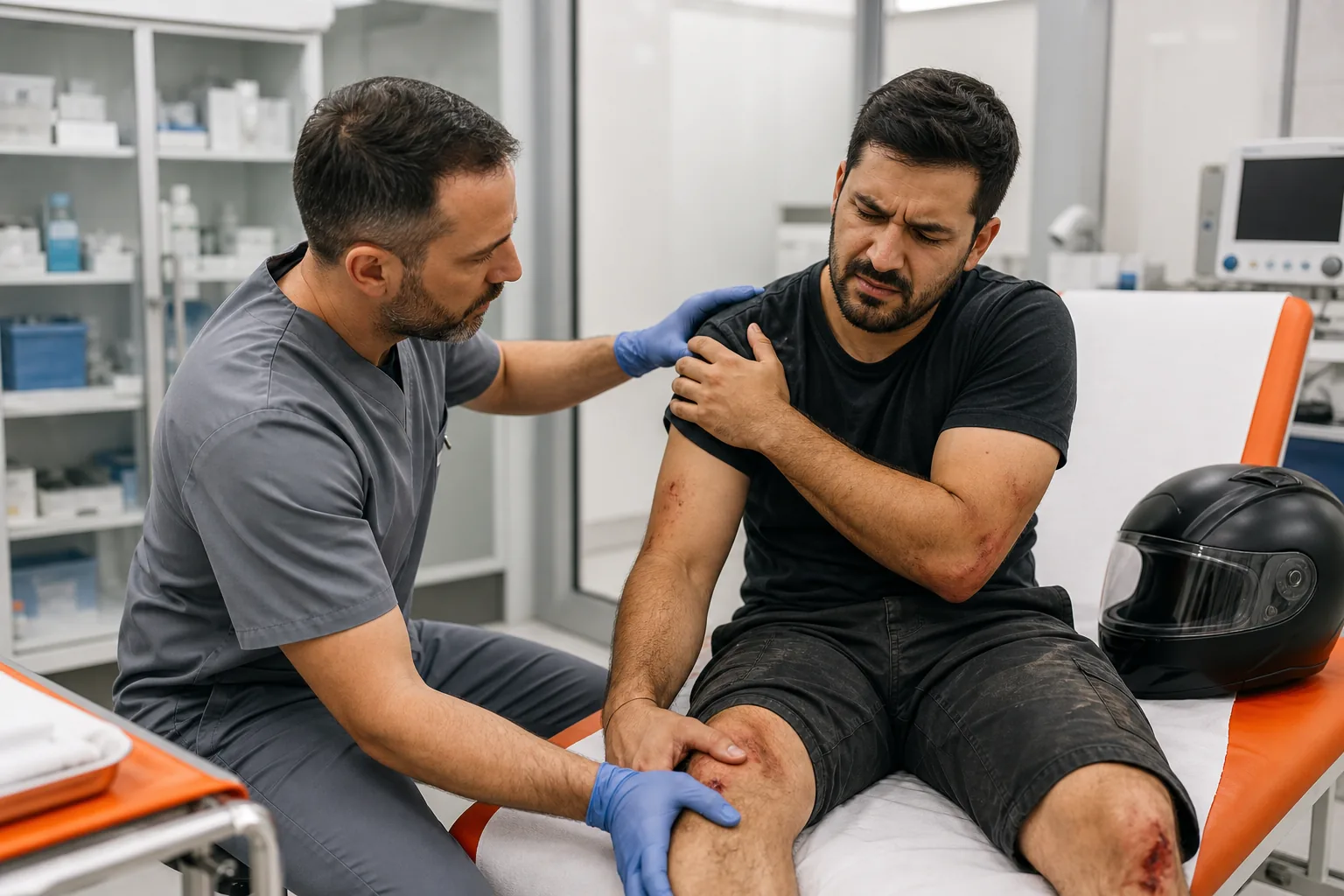
Don’t compare your recovery with another rider’s. The available figures identify injury rates and some costs, but they don’t provide a reliable recovery timeline for each injury. Your doctor’s findings should guide your care, not a general online estimate.
Step 3: Follow Your Treatment Plan and Track Long-Term Effects
Recovery from common motorcycle accident injuries may take weeks, months, or longer. Follow the plan your medical team gives you, then record what happens between visits.
Keep a daily symptom log. Use plain words. Write down the pain level, what caused it, how long it lasted, and what you could not do. Include missed work, poor sleep, help from family, and changes to chores or hobbies.
A useful log might say, “Could not stand long enough to cook dinner.” That tells more than “leg hurts.” It connects the injury to a task people understand.
Attend follow-up visits, therapy sessions, imaging appointments, and specialist referrals. If a treatment is too painful or hard to reach, tell the provider. Don’t stop on your own without discussing the problem first.
Save appointment reminders and transportation records. If someone drives you to care, note the date and reason. Ask your provider for work limits in writing. Employers may need clear restrictions before they adjust your duties.
Watch for delayed effects. A head injury may affect focus or sleep. A spinal injury may change strength or sensation. A leg fracture may lead to stiffness even after the bone heals.
Bring your symptom log to each visit. It can help your clinician spot patterns and adjust care. It also gives your legal team a time-based record instead of a vague description months later.
We understand how hard this routine can feel after a crash. At LeBaron & Jensen, P.C., we help organize the legal side while you focus on medical care. We take the stress off your plate, but we won’t replace your doctor’s advice.
Step 4: Gather Evidence of Your Injuries and Financial Losses
Medical records show what providers found. Other evidence shows how the crash changed your life and what caused your financial loss.
Start with a folder on your phone or computer. Add records as soon as you receive them. Keep the original files when possible, including photo details and message dates.
Gather:
- Photos of the crash scene, bike damage, road surface, and visible injuries
- The police report and exchange of insurance details
- Names and contact details for witnesses
- Medical bills, care plans, and work restrictions
- Pay stubs or other proof of missed work
- Repair estimates and receipts for damaged riding gear
- Messages with insurers, employers, medical offices, or witnesses
Photograph injuries over time. Use the same body position and lighting when usable. Don’t edit the images. A dated sequence may show swelling, wound care, bruising, or changes in mobility.
Write a short account of the crash while your memory is fresh. Include where you were going, what you saw, the point of impact, and what happened next. Don’t guess at speed or distance. Mark uncertain details as uncertain.
Keep a loss log. Record the date, the loss, and the document that supports it. For example, “Missed shift on Tuesday, employer note saved as a PDF.” This makes review faster and helps prevent small losses from disappearing.
Don’t post crash photos or opinions on social media. An insurer may read a cheerful photo as proof that you’re fine, even when the picture says nothing about your pain.
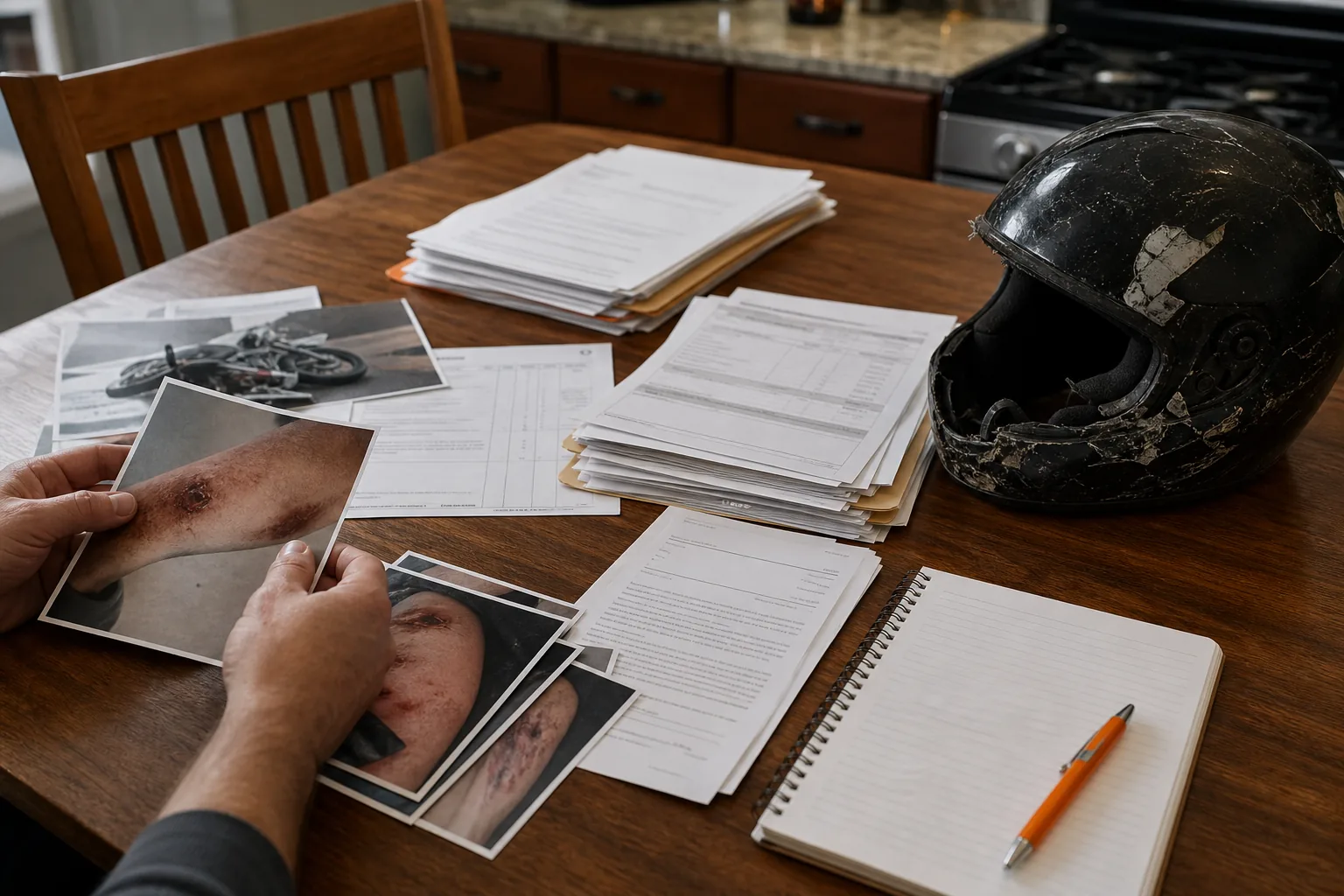
Never alter a record to make it look stronger. Keep corrections in a new note with the date. Accurate evidence is easier to trust.
Before giving a recorded statement, ask a Utah personal injury lawyer for guidance. You can report the crash without offering a full theory of fault while you’re still hurt and unsure of the facts.
Step 5: Protect Your Utah Personal Injury Claim
A serious crash can turn into a dispute about fault, medical need, or the value of a fair settlement. Protect your Utah claim by controlling what you say and keeping each deadline on your radar.
Report the collision to your insurer as required by your policy. Keep the report brief and factual. Give the date, location, vehicles involved, and basic injury information. Don’t guess about fault or say you’re “fine” before a medical exam.
Be careful with early settlement offers. An insurer may offer money before you know whether you need more therapy, surgery, or long-term support. Once you sign a release, you may lose the right to seek more compensation for the same crash.
Fault can also become contested. The other side may argue that you rode too fast, lacked visibility, or caused the impact. Preserve helmet and gear evidence. Don’t repair or discard damaged items before they can be documented.
Utah claims also involve deadlines and rules that depend on the facts. The right deadline may change based on the defendant, the type of claim, and other details. Ask counsel to check the timing early rather than relying on an online countdown.
Bring your organized file to an initial legal review. Include the crash report, insurance letters, medical records, wage proof, photos, and your symptom log. If you don’t have everything, start with what you have.
LeBaron & Jensen, P.C. represents people dealing with motorcycle accident injury claims in Utah. We can assess the available evidence, explain the claim process, and help you decide what to do next. Our goal is a fair settlement supported by the record, not a rushed promise.
We also understand that families may face care needs after a spinal injury or brain injury. A claim may involve current bills plus future medical care, lost income, and daily support. Those issues need careful review before anyone puts a final value on the case.
Keep talking with your doctors. Keep your records in one place. Let legal advice guide contact with insurers while the facts are still developing.
FAQ
What are the most common motorcycle accident injuries?
Head injuries are the most common in the research reviewed for this article, appearing in more than half of motorcycle crashes. Lower-extremity injuries follow at 30%. Spinal cord injuries account for 19.8% in the same figures, while road rash, fractures, chest injuries, and soft-tissue damage can also occur.
How long do common motorcycle accident injuries take to heal?
Healing time depends on the injury, its severity, your health, and your treatment plan. There is no safe single timeline for common motorcycle accident injuries. Ask your clinician for a case-specific outlook, and record changes at home so the care team can respond to setbacks.
Should I see a doctor after a motorcycle crash?
Yes, you should seek medical care after a motorcycle crash, even when symptoms seem minor. Pain and brain injury signs may develop later. A prompt exam can identify hidden harm and link your symptoms to the collision. Follow-up care matters if pain, dizziness, weakness, or numbness continues.
What evidence helps a motorcycle injury claim?
Helpful evidence includes medical records, injury photos, the crash report, witness details, wage records, repair documents, and a symptom log. Save insurer messages and appointment records too. Your file should show both the physical injury and its effect on work, sleep, mobility, and daily tasks.
Should I accept an insurance settlement after a motorcycle crash?
Don’t accept a settlement before you understand your medical outlook and legal rights. An early offer may not account for future care or lost income. Have a Utah injury lawyer review the offer and any release before you sign it, especially after a head or spinal injury.
Conclusion
Get medical care first, then keep a steady record of symptoms, treatment, evidence, and losses. Don’t rush into a statement or settlement while the full effect of the crash remains unclear. When you’re ready, contact LeBaron & Jensen, P.C. for a focused review of your Utah personal injury claim and the next step toward fair compensation.