
Table of Contents
A bike crash can leave you hurt, shaken, and unsure what to do next. The first choices can affect your health and your injury claim. Follow these bike accident claim steps in Utah in order, then get legal advice before you sign a release or accept a quick settlement.
Step 1: Get Medical Care and Report the Utah Bike Crash
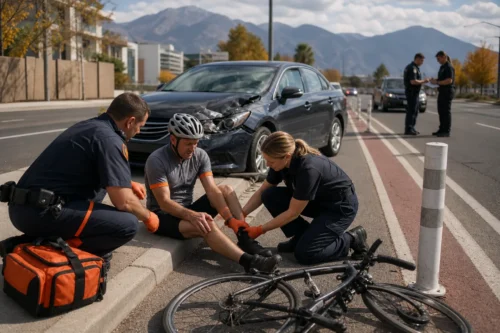
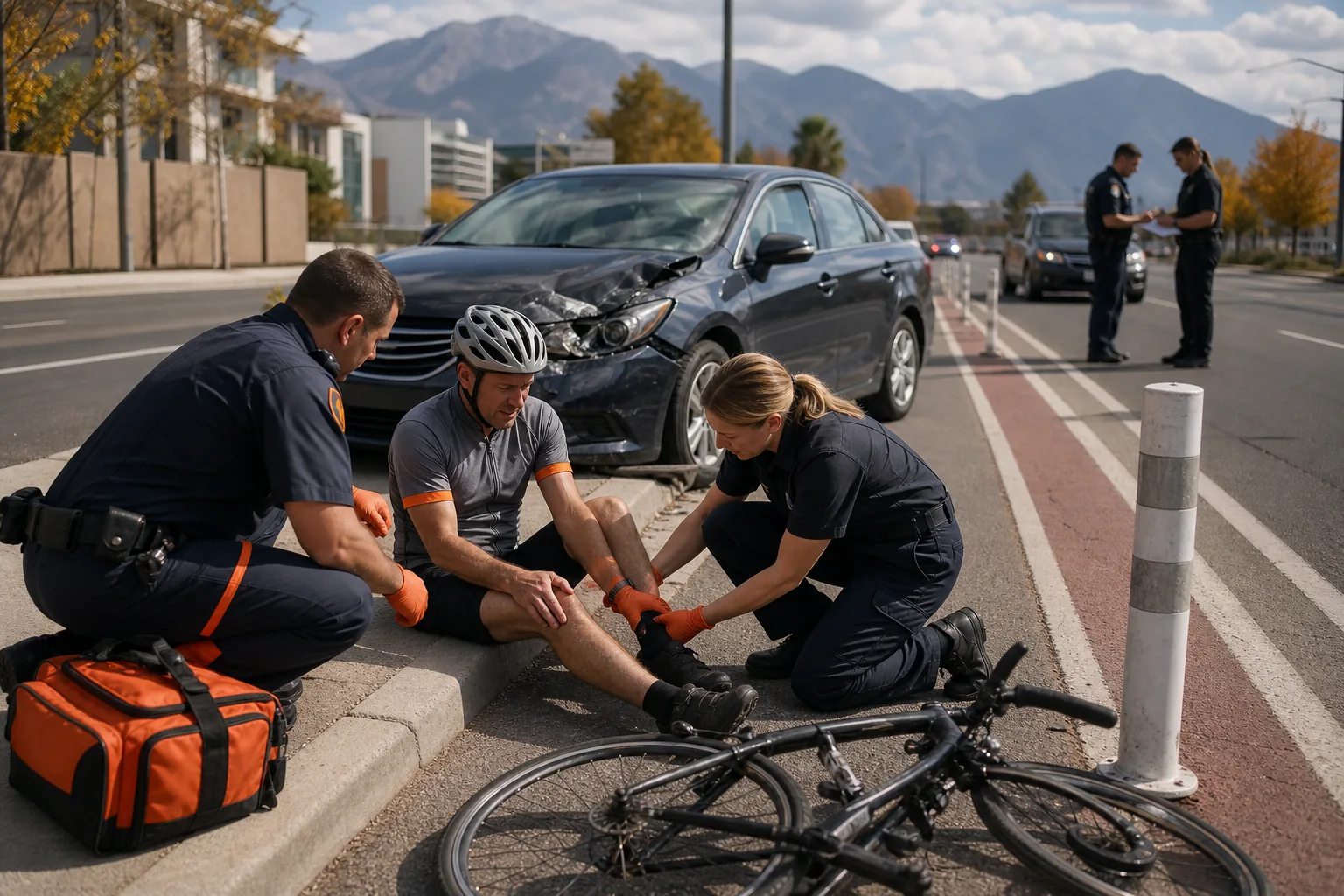
Your first task is safety. Move away from traffic if you can do so without worsening an injury, then ask for emergency help when needed.
Get medical care as soon as possible. Some injuries show up later, especially head injuries, internal injuries, and soft-tissue damage. Tell the provider that a vehicle crash caused your symptoms. Follow the care plan, attend follow-up visits, and ask questions if pain changes.
If police don’t come, report the crash through the proper local channel when you are safe. Write down why no officer came. A missing report doesn’t automatically end a personal injury claim, but it can make proof harder.
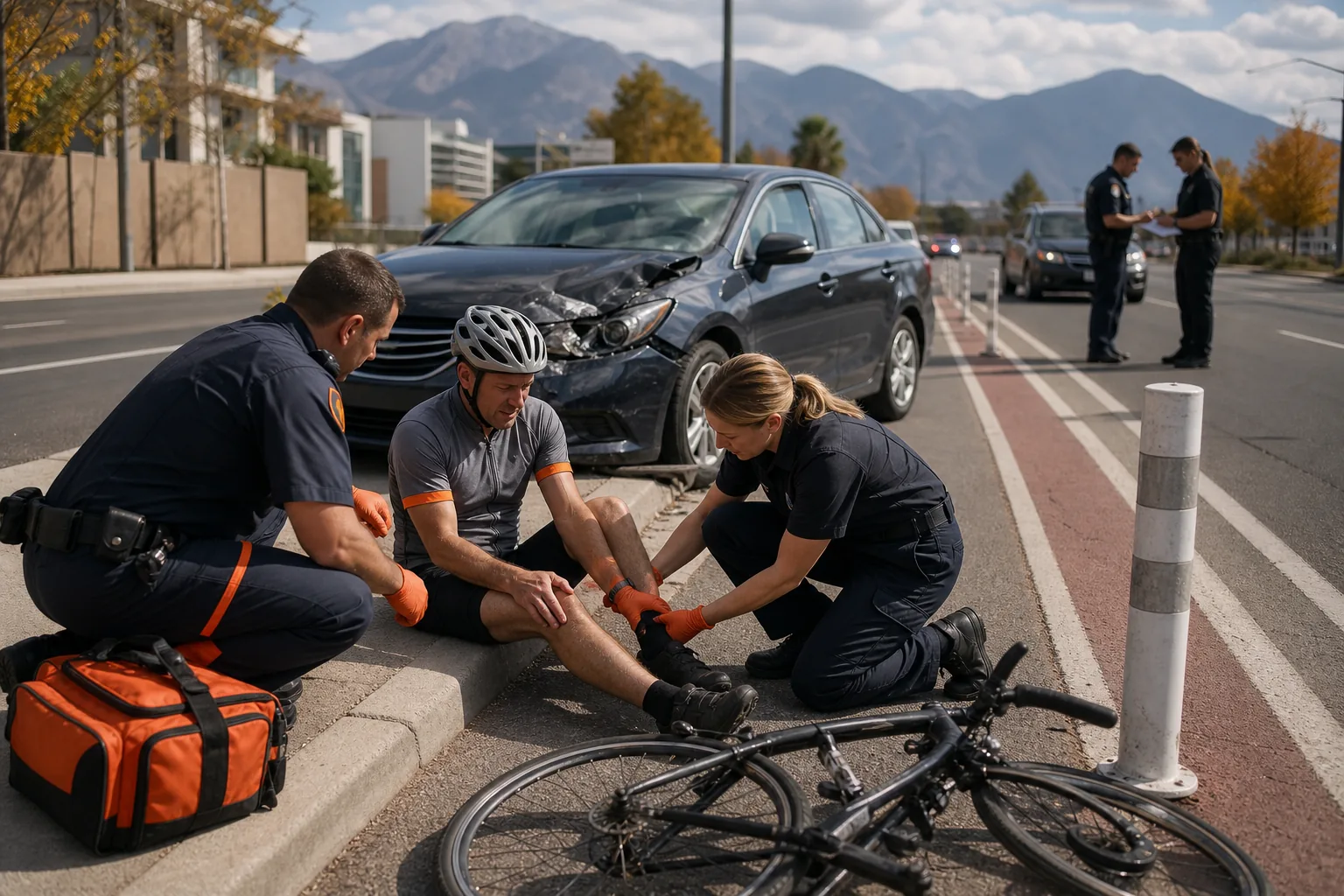
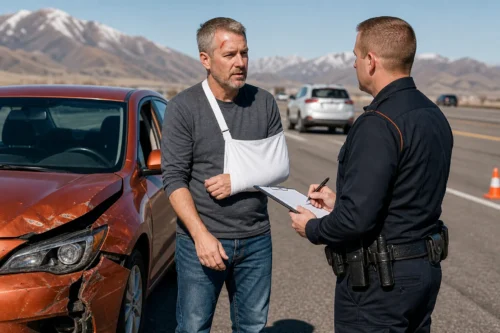
Get the driver’s name, insurance details, license plate, and contact information. Don’t argue about fault. Don’t say that you’re fine when you haven’t been checked.
Take note of witnesses before they leave. Ask for their names and contact details. A witness may remember the light color, the driver’s movement, or whether the driver looked before turning.
We understand how hard it is to think clearly after a crash. LeBaron & Jensen, P.C. can help protect the next steps while you focus on treatment.
Step 2: Preserve Evidence and Document Your Injuries
Evidence can disappear fast. Start a file for your Utah bike accident claim as soon as you can, even if you don’t know whether you’ll hire a lawyer.
Take photos of the crash area from several angles. Capture the bike lane, signs, traffic lights, lane markings, parked cars, road surface, and points of impact. Photograph the bike before repairs. Keep damaged clothing, a helmet, lights, bags, and other gear in a safe place.
Video can help show what still photos miss. Save dash-cam, GoPro, or smartphone footage in its original form. Don’t crop it, add filters, or overwrite the device. Make a backup and note when the recording was made.
Ask nearby businesses or homes whether their cameras recorded the crash. Many systems erase footage after a short period. Send a written request to preserve it. Don’t trespass or pressure an owner. Simply record the location and the person who may control the video.
Write your own account while your memory is fresh. Include your direction of travel, speed, lane position, signals, weather, and what happened before impact. Use plain facts. Mark guesses as guesses.
Keep a daily symptom log. Record pain, sleep problems, missed work, medication effects, and tasks you can’t do. This helps connect the injury to daily life. It also gives your doctor a clearer picture at follow-up visits.
Save every record in one place:
- Emergency and follow-up medical records.
- Medical bills and health insurance statements.
- Pay records showing missed work.
- Repair estimates and bike purchase records.
- Messages with insurers, witnesses, and the other driver.
Fault may be disputed if the driver says you failed to signal or rode outside a bike lane. Comparative negligence rules can reduce recovery when an injured person shares fault. Courts use these rules to assign fault and damages.
Don’t repair or replace a high-value bike until you have clear photos and an inspection plan. If repairs are needed for safety, ask the shop to preserve broken parts and provide a written report.
Step 3: Notify the Insurers Without Weakening Your Claim
Insurance notice starts the claim process, but an adjuster isn’t your lawyer. The adjuster works for the insurer and may ask questions that affect fault or injury value.
Notify the driver’s insurer that a crash occurred. Give the date, location, and basic contact details. You don’t need to give a recorded statement before you understand your rights. Ask for the request in writing and consider speaking with counsel first.
Ask about every policy that may apply. A cyclist may have access to coverage under an auto policy in the household, depending on the policy terms and the facts. Personal injury protection, often called PIP, may help with certain medical costs, but coverage rules can differ for a person riding outside a vehicle.
Your own auto insurer may still need notice, even if your car wasn’t in the crash. Give accurate information and ask what forms or proof it needs. Don’t assume that the other driver’s insurer will pay bills while the claim is open.
Commercial vehicles need special care. A delivery van, work truck, or company vehicle may involve an employer policy and different records. Maintenance files, driver logs, dispatch records, and camera footage may matter. Tell the insurer if a commercial vehicle was involved, but don’t guess about the employer’s responsibility.
Never sign a broad medical release without understanding its scope. An insurer may seek records from before the crash. Some past records may be relevant, but a broad request can reach private material that has little to do with your injuries.
Be careful with social media. A photo from a family event may be used to argue that you are less hurt than you report. Don’t post about blame, treatment, settlement talks, or activities that could be misunderstood.
We take the stress off your plate by handling claim communication when representation makes sense. LeBaron & Jensen, P.C. can review coverage questions before you make a statement that limits your options.
A quick offer may look helpful when medical bills arrive. It may come before doctors know whether you need more care. Don’t accept a release until you understand your diagnosis, future treatment, lost income, and property damage.
Step 4: Calculate Damages and Build a Demand Package
A demand package explains what happened, why the other party is responsible, and what compensation you seek. It should rest on records, not a guess at a fair settlement.
Start with economic losses. Add medical bills that relate to the crash. Include care already received and documented future care when a doctor supports it. Track prescriptions, therapy, medical equipment, travel to appointments, and household help caused by your limitations.
Calculate lost income with pay records and employer statements. If you work for yourself, gather invoices, contracts, tax records, and calendar entries. A claim may also involve reduced earning ability if the injury affects your work over time.
Property damage needs its own proof. A bicycle may have value beyond the price of a basic replacement. Gather the original receipt, model details, upgrades, wheels, computer, lights, helmet, shoes, and bags. Get a repair estimate from a qualified shop. If the frame or fork may have hidden damage, ask whether replacement is safer than repair.
Keep damaged property until the insurer has had a fair chance to inspect it. Don’t inflate its value. At the same time, don’t leave out costly parts simply because they were attached to the bike.
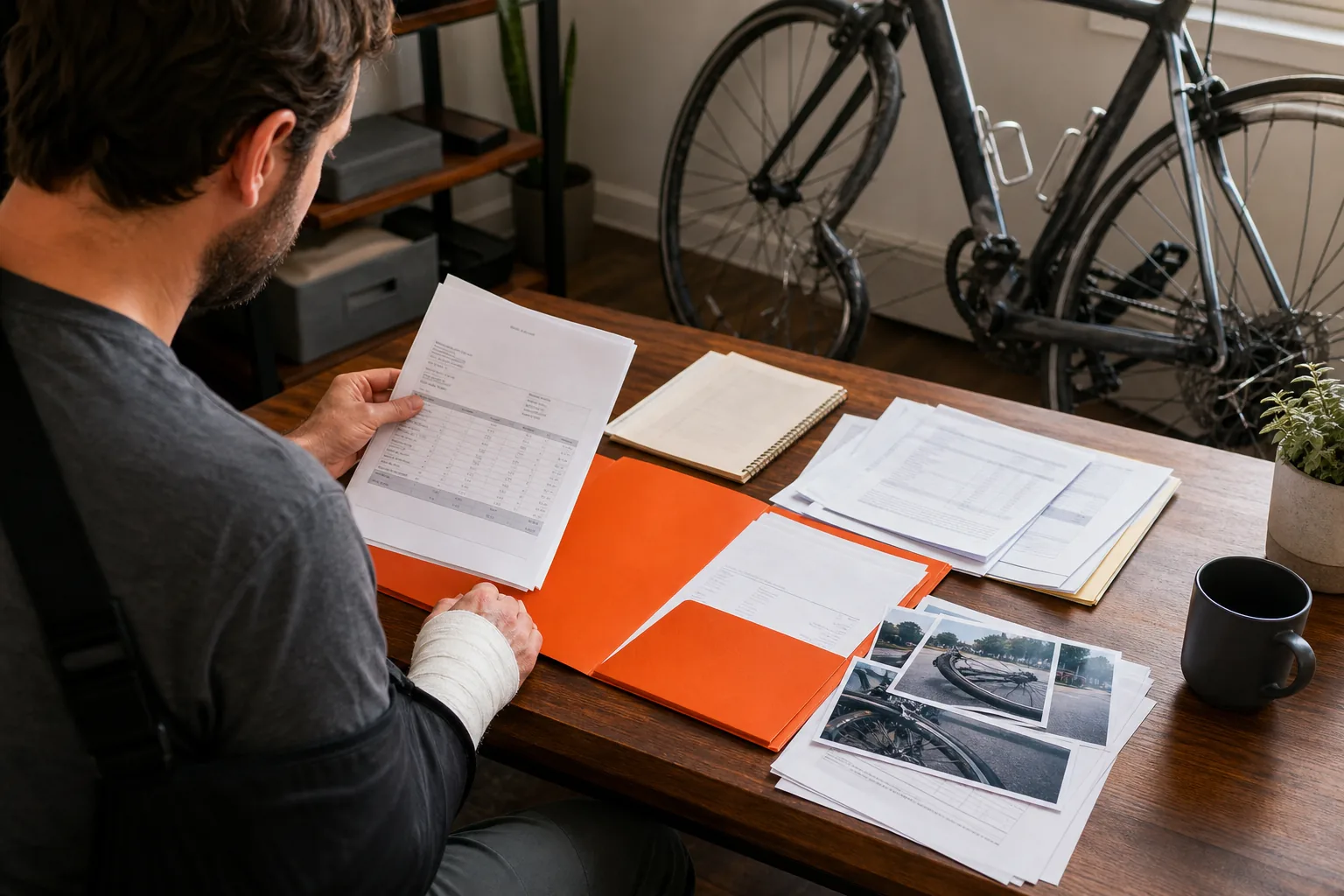
Non-economic damages cover harm that has no single invoice. This may include pain, emotional distress, sleep loss, loss of movement, and limits on hobbies or family life. Describe specific changes. “I hurt” is less useful than “I can’t ride, lift my child, or sleep through the night.”
Put the package in a clear order:
- A short account of the crash.
- Evidence showing the driver’s conduct.
- Medical records and bills.
- Work-loss proof.
- Bike and gear damage proof.
- A description of lasting limits.
- A settlement demand with a response date.
Don’t send your entire case file without review. Some evidence is useful for negotiation but should be held for later. A lawyer can also spot gaps, such as a treatment break or a missing wage record, before the insurer uses that gap against you.
We build the claim around your losses and your medical picture. The goal is your rightfully deserved compensation, not a rushed number that closes the file too soon.
Step 5: Check Utah Deadlines and Decide Whether to Hire a Lawyer
Deadlines can end a claim even when fault seems clear. Check them early, because the correct date depends on the claim, defendant, and facts.
A limitations provision lists the deadline for claims involving injury to a person or another’s property. Exceptions may change the calculation.
A claim against a government body can have special notice rules. A minor’s claim may raise different issues. The date of death matters in a wrongful death case. A written promise from an insurer doesn’t always extend the court deadline.
Do not treat an insurance claim as the same thing as filing a lawsuit. Sending bills to an adjuster does not preserve every legal deadline. Ask a Utah lawyer to check the dates before they become urgent.
You may manage a small property-only claim yourself. Legal help becomes more important when there is a serious injury, disputed fault, a treatment gap, future care, major wage loss, or a commercial vehicle.
Consider hiring counsel before giving a recorded statement or signing a release. A lawyer can review the crash evidence, compare policy layers, and handle settlement talks. That lets you focus on treatment while we take the stress off your plate.
Ask any firm how it will communicate, what records it needs, and how it handles costs. You should understand the fee agreement before representation begins. LeBaron & Jensen, P.C. serves Utah clients with personal injury guidance and can explain whether your facts support a claim.
Don’t wait for perfect information before asking about deadlines. Early advice can preserve video, protect evidence, and prevent a rushed decision.
FAQ: Utah Bike Accident Claims
How long do I have to file a bike accident claim in Utah?
The exact deadline depends on the claim and defendant. Claims involving government entities may have separate notice rules. An insurance report doesn’t replace a lawsuit filing. Check the date with a Utah lawyer soon after the crash, especially if treatment is ongoing.
Can a cyclist use PIP after a crash in Utah?
A cyclist may have access to PIP or other medical coverage, but eligibility depends on the policy and crash facts. Ask your own auto insurer for the policy language. Don’t assume the driver’s insurer will pay first. A lawyer can review household policies and explain how available coverage may interact.
What if I didn’t call the police after my bicycle accident?
You may still have a bike accident claim without a police report. Photos, witness details, medical records, video, and insurer records can help prove what happened. Write down why no report was made. If you haven’t notified the proper agency, ask whether a late report is possible.
Should I give the driver’s insurance company a recorded statement?
Don’t give a recorded statement before you understand your rights. The adjuster may ask about speed, traffic signals, prior injuries, or treatment gaps. Answer basic notice questions truthfully, but ask for time before a recorded interview. LeBaron & Jensen, P.C. can review the request and help protect your claim.
Can I recover damages if I was partly at fault?
You may recover damages when another party is more responsible, but comparative negligence can reduce the amount. Your share of fault matters. The insurer may try to assign you a large share because you rode a bicycle. Preserve evidence that shows lane position, signals, visibility, and the driver’s actions.
Conclusion
Put your health first, preserve evidence, and avoid signing a settlement release too soon. Keep every record in one file, then ask LeBaron & Jensen, P.C. to review the facts and deadlines before you negotiate a final amount. Early guidance can protect your chance at a fair settlement while you recover.