

Table of Contents
A Utah injury case can turn on a deadline most people never hear about. After the complaint is answered, you may have only 14 days to elect binding arbitration. Here are the personal injury lawsuit process steps Utah claimants should expect, from medical care and insurance talks through settlement or trial.
Step 1: Get Medical Care and Preserve Evidence
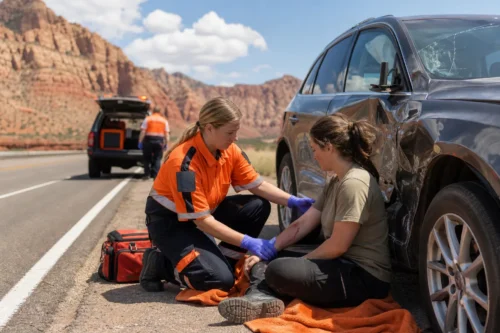
The first step in the Utah personal injury lawsuit process is protecting your health while preserving proof of what happened. Seek medical care as soon as you can, even if your pain seems mild.
Some injuries grow worse over the next day or two. Tell the provider how the injury happened and describe every symptom. Follow the care plan unless another medical professional changes it. Gaps in care can give an insurer an argument that your injury was minor or came from another event.
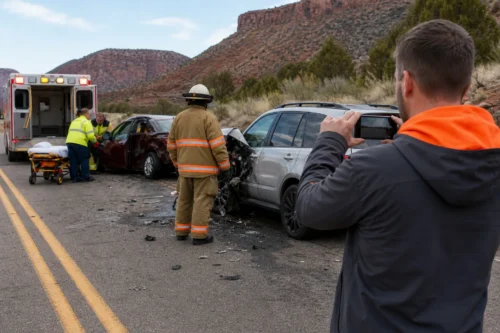
If the incident involved a car crash, report it as required and exchange information with the other driver. Take photos of the scene before vehicles move, when it is safe. Capture road signs, lane marks, vehicle damage, weather conditions, and visible injuries.
Keep the original files. Do not edit photos before saving them. Ask witnesses for their names and contact details. Save the police report, medical records, bills, prescriptions, work absence notes, and messages with insurers.
Write down what you remember while the details are fresh. Include the time, location, sequence of events, and what each person said. Do not guess when you are unsure. A clear statement that you do not remember is better than a changed answer later.
We understand how hard this can feel after a crash or other injury. LeBaron & Jensen, P.C. can help organize the early proof while you focus on treatment. Our team can also explain which records may support a negligence claim, meaning a claim that someone failed to use reasonable care.
For a broader review of claims involving accidents and other injuries, a personal injury lawyer Utah readers can consult may help identify issues before evidence is lost.
By now, you should have medical care in place, a file for every case record, and a dated account of the event.

Step 2: Notify Insurers and Evaluate Your Claim
The next part of the personal injury lawsuit process in Utah is opening the insurance claim and testing its value. Notify your insurer promptly and give basic facts that are accurate.
Utah uses a no-fault system for many auto injury claims. Your own personal injury protection coverage may pay initial medical costs and some related losses. A claim against the at-fault driver may still be possible when the legal requirements are met.
Utah also follows modified comparative negligence. If you are found primarily responsible, you generally may not recover damages. If your share of fault is lower, the award may be reduced by that percentage.
For example, imagine damages and a finding that you were partly responsible. The recoverable amount would be reduced by that percentage before other issues are considered. The facts must support the fault split. An adjuster’s first opinion does not decide it.
An adjuster may ask about the crash, your symptoms, prior conditions, treatment, missed work, and other losses. Answer truthfully, but do not speculate. You do not need to give a recorded statement or sign a broad medical release before understanding what it covers.
Do not accept a quick settlement just because bills are arriving. A release may end the claim before you know whether more treatment is needed. Ask what the offer covers and whether it includes future care, lost income, property damage, and liens.
The insurer may deny fault, question the cause of an injury, or argue that your damages are too high. We take the stress off your plate by reviewing the claim record and identifying what still needs proof. LeBaron & Jensen, P.C. can also assess whether settlement talks make sense before filing suit.
A police report can be important because it records statements and observations made during the crash investigation. Treat it as evidence, not as the only evidence.
Make a simple loss log. Record each bill, missed shift, travel cost, symptom change, and insurer contact. That log gives your legal team a working timeline instead of a pile of disconnected papers.
Step 3: File the Utah Personal Injury Complaint
Filing the complaint begins a court case in the Utah personal injury lawsuit process. The complaint states what happened, why the defendant is legally responsible, and what relief you seek.
Before filing, your legal team must check the correct court, parties, claims, and filing deadline. Utah generally allows up to four years for a personal injury lawsuit under the cited limitation rule. Wrongful death claims have a different period, generally two years. Exceptions can change the calculation, so do not treat those periods as a reason to wait.
The complaint usually identifies the plaintiff and defendant. It describes the event in enough detail to give fair notice. It also states the types of damages claimed, such as medical expenses, lost income, pain, and future losses when supported by the facts.
Filing alone does not put the defendant under the court’s control. The summons and complaint must be served under the applicable rules. Keep proof of service. If service fails, the case can stall even though the complaint was filed on time.
Service deadlines can vary by case type. Different court procedures may have different registration and response duties. Small claims procedures also have their own rules.
Service timing can depend on the procedure that applies. Review the applicable small claims procedures for the procedure that applies.
Once served, the defendant usually has a deadline to answer. An answer admits, denies, or responds to the complaint’s allegations. It may also raise defenses. Missing the answer deadline can lead to a request for default, but a default does not guarantee that every requested dollar will be awarded.
Some court procedures add registration or response deadlines. If a party fails to meet one, the plaintiff may be able to seek a default judgment. This is one reason we track every date from the day service occurs.
LeBaron & Jensen, P.C. can review the filing plan, service record, and response dates with you. A missed procedural step can cost more than time. It can limit the court’s ability to hear the case.
By now, you should know the court, the parties, the filing deadline, the service method, and the next response date.
Step 4: Exchange Evidence During Discovery and Negotiate
Discovery is the evidence-gathering phase of the Utah personal injury lawsuit process. The parties ask questions, request records, and test the strengths and weak points of each claim.
Common discovery tools include written questions called interrogatories, requests for documents, requests to admit facts, and depositions. A deposition is sworn testimony given outside the courtroom. The questions and answers are recorded for later use.
You may need to gather medical records from more than one provider. You may also need wage records, tax materials, repair estimates, photographs, witness statements, and insurance documents. Give your lawyer complete information, including facts that feel unhelpful. Surprises are harder to address when they appear during a deposition.
Answer discovery carefully. Read each question twice. If you do not know an answer, say so. Never fill a gap with a guess. Your attorney can object when a request is improper or too broad, but you still must preserve relevant records.
Arbitration creates a special timing risk in Utah. After a complaint is answered, a party has 14 days to file a notice electing binding arbitration. Missing that window can send the case to court instead. The statute also limits discovery in arbitration to 150 days after the election or answer filing.
You can review the timing rule here. Because the choice can affect the hearing format and discovery window, we do not treat the election as a routine form.
| Task | What you should do | Risk if missed |
|---|---|---|
| Preserve records | Keep original files and send relevant copies to counsel. | Important proof may be lost or challenged. |
| Answer discovery | Review each response for accuracy before signing. | Inconsistent answers can damage credibility. |
| Prepare for deposition | Review the timeline and answer only the question asked. | A careless answer may be used later. |
| Track arbitration dates | Record the answer date and the 14-day election deadline. | The case may follow a different path than intended. |
| Evaluate offers | Compare the offer with proven losses and future needs. | A release may end recovery too soon. |
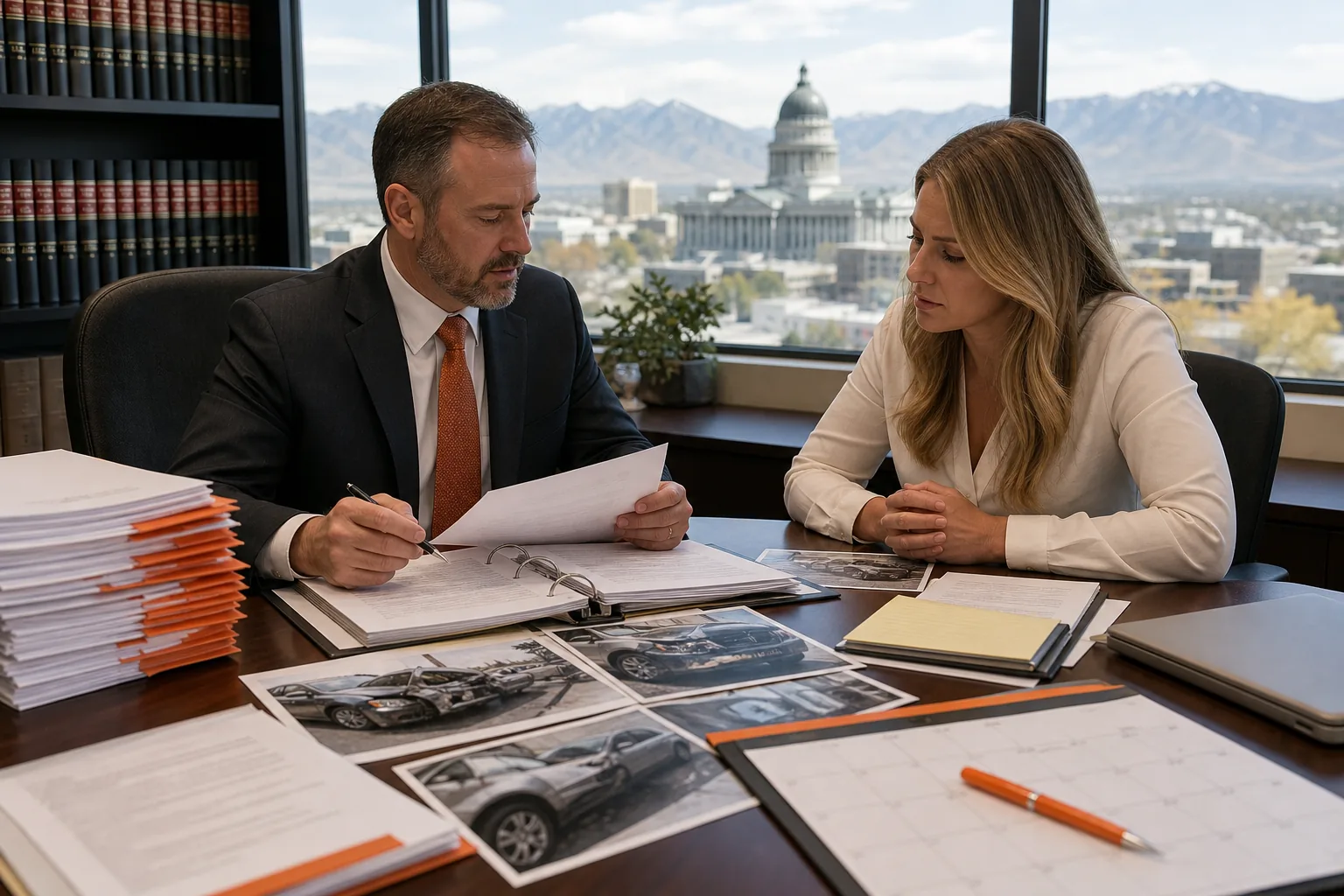
Settlement talks often happen during discovery because both sides can now see more of the evidence. An offer should be measured against liability proof, medical support, lost income, future care, and any liens.
We can help you compare a proposed fair settlement with the risks of continuing. Settlement is your choice, but it should be based on a record rather than pressure from an adjuster or the cost of one more legal step.
When discovery ends, the case is usually ready for a final settlement decision, mediation, arbitration hearing, or trial preparation.
Step 5: Resolve the Case at Settlement or Trial
The final stage of the Utah personal injury lawsuit process is resolution. Most cases end through settlement, but a trial or arbitration hearing may be needed when the parties cannot agree.
A settlement is a written agreement that resolves the claims for defined terms. Before signing, confirm the payment amount, release language, liens, case costs, and treatment bills. The gross offer is not always the amount you will receive after those obligations.
At trial, each side presents evidence under court rules. The plaintiff must prove the required elements of the claim. In a negligence case, that often means showing a duty, a breach, a connection between the breach and injury, and damages.
The defense may dispute fault, causation, the extent of the injury, or the amount of damages. You may testify about the event and its effect on daily life. Medical experts or other witnesses may explain treatment and future needs when the claim requires that support.
A judge or jury then decides the issues submitted to it. A verdict may award damages, reject the claim, or assign shared fault. The court enters judgment after the decision. Collection may require another legal step if the losing party does not pay voluntarily.
Arbitration is different from a trial. The arbitrator hears the evidence under the governing arbitration rules and issues a decision. The discovery period may be shorter, so the case must be prepared early.
An appeal is not a second trial. It asks a higher court to review legal or procedural errors that may have affected the result. Disagreement with the outcome alone is usually not enough. Appeals can take substantial time, so counsel should assess the record and the available grounds before filing.
We stay focused on the result that fits your case, whether that means a fair settlement or trial preparation. LeBaron & Jensen, P.C. can explain the next decision in plain language and help take the stress off your plate.
Before the case closes, keep the final agreement, judgment, payment records, and lien documents together. Those papers may matter later for taxes, benefits, or disputes about payment.
FAQ: Utah Personal Injury Lawsuit Process
How long do I have to file a personal injury lawsuit in Utah?
Utah generally gives an injured person up to four years to file a personal injury lawsuit, but exceptions can change the deadline. Wrongful death claims use a different period, generally two years. The event date, defendant, injury type, and claim basis all matter. Have the deadline reviewed early instead of relying on a general time limit.
What happens after a personal injury complaint is filed in Utah?
After filing, the complaint and summons must be served on the defendant. The defendant then has a response deadline. The case may enter discovery, ODR, arbitration, settlement talks, or trial preparation. Filing does not finish the process. Proof of proper service and careful tracking of every court date remain essential.
Can I be forced into arbitration in a Utah injury case?
You may face a binding arbitration decision if a party properly elects arbitration within the required 14-day period after the complaint is answered. The case then follows arbitration procedures, including a limited discovery period. Because missing the election deadline can change the case path, review the answer date and election rule promptly.
What if I share fault for the accident in Utah?
Shared fault can reduce or eliminate recovery under Utah’s modified comparative negligence rule. If you are less responsible, your damages may be reduced by your fault share. If you are primarily responsible, recovery may be barred. The evidence must support the percentage assigned to each party.
Should I accept the insurance company’s first settlement offer?
You should not accept a first offer until you understand your medical outlook, lost income, liens, and future losses. Signing a release can end the claim even if treatment continues. Ask what the offer covers and have the terms reviewed before agreeing. A fair settlement should reflect supported losses, not only the bills received so far.
Deadlines shape every Utah injury case, and some arrive soon after service or an answer. If you were hurt, gather your records and seek a case review with LeBaron & Jensen, P.C. early enough to protect your options. We can help you choose the next step with a clear view of the evidence and timing.