


Table of Contents
- How long do I have to file a medical malpractice lawsuit in Utah?
- Is a prelitigation panel required for medical malpractice in Utah?
- What must I prove in a Utah medical malpractice case?
- Can I settle a Utah medical malpractice lawsuit before trial?
- What happens if the Utah medical malpractice panel does not act?
A Utah medical malpractice case does not start in court. It starts with strict prelitigation steps, and one missed deadline can end the claim before a judge reviews it. We explain the process in order, from preserving evidence through settlement or trial, so you know what must happen next.
Step 1: Protect Your Health and Preserve Evidence
The first part of the medical malpractice lawsuit process in Utah is your health, not paperwork. Keep following your treatment plan and seek another medical opinion if your condition remains unclear.
Medical malpractice claims usually turn on four questions: Did the provider owe you a duty? Did the care fall below the accepted standard? Did that failure cause harm? What losses followed?
A medical record can help answer each question. Ask for complete copies of your records, including imaging, lab results, medication lists, discharge papers, billing records, and messages connected to your care. Keep the records in their original form. Do not mark them up.
Write down what happened while your memory is fresh. Include dates, symptoms, instructions you received, changes in your condition, and the names of people involved. Save photos that show visible harm. Keep a file for wage loss, travel costs, new care, and other out-of-pocket losses.
Do not post about the treatment dispute on social media. Avoid sending angry messages to the provider. Those posts and messages may later become evidence, even if you delete them.
Medical malpractice is a form of professional negligence. A patient must connect negligent care to an injury, not merely show that the treatment had a poor result.
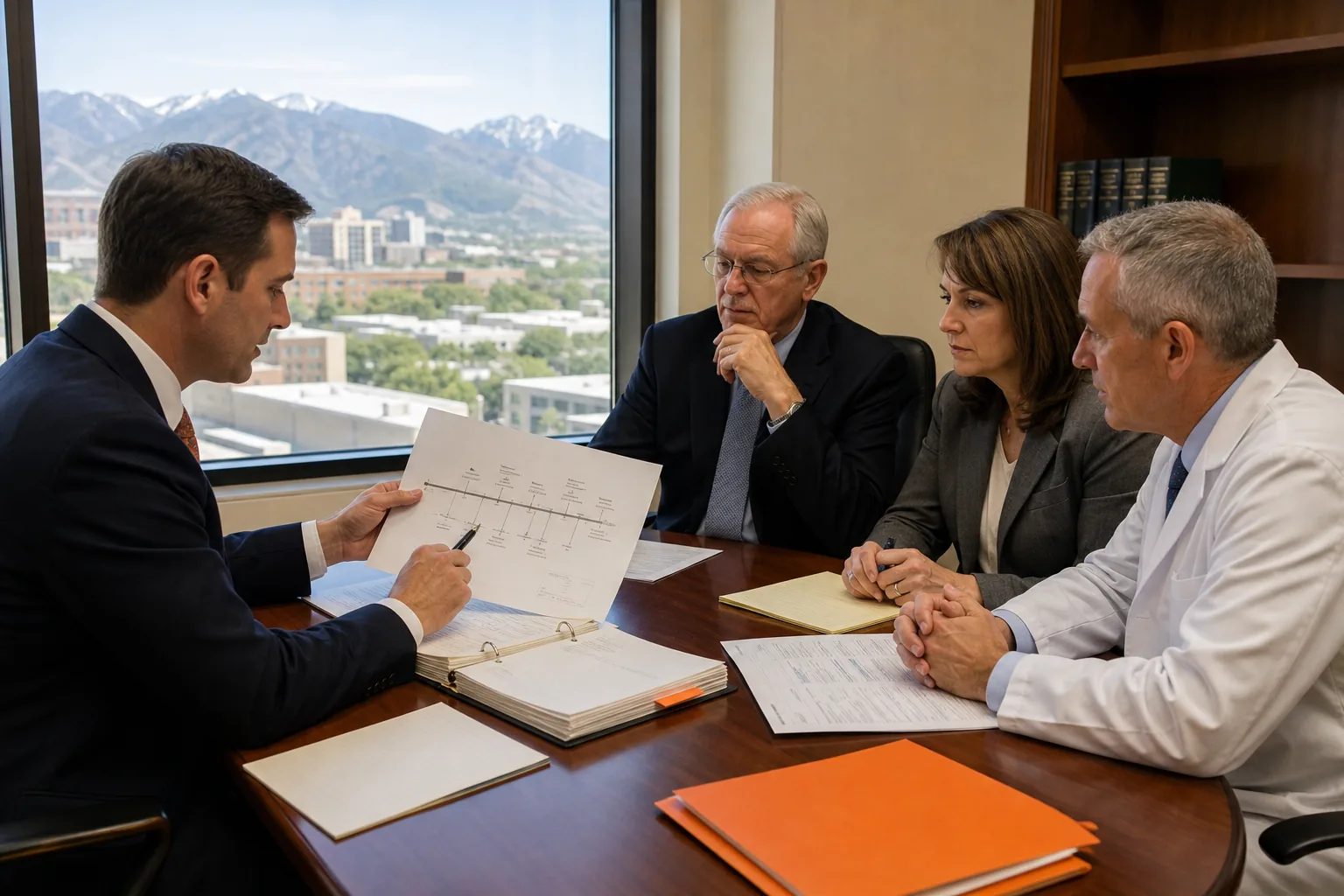
We at LeBaron & Jensen, P.C. begin by sorting the medical timeline from the claimed harm. That early review helps us see which records are missing and whether an expert may need to review the care.

By now you should have: continued appropriate care, requested your records, started a dated timeline, and preserved proof of your financial losses. Do not wait for every record before asking about deadlines.
Step 2: Check Utah Deadlines and Have the Claim Evaluated
Deadlines control the Utah medical malpractice lawsuit process. The statute of limitations is the legal time limit for filing a claim. If it expires, a strong case may be barred.
The right deadline can depend on the date of the medical event, when the injury was discovered, the type of claim, the identity of the defendant, and other facts. A wrongful death claim may follow different rules than a claim brought by a living patient. A government provider may raise separate notice issues.
Do not assume that the time spent seeking treatment pauses the clock. Do not assume that a notice of intent automatically gives you unlimited extra time. The effect of each filing depends on Utah law and the facts of the case.
Utah’s process includes a written notice of intent before a complaint can usually be filed. The notice must be served on the health care provider. A request for prelitigation panel review must then be filed within 60 days, with a copy of the notice attached.
The deadline review should happen before a lawyer decides whether to accept the case. Gather these details for the first evaluation:
- The date of each treatment or procedure.
- The date you first learned something may have gone wrong.
- The names of every provider and facility involved.
- Any later diagnosis that explains the claimed injury.
- Dates of death, if the claim involves wrongful death.
- Copies of notices, letters, or insurer communications.
A lawyer will also assess whether the facts support negligence rather than an expected complication. A bad outcome alone does not prove malpractice, and a dispute about whether treatment was authorized may raise separate express and implied consent issues. The review may require a qualified health care expert to address the standard of care and causation.
LeBaron & Jensen, P.C. handles personal injury claims across Utah, including medical malpractice matters. We check the filing date early because waiting for a complete damages picture can create a deadline risk.
State rules can change how a pre-suit process affects the filing period. That is why a lawyer should calculate the date from the records, not from a general online chart.
Step 3: Complete Utah’s Prelitigation Review Requirements
Utah’s prelitigation review is a required gate in many medical malpractice cases. You generally cannot file the complaint until the process ends or the parties use a written waiver allowed by statute.
First, serve the notice of intent to commence litigation. The notice identifies the provider and gives notice of the claim. Utah law requires service in the manner set by statute. Keep proof of service because the 60-day filing period runs from service.
Next, file the request for prelitigation panel review with the appropriate state office. Attach a copy of the notice. Use the linked prelitigation review procedure as a reference.
The panel considers whether the provider breached the standard of care and whether that breach harmed the patient. The hearing is informal and confidential. It is not the same as a trial, and the panel does not decide every issue that a court may later consider.
Prepare a clear record for the panel. Your lawyer may use selected medical records, imaging, diagrams, medical literature, or expert affidavits. The goal is to show what happened, what should have happened, and how the difference caused harm.
| What happens | What to track | Why it matters |
|---|---|---|
| Notice of intent is served | Date and proof of service | Starts the period for the review request |
| Review request is filed | Request, notice copy, and filing date | Moves the claim into the panel process |
| Panel process continues | Hearing dates, notices, and objections | Missed steps can cause dismissal or delay |
| Panel acts or fails to act | Opinion, certificate, or cooperation evidence | Determines what must happen before suit |
| Parties waive the review | Written stipulation and certificate | May avoid a hearing when legally available |
If the panel does not act because a party fails to cooperate, the claimant may need to file an affidavit explaining the failure. That filing must be made within the statutory period. If the panel gives a nonmeritorious opinion, affidavits of merit may still be required before the certificate of compliance is issued.
The parties may also stipulate in writing that the review would serve no useful purpose. When that option applies, the division can issue a certificate of compliance without a full hearing. It is a shortcut, but it still requires careful written work.
Milestone: You should have proof of service, a filed review request, a record of panel activity, and a plan for obtaining the certificate of compliance. Do not file a complaint before confirming that the prelitigation requirements are complete.
Step 4: File the Complaint and Exchange Evidence in Discovery
After the prelitigation requirements are satisfied, the next part of the Utah medical malpractice lawsuit process is filing the complaint. The complaint states the legal claims and the harm alleged against each defendant.
Utah law places special limits on medical malpractice pleadings. A complaint cannot use an ad damnum clause to demand a specific dollar amount in the usual way. Noneconomic damages and contingency fees may also be subject to statutory limits. Those rules affect case valuation from the start.
Once the complaint and summons are served, the defendant responds. The case then moves through discovery. Discovery is the evidence exchange stage. Each side asks for information that may support or weaken the other side’s position.
Expect requests for medical records, employment records, tax information, witness details, expert opinions, and communications about the treatment. You may also answer written questions or give a deposition under oath. Tell the truth, answer only the question asked, and ask for clarification when needed.
Parties have an ongoing duty to update required disclosures. Evidence that was not disclosed may be barred at a hearing or trial. A party must correct important omissions or errors.
Medical expert testimony often becomes central at this stage. An expert may address what a reasonably careful provider would have done. A separate opinion may be needed to connect the breach to the injury.
Keep your lawyer updated about new treatment, new symptoms, changes at work, and any new provider. Discovery is not a one-time exchange. New information can change the damages analysis or require a supplemental disclosure.
We take the stress off your plate by building the medical timeline around the records, testimony, and expert opinions. That work helps us test the claim before settlement talks or trial preparation becomes urgent.
Step 5: Evaluate Settlement, Mediation, Trial, and Appeal Options
Most medical malpractice disputes are resolved through negotiation or mediation, but settlement is a choice, not an automatic result. Settlement calculations should account for the evidence and Utah’s limits on noneconomic damages and attorney contingency fees.
A fair settlement should account for more than past bills. Review future treatment, lost income, reduced earning ability, pain, loss of function, and the effect of the injury on daily life. Do not accept an offer before you understand which claims and future rights it releases.
Mediation uses a neutral person to help the parties discuss resolution. The mediator does not act as your lawyer or decide who wins. A mediation can end with a signed agreement, continue with later talks, or fail without changing the right to proceed.
Utah is among the jurisdictions with medical liability screening panel rules. Alternative dispute methods may also appear in malpractice cases, but the details depend on the agreement and the court’s orders.
Trial preparation includes motions, witness preparation, exhibit review, jury selection, opening statements, testimony, expert cross-examination, and closing arguments. The jury then decides the disputed facts under the judge’s instructions. A verdict may be followed by post-trial motions or an appeal.
An appeal is not a second chance to present every fact. It usually focuses on legal errors preserved in the trial record. That is one reason careful work before and during trial matters.
Before accepting or rejecting a proposal, ask what happens next if talks fail. If the case proceeds, make sure you understand the likely costs, timing, risks, and work required from you.
LeBaron & Jensen, P.C. can help you weigh settlement against continued litigation based on the record in your case. The right choice depends on proof and risk, not pressure.
Frequently Asked Questions About Utah Medical Malpractice Lawsuits
How long do I have to file a medical malpractice lawsuit in Utah?
Utah’s filing deadline depends on the facts, including the treatment date, discovery of the injury, the defendant, and the claim type. The prelitigation process may affect the timing, but it does not remove the need for a deadline review. Have a Utah lawyer calculate the date from your records before serving notice.
Is a prelitigation panel required for medical malpractice in Utah?
A prelitigation panel review is required in many Utah medical malpractice cases before filing a complaint. The claimant generally serves a notice of intent, then files a review request within 60 days. A written stipulation may allow the parties to waive the panel when the statute permits it.
What must I prove in a Utah medical malpractice case?
You must generally prove a provider-patient duty, a breach of the medical standard of care, harm caused by that breach, and damages. A poor result alone is not enough. Medical expert evidence often helps explain what reasonable care required and how the claimed failure caused the injury.
Can I settle a Utah medical malpractice lawsuit before trial?
Yes, many cases settle before trial, but you should compare the offer with your past and future losses, legal limits, liens, fees, and the strength of the evidence. Mediation may help the parties reach a fair settlement. Do not sign a release until you understand which rights it ends.
What happens if the Utah medical malpractice panel does not act?
If the panel does not act because of a party’s failure to cooperate, the claimant may need to file an affidavit describing the problem and supporting it with evidence. The filing deadline matters. A lawyer should track the 180-day period and confirm what certificate or waiver is needed before suit.
Conclusion
Start with two tasks: preserve your medical evidence and get the filing deadline calculated. Then speak with LeBaron & Jensen, P.C. about the notice, panel review, expert proof, and next step in your claim. Early action can protect your right to seek a fair settlement or pursue the case in court.