

Table of Contents
A six-figure headline can make a car accident settlement amount sound easy to predict. It isn’t. Research reviewed for Utah claims reports a median settlement of $15,443, while a few catastrophic cases push the overall average much higher.
Your injury, medical proof, lost income, fault percentage, and available insurance matter far more than a broad average. We explain how those pieces fit together and when LeBaron & Jensen, P.C. may help take the stress off your plate.
What Is the Average Car Accident Settlement Amount?
The average car accident settlement amount is a rough benchmark, not a promise. One research source reports an average of $15,443, while another set of Utah figures gives an overall average of $306,487 and a median of $15,443.
That wide gap tells you something important. Averages can be pulled upward by a small number of severe spinal cord injuries, traumatic brain injuries, or wrongful death claims. The median shows the middle claim, so it often gives a better sense of what ordinary cases look like.
Property-damage-only claims may fall near $2,000 to $5,000. Minor injuries often appear in the $3,000 to $25,000 range. Soft-tissue claims, such as whiplash, may settle near $10,000 to $30,000 when medical care and fault are clear.
Those figures are not Utah guarantees. They combine different sources, injury types, case facts, and insurance conditions. They also may include settlements and verdicts, which are different outcomes. A verdict comes after a judge or jury decides the case. A settlement is an agreement reached before that decision.
LeBaron & Jensen, P.C. cites a $100,000 average settlement on its Utah personal injury pages. That figure should not replace a case review. It shows why broad numbers need context before you compare them with your own claim.
When we assess a claim, we look at the full loss rather than chasing the biggest number found online. A person with documented medical bills may have a stronger claim than someone with fewer bills but unclear fault.
For a useful starting point, keep every bill and record tied to the crash. A settlement discussion becomes much clearer when each claimed loss has proof behind it.
How Injury Type and Severity Change Settlement Value
Your injury type is often the biggest driver of a car accident settlement amount. A short recovery from a strain is treated very differently from a permanent injury that changes how you work or live.
Soft-tissue injuries sit near the lower end of many published ranges. Whiplash and similar strains may fall between $10,000 and $30,000. The range can move when treatment lasts longer, symptoms affect daily tasks, or the medical records clearly link the injury to the crash.
A concussion can have a wide settlement value. The value may rise when symptoms continue, affect school or work, or require ongoing care. A diagnosis alone does not show the full effect.
Herniated discs show why treatment matters. A source reports $100,000 to $400,000 for a herniated disc requiring surgery. Other comparisons may vary. Surgery, lasting limits, future care, and clear medical opinions can change the result.
Spinal cord injuries sit in a different tier. Reported averages exceed $1.1 million in one source and $5 million in another. These figures reflect severe cases with major long-term needs. They do not predict what every spinal injury claim will recover.
Doctors may need time to learn whether an injury will heal or leave lasting harm. Settling before that picture is clear can leave future treatment and income loss outside the agreement.
Injury assessment needs more than a quick look at the vehicle or the first medical visit. Symptoms and functional limits can develop after the crash.

Use the table as a map, not a quote. The same diagnosis can produce different results because the person, proof, and coverage are different.
The Main Factors That Determine a Car Accident Settlement Amount
A car accident settlement amount comes from several connected parts. There is no reliable calculator that can turn a diagnosis and a few bills into a final number.
Medical costs and future care
Emergency care is easy to document because it produces bills and records. Follow-up visits, imaging, therapy, medication, and surgery also belong in the medical-loss picture.
Future care takes more work. If a doctor expects another surgery or long-term therapy, that opinion may support a future-damage claim. A demand sent too soon can miss costs that have not appeared yet.
Lost wages and earning capacity
Lost wages include time you could not work because of the injury. Pay records and an employer statement can help show the amount. Self-employed workers may need tax records, invoices, or other proof.
Earning capacity is different. It concerns the work or income you may lose later when an injury limits your career. Severe brain or spinal injuries may require detailed medical and work assessments.
Pain, distress, and daily limits
Pain and suffering covers harm without a simple receipt. It may include physical pain, emotional distress, sleep problems, and lost enjoyment of life.
Strong proof describes what changed. Can you lift your child? Sit through a work shift? Drive without fear? Keep a short record of these limits, then share it with your treatment team and lawyer.
Fault, coverage, and liens
Fault can reduce the amount available. Insurance limits may cap what the at-fault policy can pay. Health insurers or government programs may also seek repayment from the settlement.
Comparative negligence means a person’s recovery may be reduced by that person’s share of fault. The exact Utah rule still needs to be applied to the facts of your crash.
That is why two people with similar injuries may keep very different amounts. Their policy limits, fault disputes, medical liens, and legal costs may not match.
How Utah Fault Rules and Insurance Coverage Affect Your Claim
Utah fault rules can change a car accident settlement amount even when your injuries are well documented. The key issue is whether the other driver caused the crash and whether someone assigns part of the blame to you.
Utah follows a modified comparative-fault rule. You may recover when your share of fault is below 50 percent, but your recovery is reduced by that percentage. If your total damages are $100,000 and you are found 20 percent at fault, the damages may be reduced to $80,000. If your fault reaches 50 percent or more, recovery may be barred under the rule described in the research material.
Utah also uses a no-fault system for initial medical and wage benefits. Personal Injury Protection, or PIP, can cover initial losses regardless of who caused the crash. The research source reports a minimum PIP amount of $3,000.
To seek pain and suffering damages from the at-fault driver, your claim must meet Utah’s injury threshold. That can include medical expenses above $3,000, permanent disfigurement, permanent impairment, or dismemberment.
Insurance limits create another hard boundary. A claim may be worth more than the other driver’s policy can pay. In that situation, other available insurance coverage may provide another path to compensation.
Save your policy documents. Do not assume the adjuster’s first statement explains every source of coverage available to you.
Settlement Negotiations, Timing, and When Legal Help May Matter
Insurance negotiations often begin before you know the full car accident settlement amount. An adjuster may ask for a statement or offer money while your treatment is still underway.
We recommend care first, but not silence. Follow medical advice, keep appointments when possible, and save records of every visit. If treatment gaps happen, write down why. A clear explanation is better than leaving the gap unexplained.
Settlement timing depends on the injury and the dispute. A minor claim may move quickly after treatment ends. A serious claim may require future-care opinions, wage analysis, or expert review.
We usually want a stable medical picture before advising on a final settlement. Doctors call this maximum medical improvement when they can better assess the lasting effect. No one should trade away future care without understanding that risk.
Legal help may matter when fault is disputed, injuries are serious, coverage is limited, or an insurer pressures you to settle early. It may also help when medical liens or future income losses make the net result hard to calculate.
At LeBaron & Jensen, P.C.’s auto accident attorney team, the demand can be assessed based on its facts instead of a single average. We help gather records, assess fault, and present the losses that support a fair settlement.
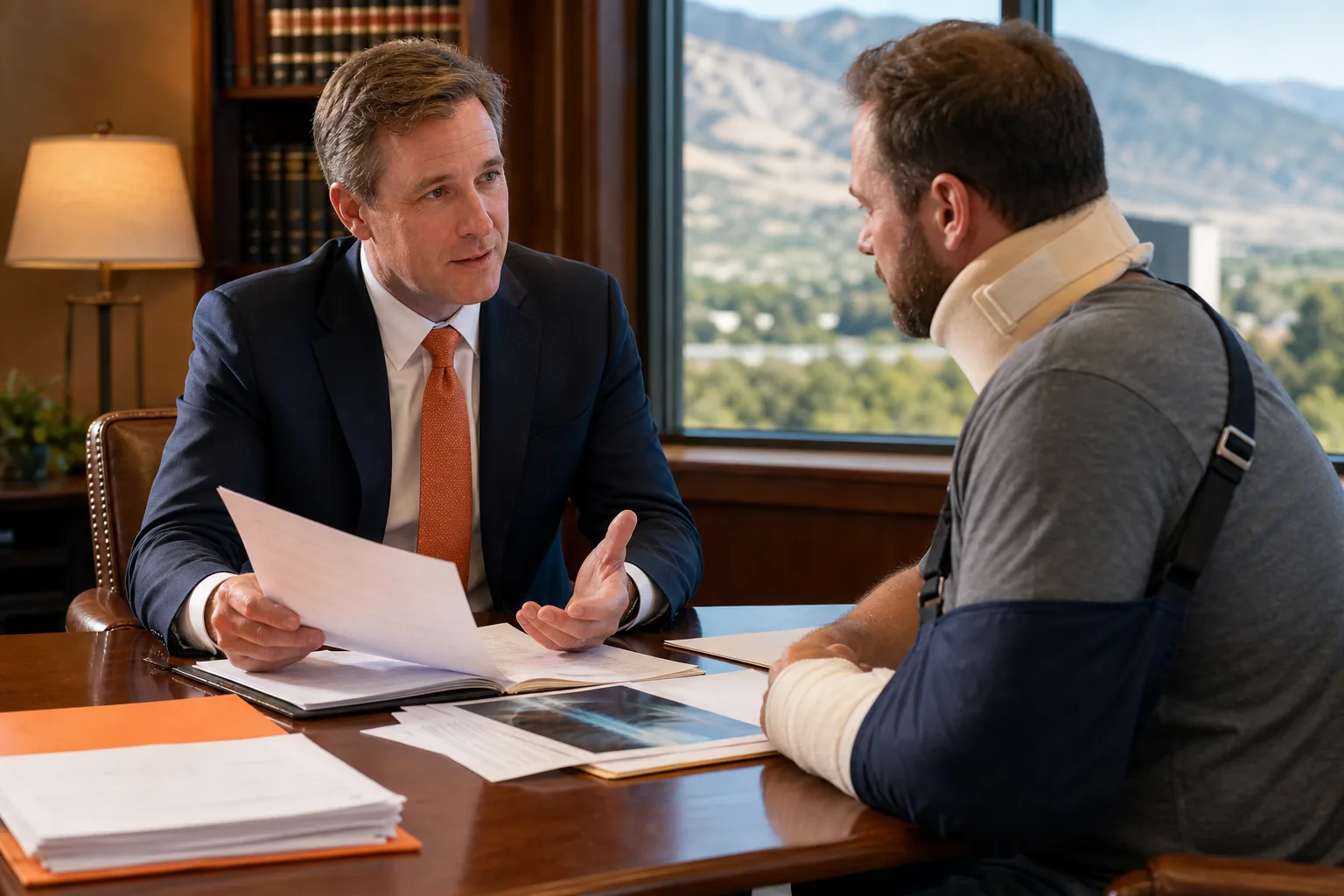
We cannot promise a result. We can explain the strengths, risks, and likely delays in your claim. That gives you a better basis for deciding whether an offer is fair.
FAQ
What is the average car accident settlement amount in Utah?
There is no single reliable Utah average for every crash. Research reviewed for this article reports a median of $15,443, while another figure gives an overall average of $306,487. The median may better reflect ordinary claims because a few catastrophic cases can pull an average upward.
How much is a whiplash settlement worth?
A whiplash claim may fall between $10,000 and $30,000 in published settlement comparisons. The car accident settlement amount depends on treatment length, medical proof, fault, lost income, insurance limits, and whether symptoms continue. A diagnosis without records of daily limits may not support the higher end.
Can I get compensation if I was partly at fault?
You may recover if your fault stays below Utah’s stated 50 percent bar, but your award may be reduced by your fault share. For example, a 20 percent fault finding can reduce $100,000 in damages to $80,000. The evidence may include crash reports, photos, witnesses, and vehicle damage.
Should I accept the insurance company’s first offer?
Do not accept a first offer before you understand your medical outlook and total losses. Early offers may arrive before future treatment or wage loss is clear. Review the offer against your records, coverage, fault risk, liens, and expected recovery. A Utah injury lawyer can help you assess those issues.
When should I contact a car accident lawyer?
Contact a lawyer early when you have serious injuries, disputed fault, missed work, limited insurance, or pressure from an adjuster. LeBaron & Jensen, P.C. can review the claim and explain possible next steps. Early review may also help protect evidence before records or witness details become harder to find.
Conclusion
Do not judge your claim by a headline average. Gather your records, finish needed medical care, and ask how fault, coverage, future losses, and liens affect the net result. If the claim feels too complex or the insurer is pushing for a quick release, contact LeBaron & Jensen, P.C. for a case review and a clearer path forward.