


Table of Contents
Utah eviction cases move fast. After service, you may have only three calendar days to start protecting your right to stay.
To contest an unlawful detainer, read every paper, track each deadline, file your Answer, and attend every hearing. We explain each step below, but don’t wait to begin.
Step 1: Read the Eviction Papers and Confirm Your Deadlines
The first step in learning how to contest an unlawful detainer in Utah is finding the date you were served. The clock may start that day.
Gather every paper you received. Look for the eviction notice, summons, complaint, hearing notice, case number, court name, and service date. Take clear photos of each page. Keep the originals in a safe place.
Utah eviction cases can involve more than one short deadline. The earliest response window may be only a few calendar days. The formal court response may be due about three to five days after service, depending on the papers and court instructions.
Don’t rely on a general online countdown. Count from the actual date and time of service. Then check the summons for the exact date and method for filing your response.
The hearing notice creates another issue. Utah law requires notice of the hearing to be served at least three calendar days before the hearing in the situations covered by the statute. Read the service details closely. A notice left in the wrong place may raise a separate question about proper service.
Review the applicable notice and procedure rules in the linked legal materials. The rules are only part of the answer, so compare them with your summons and local court instructions.
Write each deadline on paper and in your calendar. Mark the earliest date in red. If the deadline has already passed, still seek legal advice right away. A missed date does not always answer every legal question, but it increases the risk of a default judgment.
By now you should have:
- A complete copy of every eviction paper.
- The service date and the stated response deadline.
- The court name, case number, hearing date, and filing method.
- A short list of questions for a lawyer or court self-help office.

Step 2: Identify Possible Defenses and Gather Supporting Evidence
To contest an unlawful detainer in Utah, you need facts that answer the landlord’s claims. A defense is a legal reason the eviction should be denied, delayed, or limited.
Start with the complaint. Read each numbered paragraph. Next to each one, write “admit,” “deny,” or “don’t know.” Don’t guess. If you lack enough information, your Answer may say that you don’t have enough information to respond.
A court form for tenants may list several possible defenses. The facts in your case must support any defense you raise. Common examples include:
- The eviction notice was defective.
- The landlord did not serve the notice correctly.
- The complaint gives different eviction grounds than the notice.
- You corrected the problem within the allowed time.
- You offered the full amount demanded, but the landlord refused it.
- The landlord did not provide a required itemized calculation.
- You substantially complied with the lease.
- The landlord is not legally authorized to bring the case.
- You surrendered the property, and the landlord accepted it.
A court form for tenants may also include questions about habitability claims, which involve serious repair or health problems. If you rely on poor conditions, gather your written notice to the landlord, photos, inspection records, repair requests, and messages.
Read the court form for tenants before drafting. It may help you organize admissions, denials, defenses, and counterclaims. It does not mean every listed defense applies to your case.
Build a simple evidence file. Put documents in date order. Use names such as “Lease,” “Payment record,” and “Repair request.” Keep screenshots with the full message thread when possible. A cropped message may leave out facts that change its meaning.
Make a one-page timeline. Include the lease date, rent payments, complaints, notices, alleged violation, repair requests, and service date. A timeline helps us see gaps between the landlord’s story and your records.
Be careful with defenses based on payment. Paying rent after a notice may not fix every case. The effect can depend on the notice, the amount, the timing, and what the landlord accepted. Put the facts in your Answer, but don’t assume a payment ends the lawsuit.
Step 3: Complete and File Your Answer With the Utah Court
Filing an Answer is the formal way to tell the court which parts of the complaint you admit, deny, or cannot confirm. It is a central part of contesting an eviction case.
Use the case caption exactly as it appears on the complaint. Copy the plaintiff’s name, your name, the court, the judicial district, the county, the case number, and the judge’s name. A wrong case number can send your filing to the wrong case.
For each complaint paragraph, choose the response that fits. Admit only what is true. Deny statements that are false. State that you lack enough information when you cannot fairly admit or deny the claim.
Then complete the defenses section. Write facts, not conclusions. “The notice is invalid” is less useful than “The notice demanded payment for an amount that did not match the attached rent ledger,” if that is what your records show.
If you have a counterclaim, treat it as a separate claim against the landlord. State the facts that support it. Attach documents when the form asks for them. Keep a copy of everything you file.
Check the summons for the filing deadline. Sources describe the response window as roughly three to five days after service, but the papers in your case control. If the court provides an electronic filing process, follow its steps. If it requires paper filing, confirm the clerk’s filing location and hours.
Ask the clerk how to file if the instructions are unclear. Court staff can explain process questions, but they usually cannot tell you which defense to choose or predict the result.
After filing, find out how the Answer must be served on the plaintiff or the plaintiff’s lawyer. Save proof of filing and proof of service. Put the hearing date next to the filing date so you don’t treat filing as the end of the case.
We understand that these forms can feel hard to read under pressure. At LeBaron & Jensen, P.C., we can review the timeline and help you understand your civil case options. The firm offers a free initial consultation, which may help you avoid losing time at the start.
Filing milestone: You should have a file-stamped Answer, proof that it was served, and a clear note of the next hearing.
Step 4: Prepare for the Eviction Hearing or Trial
The hearing is where you present the facts behind your Answer. Learning how to contest an unlawful detainer in Utah includes preparing to speak clearly in court.
Read the complaint and your Answer again before the hearing. Make a short outline with three parts:
- What the landlord claims.
- What you dispute.
- Which document or witness supports your position.
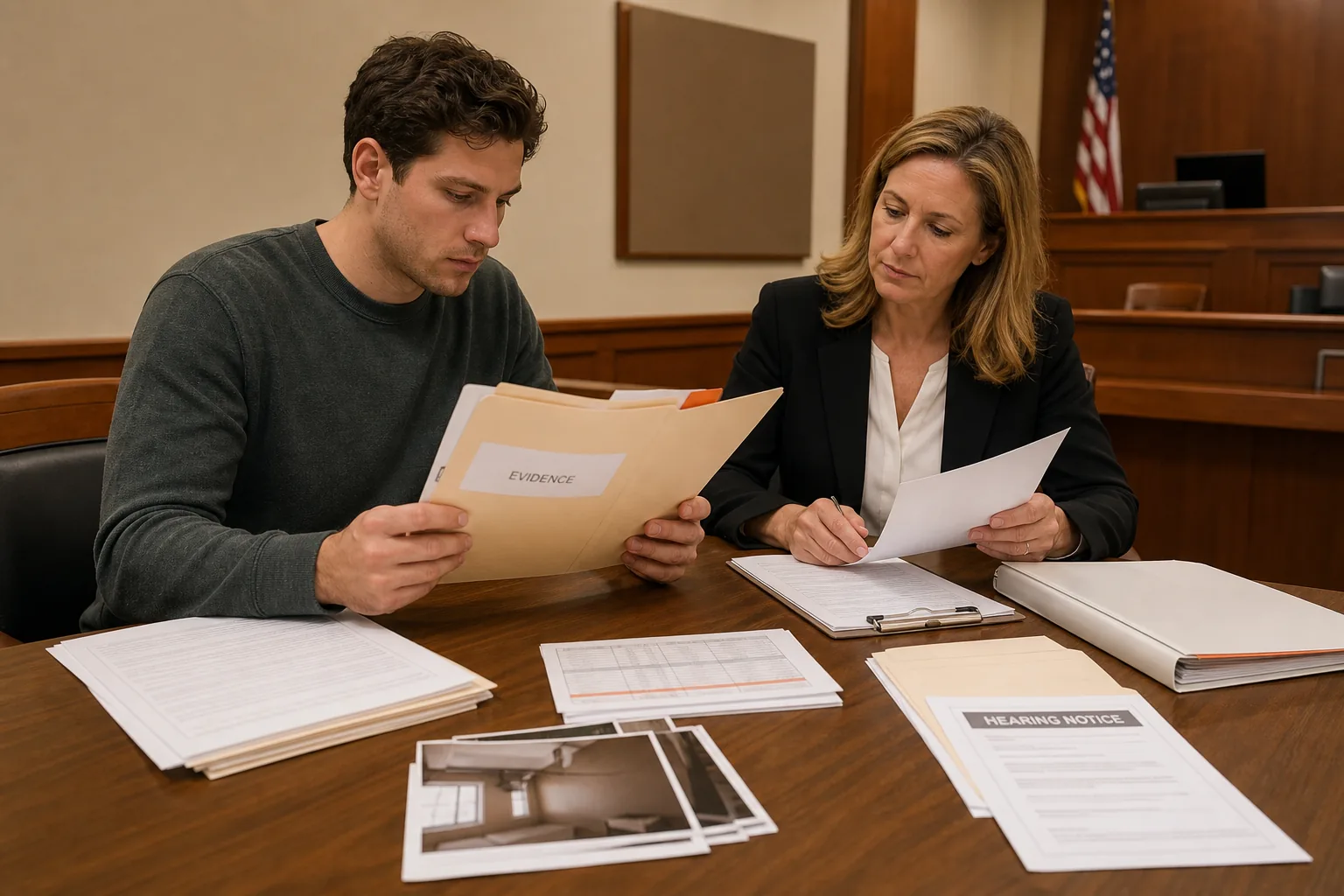
Bring organized copies of your evidence. Put the papers in the same order as your timeline. Mark key pages with tabs or notes. Bring enough copies for the judge and the other side if the court requires them.
Possible evidence may include your lease, payment proof, bank records, notices, photos, repair requests, inspection records, and messages. A witness should know what they personally saw or heard. A witness who only repeats what someone else said may not help much.
Practice a short opening explanation. State the main problem first. For example, you might explain that the notice claimed unpaid rent, but your records show a payment before the notice expired. Use only facts you can support.
Don’t interrupt the landlord. Write down points you need to answer. Wait until the judge gives you a chance to speak. Address the judge as “Your Honor,” and answer each question directly.
Bring proof of any payment or agreement. If the landlord promised more time, bring the message or written agreement. A spoken deal can become a dispute about what each person understood.
Arrive early enough to pass security and find the courtroom. If the hearing is remote, test the link and your device ahead of time. Keep your camera and microphone instructions nearby.
Missing court can be worse than presenting a weak defense. Failure to appear at a scheduled hearing can lead to a default judgment. If an emergency prevents attendance, contact the court as soon as possible and ask about the proper procedure.
Step 5: Respond to the Judgment and Seek Legal Help When Needed
After the hearing, read the court’s decision closely. A judgment may address possession, rent, fees, damages, or another claim.
Ask the clerk how to obtain a copy if you did not receive one. Note the date the judgment was entered. Later deadlines may run from entry of judgment, not from the day you first learned about the case.
If the landlord wins possession, the court may issue an order that allows the eviction to proceed. Do not assume a pending request or conversation stops enforcement. Ask the court about the exact status of the case.
If you believe the court entered a default because you missed a deadline or hearing, get legal advice quickly. A request to set aside a judgment has strict rules. You may need to explain why you missed the deadline and show a defense with supporting facts.
Keep paying attention to notices after judgment. Store every document in the same case file. If you reach a settlement, put the terms in writing and make sure the court record reflects the agreement when needed.
We recommend legal help when the case involves a large rent claim, a counterclaim, a disputed service date, a serious repair issue, or a risk of immediate removal. It can also help when several adults share the lease or when the landlord’s complaint contains claims you don’t understand.
Financial pressure can complicate an eviction case. If rent debt sits alongside other serious debt, speak with a bankruptcy lawyer Utah residents can consult about that separate issue. Bankruptcy may involve different rules, and it should not be treated as an automatic answer to an eviction judgment.
LeBaron & Jensen, P.C. can help you sort the facts and identify the next legal step. We won’t promise a result. We will focus on the deadline, the court papers, and the facts that support your position.
FAQ
How long do I have to contest an unlawful detainer in Utah?
You may have only three calendar days to begin responding after service, while the formal Answer may be due about three to five days later. The exact deadline depends on your papers and the court’s instructions. Check the summons at once, then seek legal help if the deadline is close or has passed.
What defenses can a tenant raise in a Utah eviction case?
A tenant may raise defenses tied to defective notice, improper service, payment, compliance with the notice, lease compliance, surrender of the property, or the landlord’s authority to sue. The applicable Answer form may list possible defenses, but you should select only those supported by your facts and records.
What happens if I miss my Utah eviction hearing?
Missing a hearing can lead to a default judgment against you. Contact the court promptly if an emergency caused the absence, and ask a Utah lawyer whether a request to set aside the judgment may apply. Do not assume that calling the landlord or missing one hearing ends the court process.
Can I file an Answer without a lawyer in Utah?
Yes, you may be able to represent yourself, but the short deadlines make mistakes costly. You must respond to the complaint, raise supported defenses, meet filing rules, serve the other side when required, and attend every hearing. LeBaron & Jensen, P.C. offers a free initial consultation for people who need help assessing their options.
What evidence should I bring to an unlawful detainer hearing?
Bring the lease, payment records, eviction notices, messages, repair requests, photos, inspection records, and proof of service. Arrange them by date and connect each item to a statement in your Answer. Witnesses should speak about facts they personally know. Keep copies ready for the court and the other side.
Act on the earliest deadline, not the deadline you hope applies. Save every paper, file a careful Answer, and get legal guidance quickly if the case involves disputed facts or a possible default. Contact LeBaron & Jensen, P.C. to discuss your next step before the court’s short window closes.