
Table of Contents
A personal injury lien is a legal claim against money recovered after an accident. It can let a medical provider, insurer, government agency, or attorney get paid from your settlement before you receive your share.
The party asserting the lien matters. So does timing. Attorney-lien enforcement has different timing rules from the deadline for filing an injury claim. We explain how these claims work and how LeBaron & Jensen, P.C. can help protect your fair settlement.
What Is a Personal Injury Lien in Utah?
A personal injury lien in Utah is a claim tied to the proceeds of an injury case. It gives another party a right to seek payment from the settlement or judgment connected to your accident.
Think of the settlement as a pool of money. Before that money reaches you, certain valid claims may need review and payment. The lien usually targets the recovery from the case, rather than giving the lienholder a general right to take unrelated property.
Medical liens often arise when a provider agrees to wait for payment until the injury claim ends. A health insurer may also seek repayment if it paid accident-related bills under a policy with reimbursement language. That process is often called subrogation.
A lien is different from an ordinary bill. You may still owe a bill under your treatment agreement, even if no lien was filed. A lien gives the claimant a way to pursue payment from the case proceeds. That distinction matters when the settlement is too small to cover every loss.
Utah injury claims also involve fault rules and filing deadlines. Under modified comparative fault principles, a person may recover only when their fault is less than the combined fault of the defendants and other persons counted under Utah law, so reaching 50 percent fault bars recovery. Utah Code § 78B-5-818 sets the rule; the facts and legal requirements of each claim still matter. A claim may also have a one-to-four-year filing period, depending on the claim type.
An attorney generally must wait until 30 days have passed after an unpaid demand before intervening or filing a separate action to enforce a lien under U.C. § 38-2-7.
These rules are easy to mix up. The deadline for filing your injury case is not automatically the deadline for every lien connected to it. Both timelines should be reviewed before settlement funds are released.
How Personal Injury Liens Work During a Utah Claim
Personal injury liens in Utah usually enter the case while medical care or settlement talks are still underway. The sooner we identify them, the fewer surprises appear at closing.
First, we ask who paid for treatment. Your own auto policy may cover early medical expenses through applicable first-party coverage. Coverage depends on the policy and claim details.
After that coverage ends, another source may pay. A private health insurer might send a notice of lien. Medicaid recovery may involve the Office of Recovery Services, or ORS. A provider might have a signed agreement that delays payment until the case resolves.
Next, the lienholder reviews the injury claim. Insurers may identify accident-related treatment through claim records and billing information. The lienholder can then ask the injured person or attorney to protect its right to repayment.
Protection usually means holding enough settlement money until the claim is confirmed. We do not treat every letter as proof that the amount is correct. We ask for records that show the service, date, amount, and connection to the accident.
That review can uncover bills for unrelated treatment. It may also reveal duplicate charges or a balance based on a billed rate rather than the amount actually paid. A settlement should not close until the lien list is clear enough to support the proposed payments.
Negotiation comes next. A lienholder may agree to reduce its claim when the settlement does not cover all losses. The amount of work involved, the strength of the reimbursement right, and the size of the recovery can all affect the discussion.
Ignoring a valid lien creates risk. The lienholder may seek repayment later. That can lead to added legal costs and a dispute after you thought the case was finished.
We take the stress off your plate by tracking notices, requesting final figures, and addressing disputed charges before distribution. The goal is simple: resolve the obligation while preserving as much of your recovery as the law allows.
Common Types of Personal Injury Liens in Utah
The answer to “what is a personal injury lien in Utah?” depends partly on who seeks payment. Each lien type has a different source, process, and level of public guidance.
| Lien type | Who may assert it | Known Utah reference or timing | Main review question |
|---|---|---|---|
| Attorney lien | The attorney | U.C. § 38-2-7; 30-day wait after an unpaid demand before an enforcement action | Were the applicable notice and enforcement steps followed, and is the amount supported? |
| Medicaid lien | Office of Recovery Services | Which accident-related payments must be repaid? | |
| Private health insurer lien | The private health insurer | Usually based on policy reimbursement terms | Does the policy give the insurer a valid recovery right? |
| Judgment lien on real property | — | Utah Code Section 78B-5-201 and -202 | Does a separate judgment affect property or settlement funds? |
| Medical provider agreement | A doctor, hospital, or other provider | Often based on a signed payment agreement | What did you agree to pay, and what services were covered? |
Attorney liens. An attorney lien can arise from unpaid fees or costs tied to legal work. Utah law requires a 30-day wait after an unpaid demand before an attorney may intervene or file a separate action to enforce the lien. This is a waiting period, not a 30-day deadline to record the lien. Other notice and enforcement requirements should be reviewed separately.
Medicaid liens. Medicaid-related recovery may involve the Office of Recovery Services. The public material reviewed here does not state a standard percentage, final amount, or single deadline that fits every case. We request the agency’s current claim information instead of guessing at the balance.
Private health insurance liens. A private insurer may seek reimbursement for medical care it paid after an accident. The policy language matters. So does whether the listed treatment came from the injury. A notice may need review before any money is set aside.

Judgment liens. A judgment lien tied to real property is a separate issue from a medical lien. A judgment lien may affect real property under applicable Utah law. The Utah law provides a starting point for understanding that process.
Provider payment agreements. Some providers agree to delay collection while a claim is pending. Read the agreement before signing it. It may explain the amount due, the payment trigger, and what happens if the case produces no recovery.
The table gives a screening view, not a final legal answer. Lien priority and enforceability can depend on documents that are not visible from a settlement demand alone.
How Liens Affect Your Utah Injury Settlement
A lien reduces the money available for you after the gross settlement is reached. That is why a fair settlement must be measured by its net value, not just the headline number.
Imagine a settlement offer arrives before your care is complete. The gross amount may look helpful. But attorney fees, case costs, medical balances, insurer claims, and other obligations can reduce what reaches your bank account.
A basic distribution review asks:
- What is the gross settlement?
- What fee applies under the representation agreement?
- What case costs remain unpaid?
- Which medical bills relate to the accident?
- Which liens are valid, disputed, or still unconfirmed?
- What amount will you actually receive?
Utah fault rules can reduce the gross recovery before lien payments are considered. If an insurer argues that you caused part of the crash, that issue may affect the claim value. A lawyer may need evidence from the crash scene, medical records, witnesses, and insurance files.
Settlement timing matters too. A quick offer may arrive before doctors know whether you need more care. Accepting it can leave you with future bills and a lien problem that the check cannot cover.
The proposed distribution should be compared with the medical records and lien statements. If the settlement cannot pay every claim in full, we ask whether a reduction is possible. The result should be a written plan, not a last-minute guess.
For people dealing with a crash claim, our personal injury lawyer Utah page explains how we approach injury cases and settlement concerns.
Resolving a Personal Injury Lien With Utah Legal Help
Resolving a personal injury lien takes more than forwarding a settlement check. We start by building a full list of possible claims.
That list may include medical providers, private insurers, Medicaid recovery, Medicare-related issues, other benefit claims, attorney fees, and court judgments. We match each claim to the treatment or service at issue.
Gather the documents early
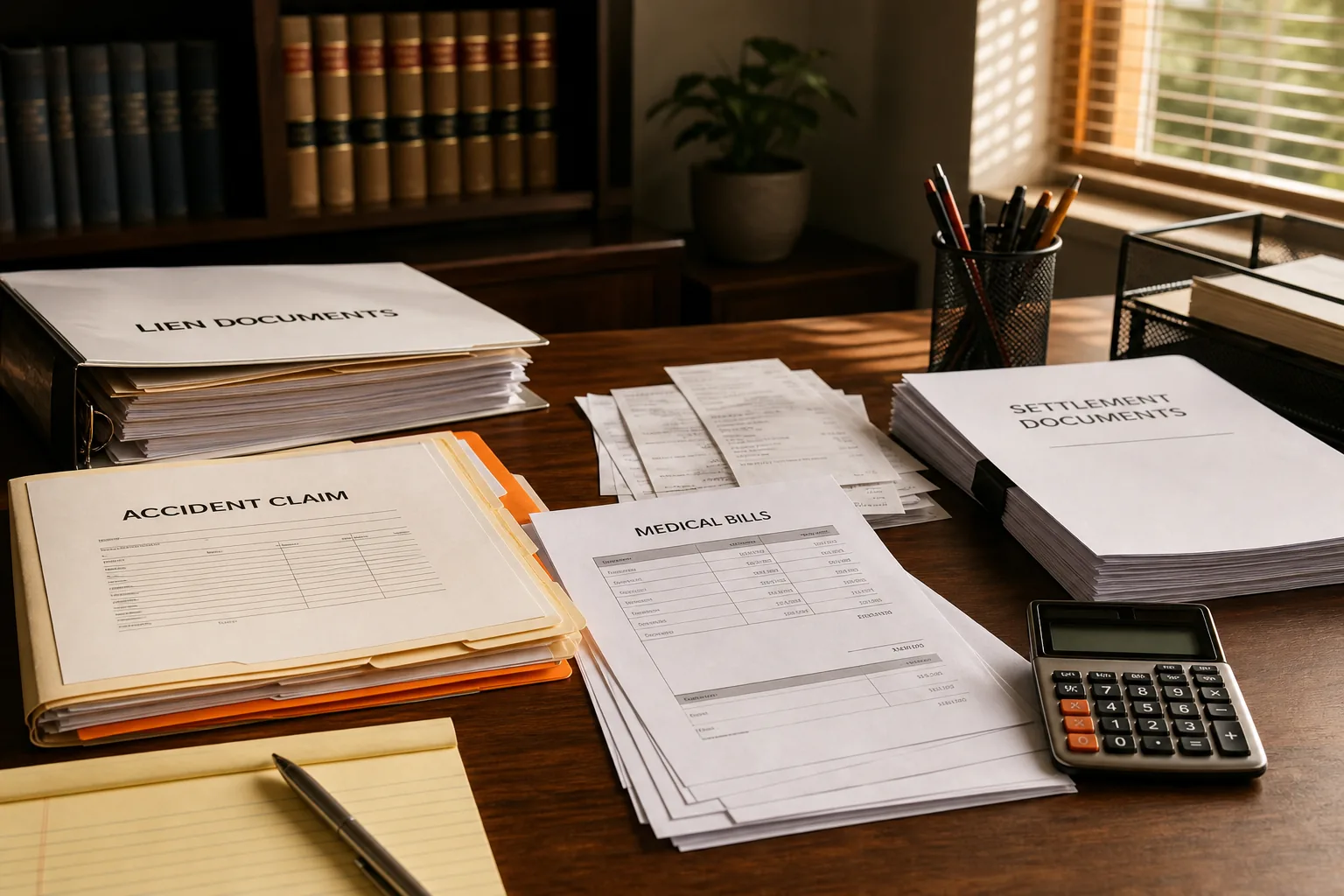
Keep every lien notice, medical bill, insurance explanation of benefits, payment agreement, and settlement letter. Send copies to us before responding. A small detail in a policy or agreement can change the analysis.
We also request final balances. An opening estimate may not be the same as the amount required for release. We want written confirmation of the payment terms and any remaining obligation.
Check the legal basis
Not every demand has the same force. An attorney lien may depend on statutory steps. A private insurer’s claim may depend on policy language. A provider’s claim may depend on a signed agreement or another legal basis.
We ask whether the claim is timely, whether it relates to the accident, and whether the amount is accurate. We also check whether the lienholder should share part of the cost of obtaining the recovery.
Negotiate when the numbers do not work
A settlement can leave too little for the injured person after full lien payments. In that setting, we present the facts that support a reduction. Those facts may include disputed treatment, limited coverage, shared fault, or damages that the settlement does not fully cover.
We cannot promise that every lien will be reduced. Some claims have strong legal or contract rights. But early review gives us more room to protect your net recovery.
LeBaron & Jensen, P.C. handles the lien discussion as part of the larger injury claim. We take the stress off your plate so you can focus on treatment and your family.
Do not sign before the plan is clear
A release may end your claim against the at-fault party. It may not erase every separate payment duty. Before signing, ask what the release covers and how known liens will be resolved.
When a lien issue is unclear, pause and get legal advice. A short delay is often safer than closing a case with an unpaid claim attached to it.
Frequently Asked Questions About Utah Personal Injury Liens
What is a personal injury lien in Utah?
A personal injury lien in Utah is a claim for payment from settlement or judgment proceeds. A medical provider, insurer, government recovery agency, or attorney may assert one. The lien does not automatically prove the full amount is owed. The documents, timing, treatment records, and legal basis must be reviewed before distribution.
Can health insurance take money from my Utah settlement?
Yes, a health insurer may seek repayment from a Utah injury settlement when the policy gives it that right. This is often called subrogation. The insurer usually seeks payment for accident-related care it covered. The policy and medical records should be reviewed, and unrelated or unsupported charges challenged.
How long does an attorney have to file a lien in Utah?
Utah Code § 38-2-7 requires an attorney to wait until 30 days have passed after an unpaid demand before intervening or filing a separate action to enforce a lien. It does not set a 30-day recording deadline. Ask your lawyer which notice and enforcement requirements apply; the injury lawsuit deadline is a separate question.
Does Medicaid have a lien on a Utah personal injury settlement?
Medicaid recovery may seek repayment from a Utah personal injury settlement when it paid for accident-related care. The Office of Recovery Services may handle the claim. The amount and process depend on the records and applicable rules. Ask for a current written balance before settlement funds are distributed.
Can a personal injury lawyer reduce a lien?
A personal injury lawyer may be able to reduce a lien, but no reduction is guaranteed. The result depends on the lien’s legal basis, the policy or agreement, the treatment records, and the size of the settlement. The claim should be compared with the recovery, with negotiation when the facts support a lower payment.
Conclusion
A Utah personal injury lien can change what you take home, even after you win a settlement. Do not sign a release or distribute funds until every known claim has been identified and checked. LeBaron & Jensen, P.C. can review the lien documents, address disputed balances, and help you pursue a fair settlement. Gather your notices and medical bills, then contact our team to get started.