
Table of Contents
A deposition can feel like a courtroom test, but it usually happens before trial. You will answer questions under oath while the attorneys build the case record. Our review of Utah deposition materials found 13 common questions across six topics. Most focus on your background, the crash, and your medical history. The steps below will help you prepare without guessing or rehearsing a script.
Step 1: Understand What a Utah Car Accident Deposition Is
Car accident deposition questions in Utah are part of the discovery process. Discovery lets each side gather facts before trial. A deposition is a recorded question-and-answer session under oath. A court reporter usually makes a written transcript.
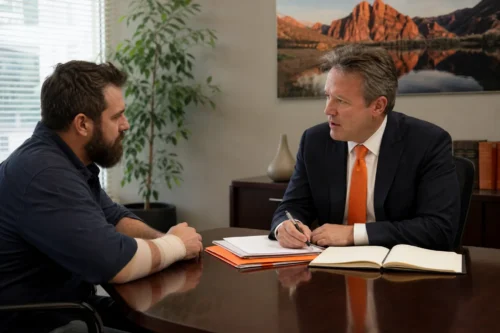
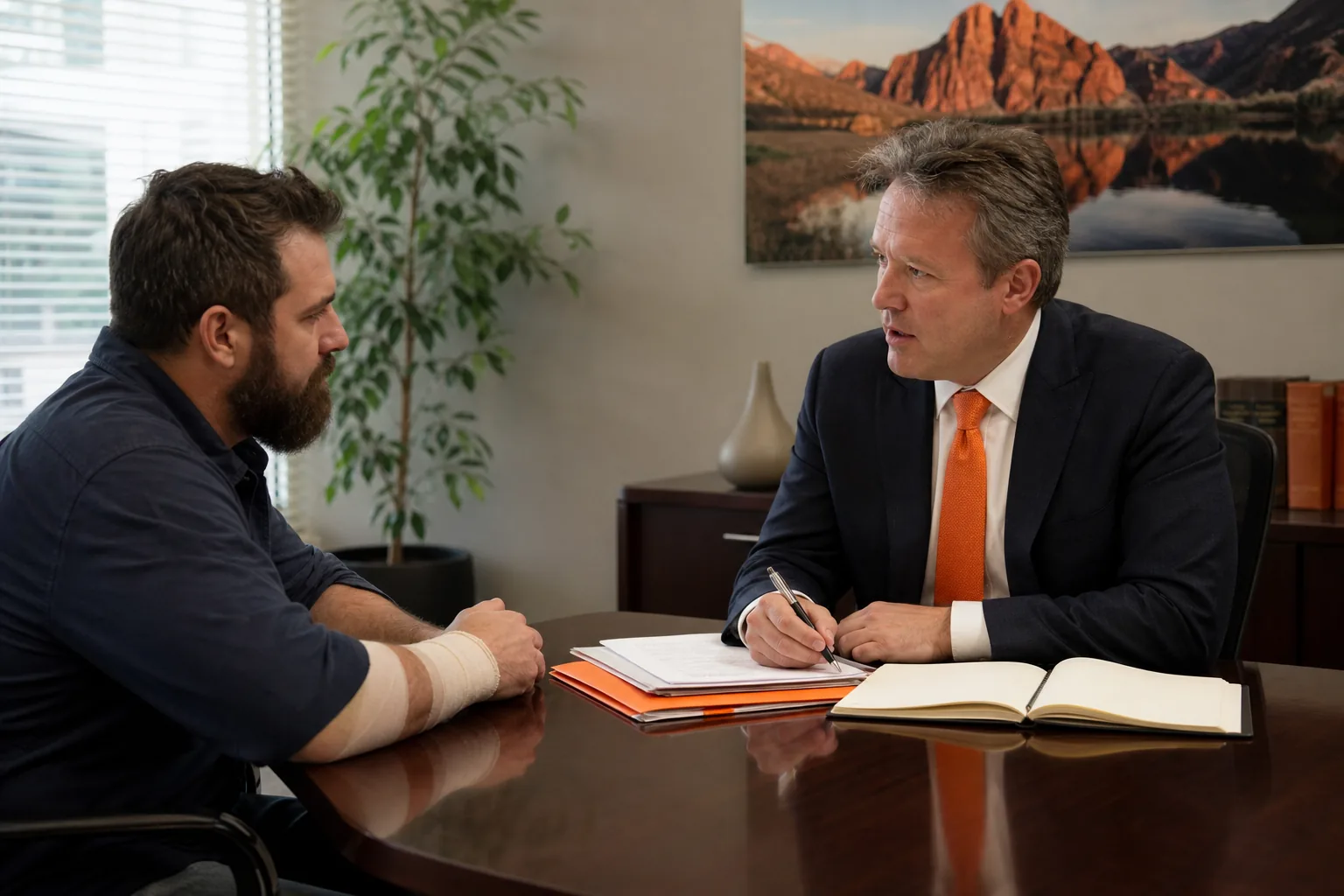
You may attend with your lawyer. The other side’s attorney will ask most questions. Your lawyer can object when needed, but you will usually still answer unless your lawyer tells you not to answer. The process is formal, though it may take place in an office or conference room.
Think of your testimony as evidence. The other side may compare it with the police report, medical records, photographs, vehicle damage, and earlier statements. A small mistake does not always destroy a claim. But a careless answer can create a problem later.
A deposition also tests how well you remember key facts. The attorney may ask about the crash more than once. The wording may change. That does not mean you should change your answer. Take time to understand each question before you respond.
A deposition is sworn testimony taken outside court, which explains why your answers need the same care as testimony at trial. You are not expected to know every detail. You are expected to tell the truth based on what you remember.
At LeBaron & Jensen, P.C., we help clients understand what a deposition is meant to accomplish. We also prepare them for the facts the other side may test. That preparation can take the fear out of the unknown and help you stay focused.
Step 2: Review the Common Car Accident Deposition Questions Utah Attorneys Ask
Most car accident deposition questions in Utah fit a few repeat groups. Knowing those groups helps you prepare facts without trying to memorize perfect answers.
Our review found that personal background and accident details each made up four of 13 collected questions. Medical history made up two. Questions about legal services, witnesses, and vehicle damage appeared once each. The numbers do not predict your exact deposition, but they show where much of the discussion may go.
Personal background questions
These questions may seem private or unrelated to the crash. They can include your full name, any maiden name, marital history, children, and place of birth. No single background question dominated.
The attorney may also ask about your work history, education, prior addresses, or daily activities. Answer the question asked. Do not volunteer a long life story unless your lawyer tells you that more detail is needed.
Accident detail questions
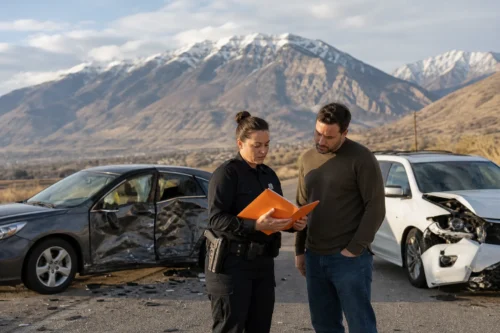
Expect questions about where you were going, where you were sitting, traffic conditions, speed, lane position, and what happened just before impact. The attorney may ask what you saw, heard, or felt. They may ask when you first noticed the other vehicle.
Questions can also cover the moments after impact. You may be asked who spoke at the scene, whether police arrived, and what you told anyone nearby. If you do not remember a detail, say so. “I don’t know” and “I don’t remember” are valid answers when they are true.
Medical history questions
Medical questions often reach beyond the first emergency visit. The attorney may ask about prior injuries, symptoms before the crash, treatment after it, missed appointments, and how your condition affects work or home life.
Do not hide an old injury. Explain what you remember and let your lawyer address how it differs from the new injury. The issue may be whether the collision caused a new condition or made an earlier condition worse.
A detailed sample outline from an auto accident deposition question guide shows how attorneys may move through the driver, crash, injury, and claim history. Use sample questions to spot topics. Do not treat any online outline as a script for your own testimony.
LeBaron & Jensen, P.C. provides legal representation and assistance for personal injury, car accident, and related cases in Utah. We explain why a question may matter, since many public question lists give the question but not its purpose. That gap is one reason personal preparation matters.
Step 3: Prepare Your Timeline, Records, and Key Facts
Strong preparation starts with a clear timeline. Do not wait until the day before. Work with your lawyer to place each important event in order, from the hours before the crash through your current treatment.
Build the timeline
Start with the date, time, and location. Write down where you were going and what you recall about the road. Add weather, traffic, signals, lane position, and the first moment you saw the other vehicle.
Next, record what happened after impact. Note who came to the scene. Include any statement you gave to police, an insurer, a medical provider, or another person. Then list your first symptoms and the first place where you sought care.
Keep the timeline factual. Do not fill gaps with an estimate just because the page looks incomplete. Mark uncertain details for discussion with your attorney.
Gather the records
Your lawyer may review documents before the deposition. Gather what you have, then provide it through the proper process. Useful records may include:
- Police or traffic reports
- Photographs of the scene, vehicles, and visible injuries
- Medical bills and treatment records
- Insurance letters and claim messages
- Work records tied to missed time
- Names and contact details for possible witnesses
Photographs can help anchor your memory. A picture of vehicle damage may show the impact point. A scene photo may help you recall lane placement or road conditions. LeBaron & Jensen, P.C. discusses how photos, witness statements, and written records can support a personal injury case.
Review records for consistency, not for a way to change your story. Medical notes may use terms you did not say yourself. They may also list symptoms in a different order. Tell your lawyer when a record seems wrong or incomplete.
Prepare the facts that may cause stress
Think about facts that feel uncomfortable. These may include a prior claim, a gap in treatment, a missed work shift, a traffic ticket, or a statement that differs from your current memory.
Do not hide these facts from your lawyer. Your attorney can prepare you to explain them in a calm and accurate way. The other side may find them during discovery. Learning about them during the deposition is far worse than discussing them beforehand.
Bring questions to your preparation meeting. Ask what topics may arise. Ask how objections work. Ask what to do if you need a break. You should also know whether your attorney expects you to review certain records before the session.

Step 4: Answer Deposition Questions Clearly and Protect Your Testimony
The best answer to a deposition question is truthful, direct, and limited to what you know. You do not need to win an argument with the other attorney. You need to give accurate testimony.
Listen before you answer
Let the attorney finish the question. Pause for a moment. Make sure you understand what the question asks. If the wording is unclear, ask the attorney to repeat or explain it.
Do not answer a question you did not understand. A wrong answer can look firm once it appears in a transcript. A short request for clarification gives you a better chance to answer the right question.
Use precise answers
Say “yes” or “no” when that fully answers the question. Add a brief explanation when needed. Avoid broad claims such as “always,” “never,” or “nothing else happened” unless you are certain.
Do not guess at speed, distance, timing, or medical cause. You can say, “I don’t know,” “I don’t remember,” or “I would need to see that document.” Those phrases are better than a made-up estimate.
Be careful with questions that combine several facts. For example, an attorney may ask whether you saw the vehicle, heard the horn, and felt the impact. Ask the attorney to separate the questions if needed. Then answer each part as best you can.
Handle pressure without arguing
Some questions may sound unfair. Others may repeat a point after you have answered. Stay calm. Do not trade insults or try to guess what the attorney wants to hear.
Your lawyer may object to a question. Stop and wait for guidance. In many cases, the objection preserves an issue while the questioning continues. Your attorney will tell you if you should not answer.
Ask for a break if you need one. You may need water, a short rest, or a private discussion with your lawyer. Never use a break to discuss an answer while the question is still pending unless your attorney directs you to do so.
Correct mistakes carefully
If you realize an answer was wrong, correct it as soon as possible. Explain what you got wrong and give the accurate answer. Do not silently change your position just because the question was asked again.
After the deposition, your lawyer may discuss the transcript review process. Ask what happens next and whether you need to identify errors. The exact process can depend on the case and the court’s rules.
At LeBaron & Jensen, P.C., we prepare clients for the pressure points that can affect a personal injury claim. We take the stress off your plate by helping you separate known facts from memory gaps. That preparation supports your chance to seek a fair settlement based on the full record.
One rule should guide every answer: tell the truth, then stop. Extra detail can create a new question that nobody needed to ask.
FAQ
What questions are asked in a Utah car accident deposition?
Utah car accident deposition questions usually cover your personal background, the crash, your medical history, witnesses, vehicle damage, and the claim itself. You may also face questions about prior injuries or statements. The exact topics depend on the facts. Review your records with your attorney before the deposition so you can answer from memory without guessing.
Do I have to answer every deposition question?
You usually must answer relevant deposition questions, but your lawyer may object or instruct you not to answer in limited situations. Wait after an objection and follow your attorney’s direction. If a question is unclear, ask for clarification. Never refuse because a question feels uncomfortable without first giving your lawyer a chance to advise you.
What if I don’t remember what happened in the crash?
If you do not remember a fact, say that you do not remember. Do not estimate a speed, distance, or time just to give an answer. You may review records during preparation, but you should not study them to invent certainty. Honest limits on memory are safer than details that later conflict with the evidence.
Can a deposition hurt my personal injury case?
A deposition can hurt a personal injury case if testimony is careless, false, or inconsistent with records. Preparation lowers that risk. Tell your lawyer about weak facts before the session. During questioning, listen closely, answer only the question asked, and correct mistakes promptly. Your testimony becomes part of the case record.
Should I hire a lawyer before a car accident deposition?
You should speak with a Utah personal injury lawyer before a deposition if you do not already have representation. A lawyer can explain the process, review the likely questions, and help you prepare for difficult facts. LeBaron & Jensen, P.C. can discuss your situation and the next step without asking you to handle the process alone.
Conclusion
Prepare for a deposition with facts, not a memorized speech. Review your timeline and records with a Utah personal injury attorney, then answer each question truthfully and carefully. If you have received a deposition notice, contact LeBaron & Jensen, P.C. to discuss your case and prepare for what comes next.