
Table of Contents
A crash can leave you hurt, shaken, and unsure what to do next. The proof you gather early may decide whether an insurer accepts fault or shifts blame to you. Use this Utah-focused checklist to preserve the crash record, connect your injuries to the collision, and prepare for a fair settlement or lawsuit.
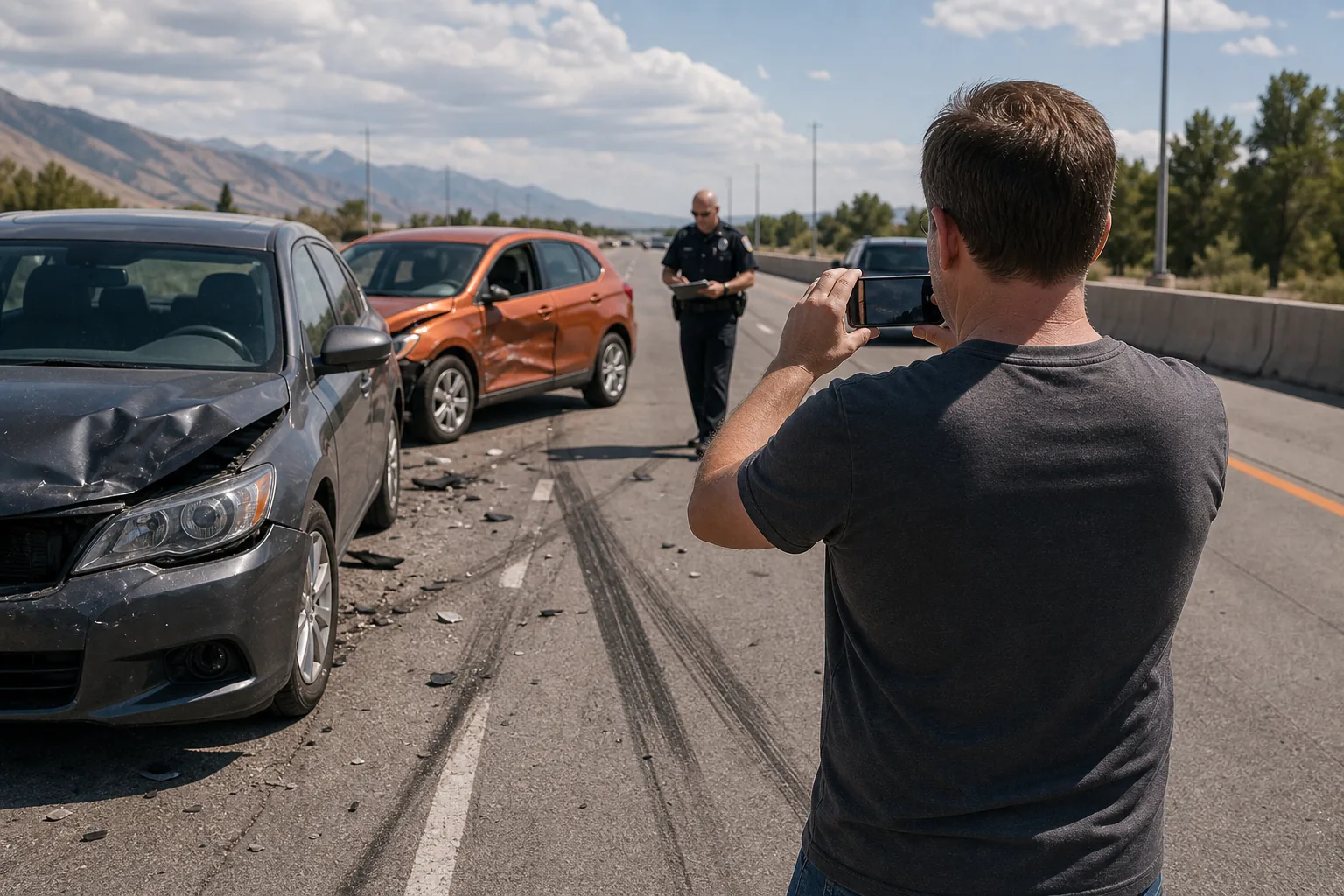
Step 1: Document the Crash and Preserve Immediate Evidence
The first evidence needed for a car accident lawsuit in Utah is a clear record of what happened. Safety comes first, but act quickly once you can.
Call 911 when anyone is hurt or the crash involves major damage. Stop, remain at the scene, exchange required information, and provide reasonable help to injured people.
Ask the responding officer how to obtain the crash report. You can request copies of traffic crash reports or other public records securely online. The report may record the location, statements, road conditions, vehicle damage, and any citation issued.
At the scene, collect the other driver’s name, address, license information, plate number, and insurance details. Don’t argue about fault. A simple statement can later be taken out of context.
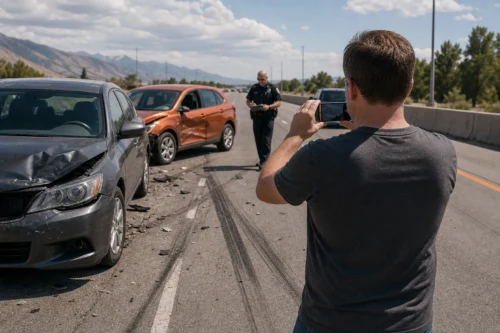
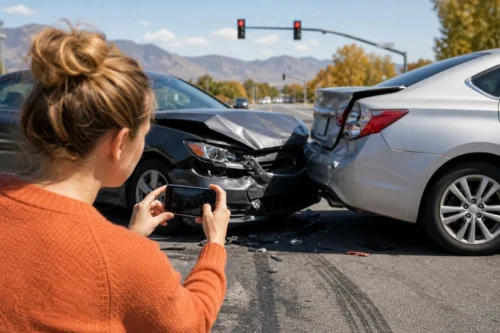
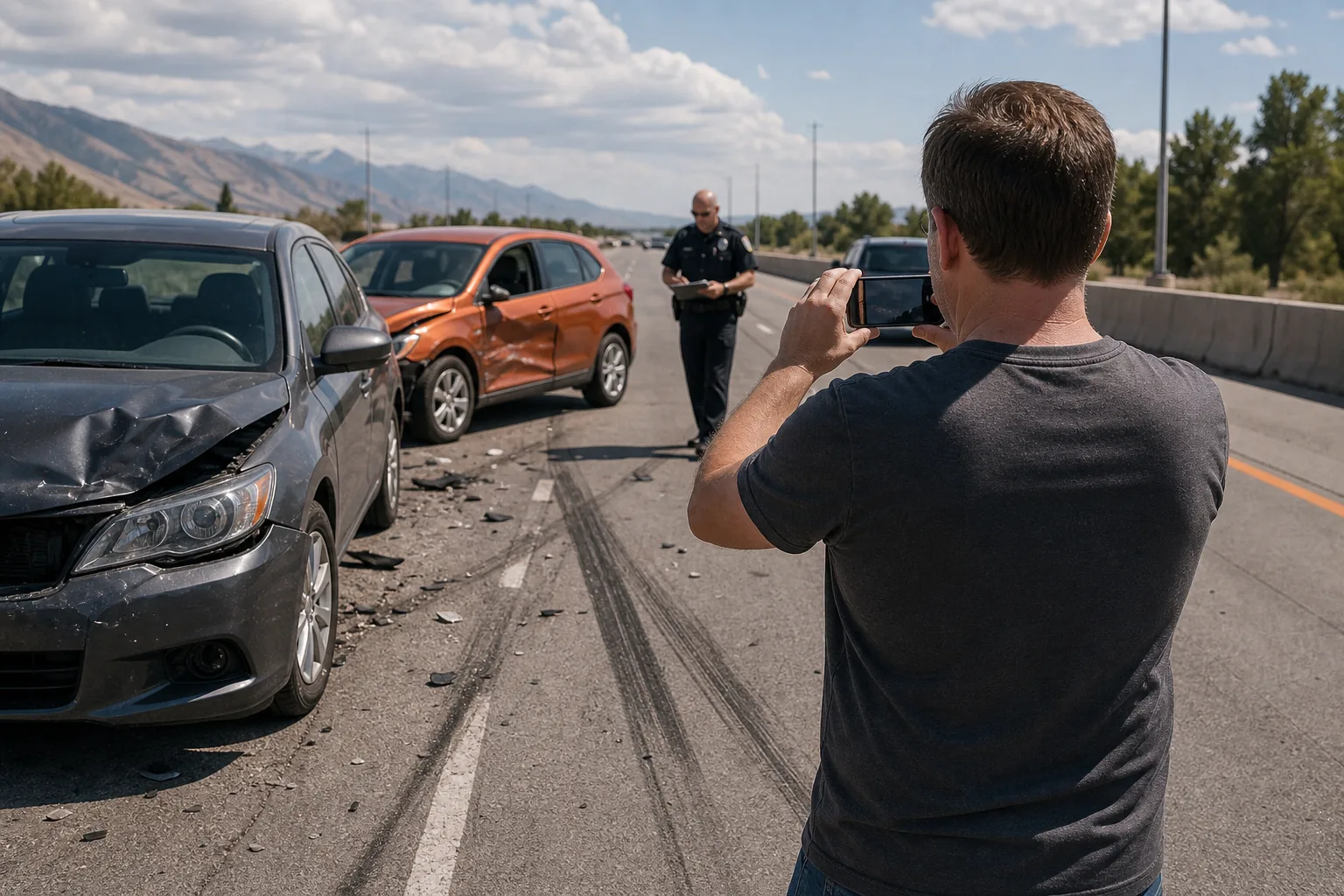
- Photograph every vehicle from several angles.
- Capture skid marks, debris, lane lines, signs, and traffic signals.
- Photograph visible injuries if you can do so safely.
- Write down the time, weather, lighting, and road conditions.
- Save dash-cam files in their original format.
Ask nearby businesses, homes, and repair shops whether cameras recorded the crash. Send a written request to preserve the footage. Some systems erase files on a short cycle, so waiting can cost you the best proof.
Step 2: Prove Fault With Reports, Witnesses, Video, and Accident Evidence
To prove negligence, your evidence must show a duty, a breach, a link to the crash, and damages. Utah’s modified comparative-fault rule makes this step especially important.
Your recovery can be reduced by your share of fault. The exact rule depends on the facts and how fault is assigned, so don’t assume a small mistake is harmless.
A police report helps, but it doesn’t decide every issue. Insurers and juries may compare the report with photographs, witness accounts, vehicle damage, and video. If both drivers claim they had the green light, one report may not settle the dispute.
Get witness names and contact details before they leave. Ask each person to write what they saw in their own words. Don’t coach the witness or ask them to guess speed, distance, or fault.
Video can show the seconds before impact. Look for dash-cam footage, traffic cameras, business security systems, and doorbell cameras. Preserve the full file, not only a clipped version. Keep the device data when possible, since file dates can help establish when the recording was made.
Modern vehicles may contain an event data recorder, or EDR. It can preserve information about speed, braking, and crash forces. An attorney may need to arrange a qualified download before a vehicle is altered or sold.
A repair estimate or vehicle damage report adds another layer. Crush patterns may support one account of impact while weakening another. In a disputed case, an accident reconstructionist can study skid marks, vehicle damage, roadway design, and EDR data.
The online portal for accident reports and records requests is another route for obtaining records. Keep the request confirmation in your file. If no officer came to the scene, other evidence becomes even more important.
Step 3: Connect Your Injuries and Financial Losses to the Collision
Medical and financial records show what the crash did to your body, work, and daily life. This evidence needed for a car accident lawsuit in Utah should form one unbroken paper trail.
Seek medical care as soon as you can. Tell the provider that the visit follows a car crash. Describe every symptom, even if it seems minor. Neck pain, headaches, numbness, sleep trouble, and anxiety may change over time.
Save both medical records and billing records. The records explain your diagnosis, treatment plan, test results, and progress. The bills show the cost of care. Keep copies of emergency records, imaging reports, therapy notes, prescriptions, and specialist visits.
Follow the treatment plan unless another provider changes it. Gaps can give an insurer an argument that the injury was unrelated or less serious. If you miss an appointment, document why and reschedule promptly.
Ask your doctor about maximum medical improvement, or MMI. MMI means your condition has stabilized as much as treatment can reasonably improve it. Settling before that point can leave out future surgery, therapy, medication, or other care.
Keep proof of lost income. Pay stubs, employer records, leave records, and a written log of missed hours can support a wage claim. If your injury changed your duties or reduced your hours, ask your employer to document the change.
Also track costs that arise because of the injury. Save receipts for travel to appointments, paid help at home, medical supplies, and other related expenses. Write down tasks you could no longer do without help.
Utah follows a build-versus-paid approach in some medical-bill disputes. That means the amount billed and the amount paid may affect reimbursement and lien issues differently. Medical and billing records can help inform discussions about a fair settlement.

Step 4: Notify Insurers and Build a Settlement Demand
Insurance notice starts the claim process, but your first conversation can affect the case. Report the collision to your own insurer promptly and follow the policy’s notice rules.
Utah policies include personal injury protection, or PIP. PIP can help pay initial medical expenses and certain losses through your own coverage, even when fault is disputed. Review your policy and ask what documents the insurer needs.
Notify the other driver’s liability insurer when appropriate. Give basic facts about the date, place, vehicles, and injuries. Avoid guessing about fault or promising that you are fully recovered.
Speak with an attorney before giving a recorded statement to the other insurer. Don’t sign a broad medical release or property-damage settlement before you understand what rights it affects. An early release may close the door on later injury claims.
Once treatment reaches a stable point, we organize the demand package. It should explain liability first, then damages. A strong package may include:
- The police or traffic crash report.
- Photographs, video, and vehicle damage records.
- Witness contact details and statements.
- Medical records and itemized bills.
- Pay records and proof of other financial loss.
- A description of pain, daily limits, and expected future care.
Damages may include past medical costs, future medical needs, lost wages, reduced earning ability, pain, emotional distress, and changes to your quality of life. The value depends on proof, not a preset formula.
Our Utah auto accident legal services include gathering and organizing the records needed for a claim. At LeBaron & Jensen, P.C., we take the stress off your plate while you focus on treatment.
Keep a complete copy of everything sent to the insurer. Record dates, names, and promises made during claim calls. A clean file prevents small details from becoming large disputes.
Step 5: Prepare for Litigation, Mediation, or Trial With a Utah Attorney
Some claims settle through negotiation. Others need discovery, mediation, or trial because the insurer disputes fault or damages.
Utah generally gives three years to file many personal injury lawsuits. Exceptions may apply. Claims involving a government body can require a notice of claim within six months, followed by separate filing rules. Don’t rely on a deadline estimate from a website when a filing date may control your rights.
Contact counsel early enough to preserve evidence. LeBaron & Jensen, P.C. can review the crash report, inspect the evidence trail, and help assess whether the other driver was more at fault than you.
After filing, discovery lets each side request information. You may answer written questions, produce records, or give a deposition under oath. The other side may ask about prior injuries, treatment, work limits, and the events leading to the crash.
Experts may help when ordinary records leave key questions open. An accident reconstructionist can explain speed, impact angle, braking, or right of way. A medical expert may address whether the collision caused a lasting condition or future treatment need.
Mediation is a meeting with a neutral person who helps both sides discuss settlement. The mediator doesn’t act as your judge. You decide whether to accept an offer. Many cases resolve there, but preparation still matters because the insurer needs a reason to pay more.
If the case reaches trial, you carry the burden of proof. That means showing that your account is more likely true than not. The judge or jury will weigh the report, witnesses, video, medical records, expert opinions, and your testimony together.
Keep your social media private and avoid posts about the crash, your activities, or your recovery. Don’t delete old posts. Tell your attorney about anything that may appear relevant so it can be handled honestly.
Utah Car Accident Evidence Checklist
Save this list and use your browser’s print function to save it as a PDF for your records.
- Crash report or police report requested
- Other driver’s name and insurance details saved
- Photos of vehicles, roadway, signs, signals, and injuries
- Dash-cam, traffic-camera, or security video preserved
- Witness names and contact information collected
- Medical visits, diagnoses, bills, and treatment plans filed
- Pay stubs, missed hours, and employer records gathered
- Repair estimate or vehicle damage report obtained
- Receipts for injury-related expenses saved
- Insurance notices and claim communications logged
- Potential filing deadlines reviewed with a Utah attorney
Frequently Asked Questions
What evidence is needed for a car accident lawsuit in Utah?
The key evidence includes an official crash report, photos, video, witness accounts, medical records, bills, wage records, and vehicle damage proof. Together, these records can show who caused the crash and how it harmed you. Disputed or severe cases may also need EDR data, accident reconstruction, or medical expert testimony.
Can I sue after a Utah crash without a police report?
Yes, you can pursue a claim without a police report, but proving fault may be harder. Use photos, video, witness statements, medical records, insurance documents, and repair records to build the missing timeline. If the other driver changes their story, speak with an attorney before making recorded statements.
How does comparative fault affect my Utah car accident case?
Comparative fault can reduce your compensation based on the percentage of blame assigned to you. If your fault reaches the applicable legal threshold, recovery may be barred. This makes objective proof important in a Utah car accident lawsuit, especially when both drivers tell different stories about a light, stop sign, or lane change.
How long do I have to file a Utah car accident lawsuit?
Many Utah personal injury lawsuits have a three-year filing period, but exceptions can change the deadline. Claims involving government entities may require notice within six months. Insurance negotiations don’t always extend a court deadline, so have an attorney confirm the date that applies to your claim.
Should I give the insurance company a recorded statement?
Get legal advice before giving the other driver’s insurer a recorded statement. Answer basic questions truthfully, but don’t guess about speed, fault, or future medical care. The adjuster may use an unclear answer to challenge your account. We can help you protect the record while still meeting reasonable notice duties.
Preserve the crash report, visual proof, medical file, and wage records before evidence fades. If fault is disputed or your injuries may last, LeBaron & Jensen, P.C. can review your situation and help you seek a fair settlement while protecting your rightfully deserved compensation.