
Table of Contents
A crash during work can raise two separate questions: who pays for your injury, and who caused it? The answer may involve workers’ compensation, a third-party lawsuit, or several insurance policies at once. Follow these steps after a workplace car accident in Utah, then speak with LeBaron & Jensen, P.C. before signing away any claim.
We pulled 2023 Utah fatal work injury data from the Utah Labor Commission, sourced from the federal Census of Fatal Occupational Injuries. Transportation incidents caused 31 of Utah’s 69 workplace deaths that year, and 18 were roadway crashes involving a motorized vehicle. A National Council on Compensation Insurance study found that motor vehicle workers’ compensation claims cost 70% more than the average lost-time claim nationwide. It also found 1 in 4 of those claims produce a subrogation recovery, so the same crash often supports two separate claims.
Step 1: Get Medical Care and Report the Utah Workplace Crash
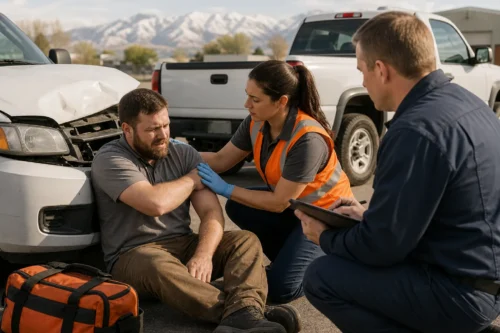
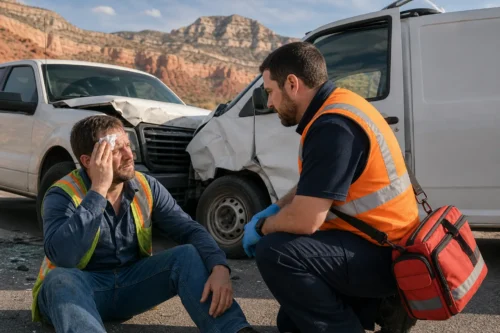
A workplace car accident lawsuit in Utah starts with your health, not a settlement demand. Get emergency care when needed, even if pain seems mild after the collision.
Tell the medical provider that the injury happened during work duties. Explain what you were doing, where the crash occurred, and which body parts hurt. Keep each discharge paper, prescription record, work restriction, and follow-up appointment notice.
Report the crash to your employer as soon as you can. Use a written message or report form. State the date, time, place, work assignment, and basic facts. Keep a copy for your records.
Utah workers’ compensation is a no-fault system. It can pay reasonable medical costs and part of lost wages when an employee suffers a work-related injury. In Utah, employers generally must carry this coverage for employees under state law.
After you report the injury, the employer has seven days to send its first injury report to the insurance carrier. The carrier then has 14 days to report it electronically to the appropriate state agency. You should ask for a copy of the employer’s report.
Do not assume that an employer’s delay ends your rights. Still, early notice helps prevent disputes over whether the crash happened during work. It also gives the insurer a clear record before memories fade.
Workers’ compensation may cover treatment, mileage to medical visits, and wage benefits. A doctor’s work release can also affect temporary disability payments. If your employer offers suitable light-duty work, discuss the offer with counsel before refusing it.
Read the workers’ compensation guidance for information about employer reporting and medical benefits.
Step 2: Document the Collision, Work Assignment, and Available Insurance
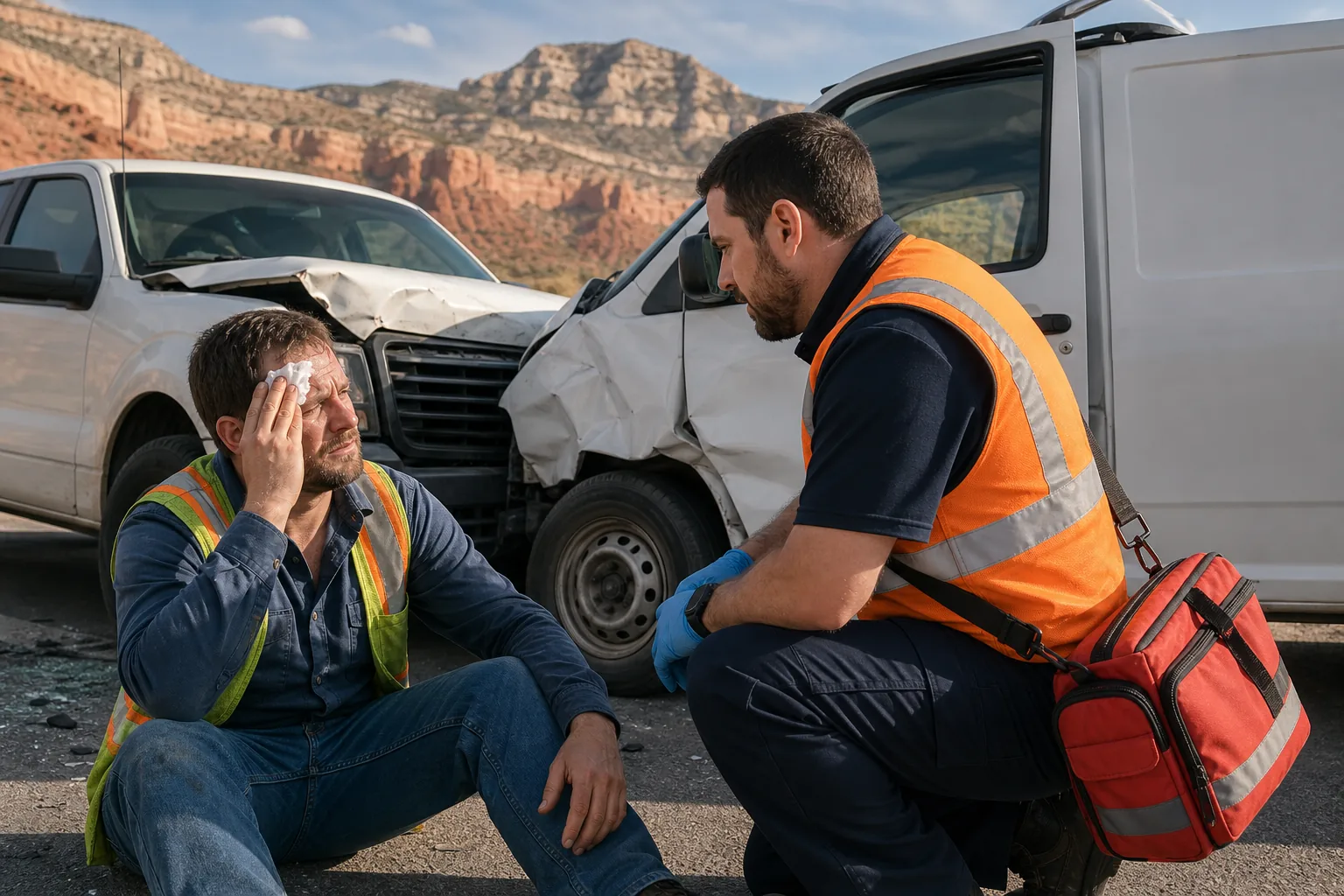
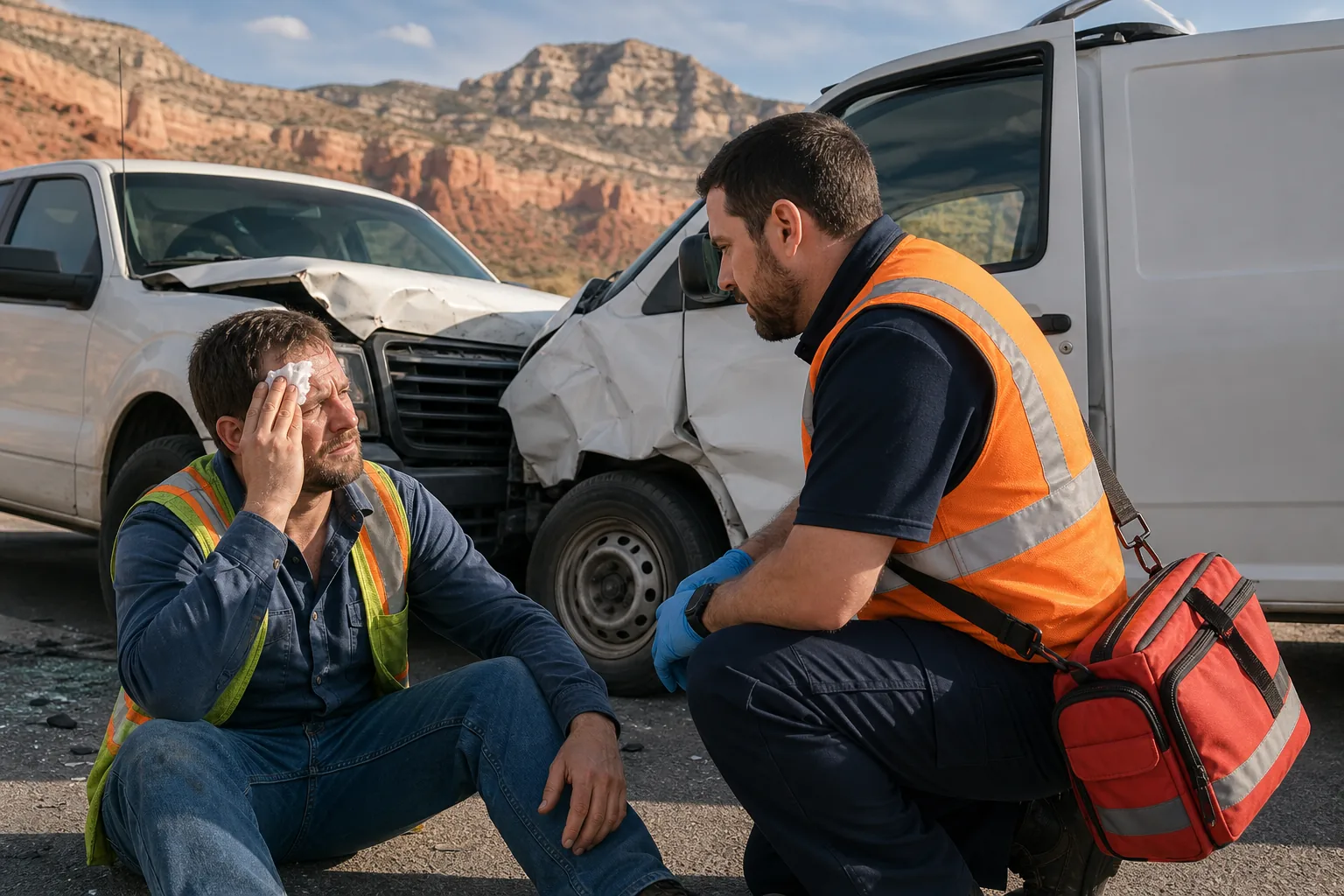
Evidence can disappear quickly after a work vehicle crash. Start a file on the first day. Save the police report, photos, medical records, pay records, and every message about the collision.
Write down your own account while the details remain fresh. Include your route, task, speed, weather, road condition, traffic signals, and what happened just before impact. Do not guess. Mark uncertain details as uncertain.
Photograph the vehicles from several angles. Capture the road, lane markings, nearby signs, visible injuries, cargo, and damage inside the vehicle. Ask witnesses for their names and contact information. Do not argue with the other driver about fault.
Your work assignment matters. Save the delivery order, dispatch message, time sheet, route plan, job ticket, or supervisor instruction that placed you on the road. If you drove an employer vehicle, preserve its unit number and any maintenance concern you reported before the crash.
Commercial vehicles can bring different insurance questions than a private car. The employer may have a commercial auto policy. The driver may also have a personal policy. Your own policy may include uninsured motorist or underinsured motorist coverage, often called UM or UIM.
Ask for policy information without making statements that admit fault. An adjuster may ask for a recorded interview or a broad medical release. You can tell the adjuster that you need time to review the request.
Classification can matter too. Utah has rules for certain owners, independent contractors, and statutory employees. A person who works for a hiring employer may sometimes waive workers’ compensation coverage through a formal coverage waiver. That issue needs a close look at the work agreement and the person’s actual duties.
Keep a simple loss log. Record missed shifts, reduced hours, new job limits, travel costs, and out-of-pocket treatment expenses. If your role changes after the crash, ask the employer to confirm the change in writing.
Step 3: Determine Whether Workers’ Compensation, a Third-Party Claim, or Both Apply
A workplace car accident lawsuit in Utah may sit beside a workers’ compensation claim. These claims serve different purposes and use different rules.
Workers’ compensation does not usually require proof that someone caused the crash. The key issue is whether the injury arose from work. A personal injury claim against another party usually requires proof of negligence, which means showing that the party failed to use reasonable care.
| Claim path | What you must show | Common payment focus | Main issue to check |
|---|---|---|---|
| Workers’ compensation | The injury happened during covered work | Medical care and wage benefits | Notice, treatment, work status, and impairment |
| Claim against another driver | The driver’s negligence caused the injury | Losses allowed under personal injury law | Fault, insurance limits, and proof of damages |
| Claim against another company | The company or its worker caused the harm | Damages tied to the company’s legal fault | Employment status and control over the work |
| UM or UIM claim | An uninsured or underinsured driver caused the loss | Covered damages under your policy | Policy terms and coordination with other benefits |
For example, imagine a delivery worker struck by a driver who ran a red light. Workers’ compensation may address the work injury. A claim against the driver may address losses that workers’ compensation does not pay. The two claims must be handled together so one settlement does not damage the other.
An employer is not automatically liable for every crash involving an employee. The facts may include the driver’s work status, the assigned route, vehicle ownership, training, supervision, and whether the driver acted within the scope of work.
Employer immunity can also affect a direct claim against the employer. A third-party claim may be stronger when a separate driver, contractor, vehicle owner, or company caused the crash. Those relationships should be reviewed before deciding who belongs in a lawsuit.
Insurance benefits may overlap. Workers’ compensation may pay first for covered treatment. UM or UIM coverage may have its own conditions. A carrier may claim a right to reimbursement from a later recovery. Do not divide a settlement before identifying every lien, reimbursement claim, and policy limit.
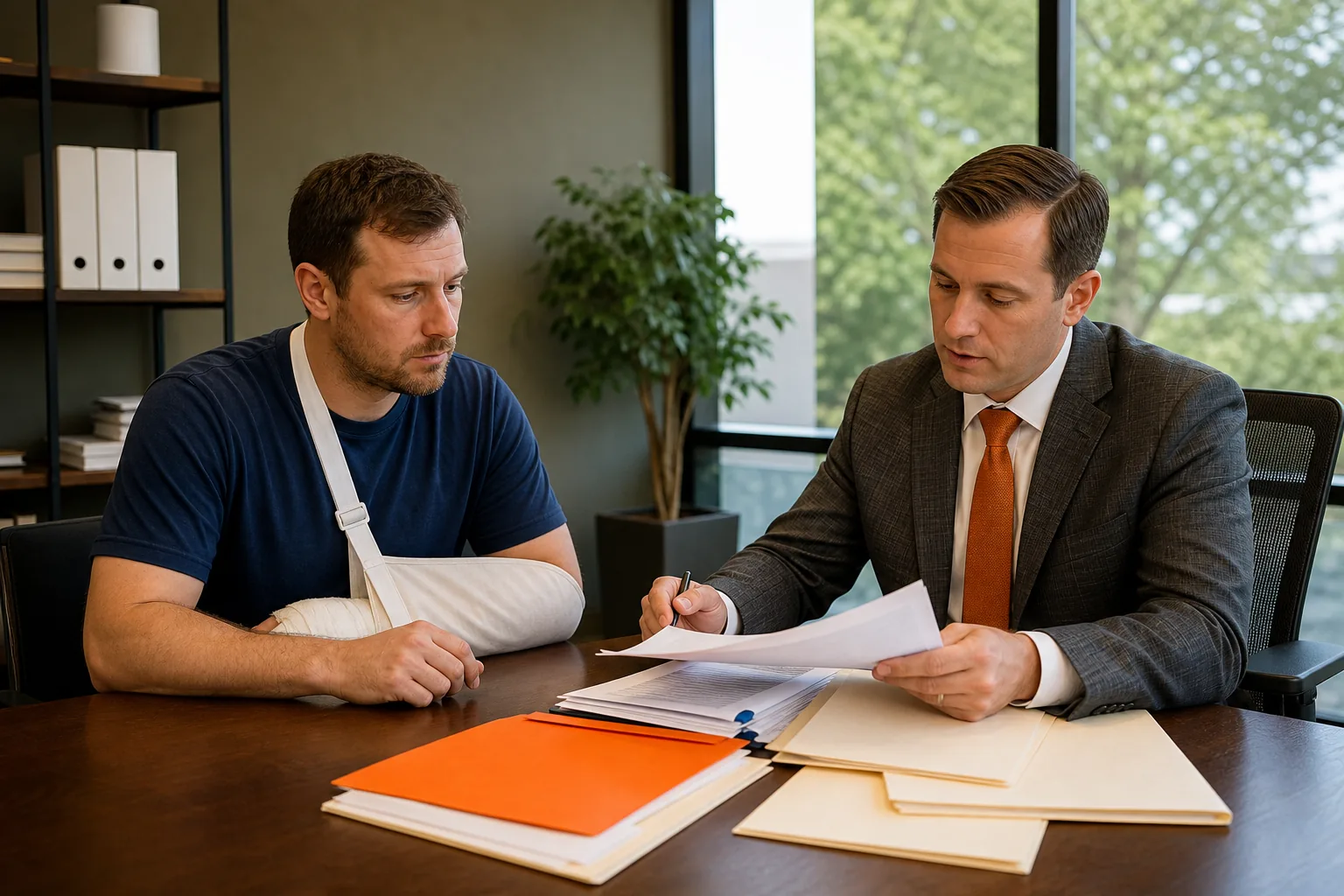
Step 4: Check Utah Deadlines and Build the Liability Case
Deadlines can end a workplace car accident lawsuit in Utah before a court reviews the facts. Put every possible deadline on a calendar now.
Utah workers’ compensation rules commonly involve a 180-day notice period for reporting a work injury. Research for this topic also identifies a six-year filing window for certain workers’ compensation claims and a 12-year limit tied to permanent disability claims. The correct deadline can depend on the injury, benefit type, and facts.
These time limits are not a reason to wait. A claim may involve several dates, including the collision, notice to the employer, medical discovery, a permanent impairment finding, and an insurer’s denial. Missing one step can create a fight that careful early action might avoid.
A third-party personal injury case has different deadlines. The time to sue may depend on the defendant, the type of claim, and whether a government entity is involved. We do not treat a workers’ compensation deadline as the deadline for every related lawsuit.
To build the liability case, connect four facts:
- The other party owed a duty of reasonable care.
- The party breached that duty through unsafe conduct.
- The breach caused the collision or made the injury worse.
- The injury caused losses supported by records.
Useful proof may include the crash report, scene photographs, vehicle data, witness statements, traffic video, medical records, wage records, and work restrictions. Preserve electronic evidence quickly. Businesses may overwrite camera footage or delete dispatch messages under routine retention rules.
Damages can include medical treatment, lost income, reduced earning ability, pain, and limits on daily life when the law allows them. The value depends on proof, not on a calculator alone.
Settlement is only one path. The parties may discuss mediation, where a neutral person helps them negotiate. Arbitration may place the dispute before an arbitrator. A bench trial has a judge decide the facts. A jury trial places fact questions before jurors. Small claims may apply only within its legal limits and may not fit a serious injury case.
Those paths can be compared with the cost, proof, risk, and amount at stake. A fair settlement can be the right result. It is not the right result if the release closes an unresolved workers’ compensation or UIM claim.
Step 5: Consult LeBaron & Jensen, P.C. Before Accepting a Settlement
A workplace car accident can leave you handling medical care while several insurers ask for answers. We understand how exhausting that can be. Early legal review can take the stress off your plate before a small payment becomes a final release.
At LeBaron & Jensen, P.C., we can review how the crash relates to your job, the available insurance, and the conduct of other drivers or companies. We can also help sort the workers’ compensation claim from any personal injury claim instead of treating them as one file.
Bring these records to an initial case review when available:
- The crash report and photographs.
- Employer reports and work assignment records.
- Medical records and current restrictions.
- Pay records and proof of missed work.
- Insurance letters, policy information, and settlement offers.
- Names of witnesses and businesses with possible video.
We may first check whether the insurer accepted or denied the work injury. Then we identify every party whose conduct may have caused the crash. Policy language should also be reviewed before discussing a fair settlement.
If another driver caused the collision, the case may fit within a broader personal injury lawyer Utah practice. That review can include damages that workers’ compensation does not pay, subject to Utah law and the available evidence.
We do not promise a result before reviewing the facts. Some cases resolve through settlement. Others need formal litigation. The right choice depends on liability, medical proof, future losses, insurance limits, and the release language proposed by the carrier.
Do not give a recorded statement about disputed fault without understanding the questions first. Do not sign a broad release because an adjuster says it is routine. Once signed, a release can make later claims far harder to pursue.
LeBaron & Jensen, P.C. can help you set the next step while preserving your options. Gather the file, write down what happened, and ask for a review before accepting money.
FAQ About a Workplace Car Accident Lawsuit in Utah
Can I sue after a workplace car accident in Utah?
Yes, you may have a lawsuit against a negligent third party even when workers’ compensation applies. A claim against another driver, vehicle owner, contractor, or company may require proof of negligence. Workers’ compensation may still handle covered medical care and wage benefits. The two matters should be reviewed together before you sign a release.
Does workers’ compensation cover a car accident at work?
Workers’ compensation may cover an injury from a car accident when the employee was performing work duties. It generally does not depend on proving another person caused the crash. Coverage can depend on the trip, employment status, and facts around the collision. Report the injury quickly and keep all medical and work records.
How long do I have to report a workplace crash in Utah?
You should report the crash to your employer immediately, even if you think the injury is minor. Utah workers’ compensation guidance commonly identifies a 180-day notice period for work injuries, but other deadlines may apply. Waiting can lead to a dispute over notice or cause. Written notice gives you a clearer record.
Can I receive workers’ compensation and a third-party settlement?
Yes, both may be possible after a workplace car accident in Utah. Workers’ compensation may pay covered treatment and wage benefits, while a third-party case may seek other legally available damages. The workers’ compensation insurer may have reimbursement rights against a recovery. Have counsel review liens, policy limits, and release terms first.
Should I accept the insurance company’s first offer?
You should not accept a settlement offer before reviewing the full claim. The offer may release future medical costs, lost earning capacity, pain damages, or related insurance benefits. A lawyer can compare the offer with your treatment status, work limits, and available policies. That review helps you decide whether the payment is fair.
Conclusion
After a work-related crash, report the injury, get medical care, preserve evidence, and avoid signing a broad release too soon. Contact LeBaron & Jensen, P.C. for a case review before accepting a settlement so we can help protect your workers’ compensation and third-party claim options.