
Table of Contents
A work-related crash can leave you hurt, out of work, and unsure who should pay. The right claim may involve workers’ compensation, another driver’s insurer, or both. Follow these steps to report the accident, preserve proof, protect your statement, and seek a fair settlement. If the facts are disputed, LeBaron & Jensen, P.C. can take the stress off your plate.
We reviewed 6 Utah law firm pages covering employee car accident injury claims, scored against 5 categories: reporting, claim type, evidence, adjuster contact, damages. All 6 cover workers’ comp versus third-party claims, but only 2 of 6 cover reporting and medical care together. Only 1 of 6 discusses evidence tying a crash to a job, and 0 of 6 address handling a recorded adjuster statement. The fault question gets answered repeatedly online, while steps that protect a claim during an adjuster call remain largely unaddressed.
Step 1: Get Medical Care and Report the Utah Work-Related Crash
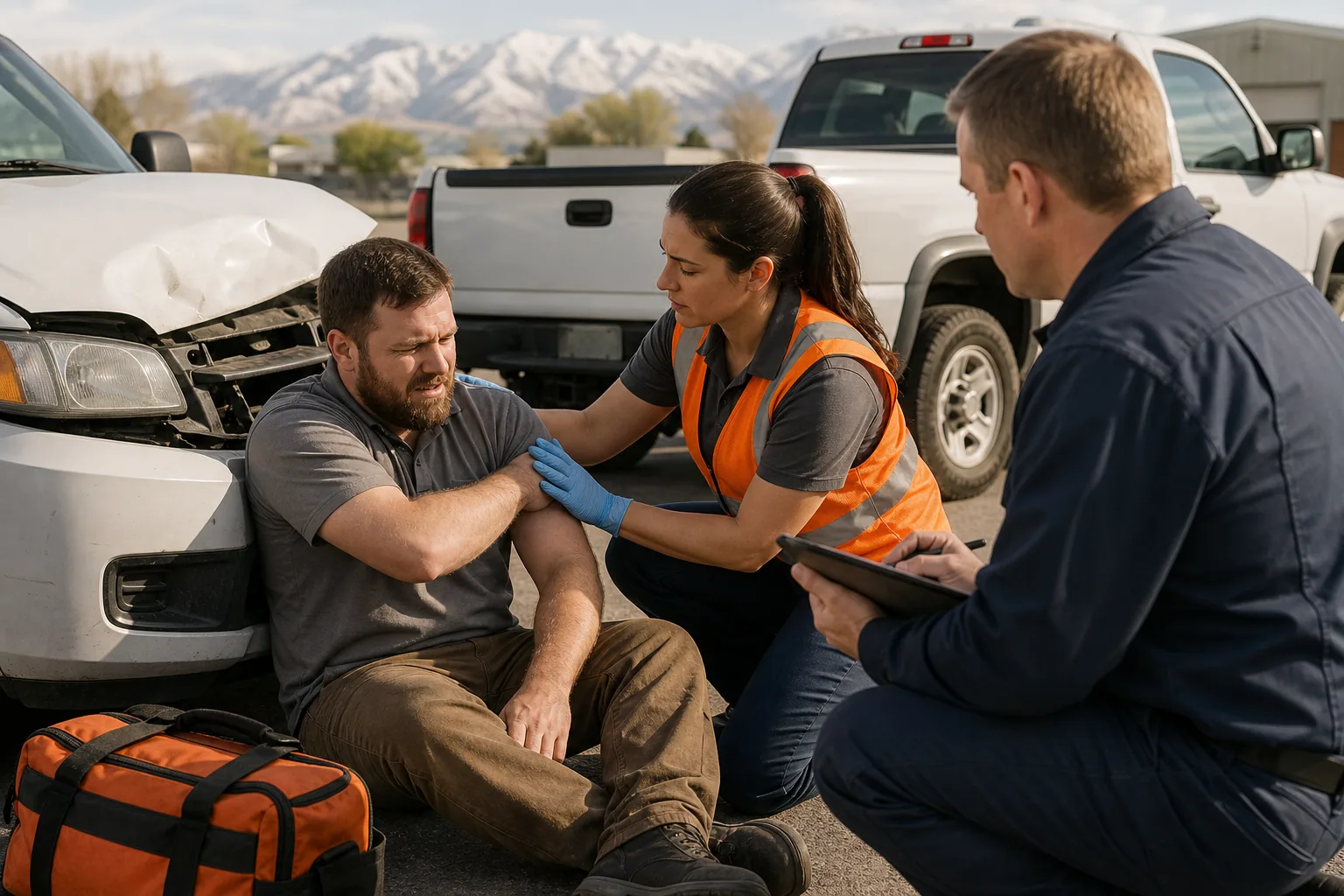
Your first task in an employee car accident injury claim in Utah is to get medical care and report the crash. Do both as soon as you can.
Tell the doctor that the injury happened during work duties. Explain when, where, and how the crash occurred. Ask the provider to record that the injury is work related. Keep copies of discharge papers, work restrictions, prescriptions, and bills.
Report the accident to your supervisor, manager, human resources team, or another person who handles injury reports. Put the report in writing. An email gives you a date-stamped record. Include the crash date, location, work task, injuries, and any witnesses.
Utah workers’ compensation is a no-fault system. That means you generally do not need to prove that your employer caused the crash to seek covered benefits. General workers’ compensation information may explain that coverage can include medical care and disability benefits.
Ask your employer for the workers’ compensation carrier’s name and claim information. If the employer directs you to a preferred provider, follow that instruction for the first visit unless an urgent condition requires immediate care.
We understand that paperwork feels small after a crash. It still matters. A short written report can prevent a later dispute about when your employer learned of the injury.
Step 2: Determine Whether Workers’ Compensation or a Third-Party Claim Applies
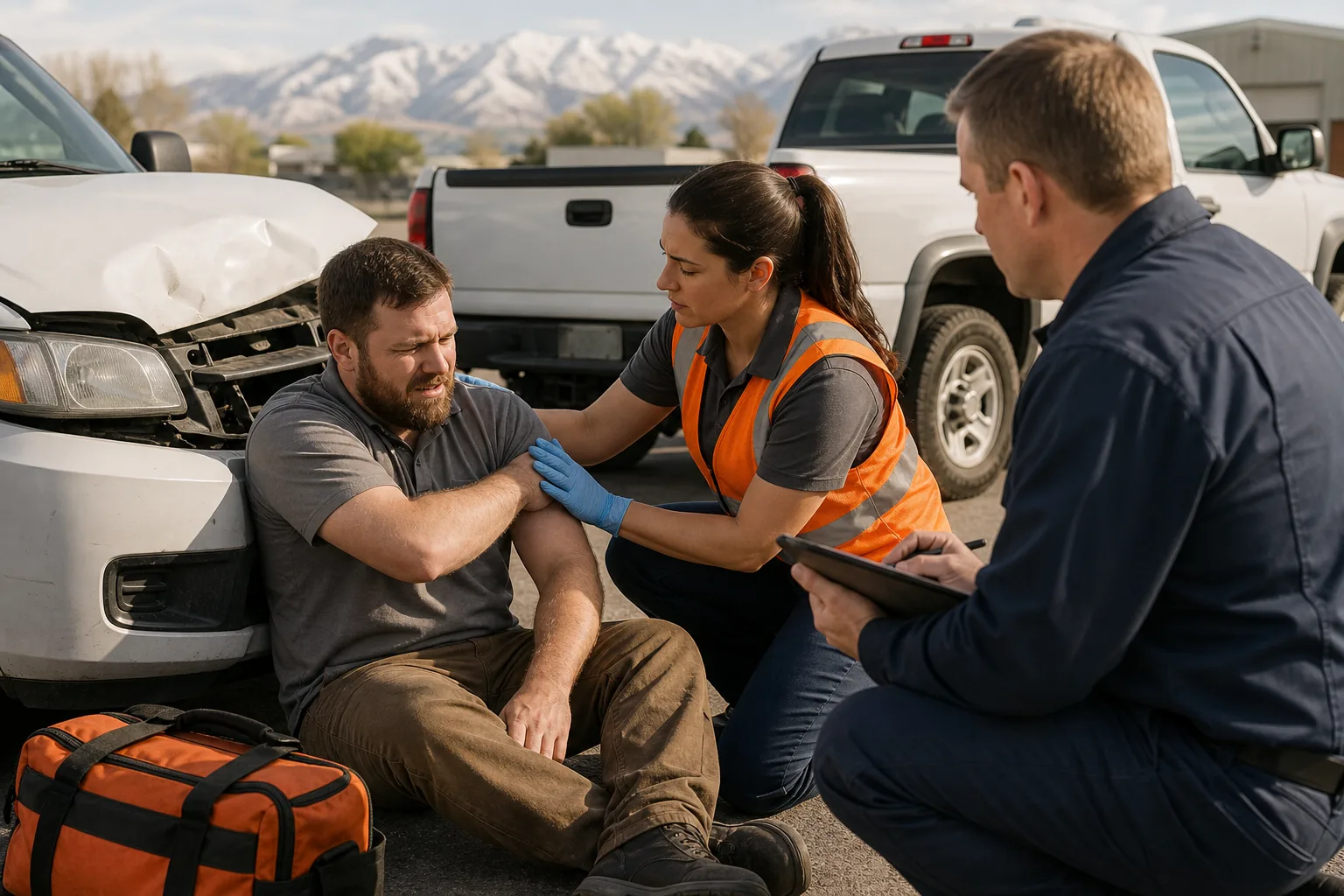
An employee car accident injury claim in Utah may involve more than one source of compensation. First, identify the claim path before accepting money or signing a release.
Workers’ compensation may cover medical treatment and part of your lost income. It can apply even when you caused the crash by mistake. The key issue is usually whether the injury arose from your work, not whether someone was negligent.
A third-party claim is different. It may arise when another driver caused the collision. For example, you might be driving to a job site when another motorist runs a red light. That driver’s insurance may owe damages tied to negligence, such as medical losses, lost income, and pain caused by the crash.
Your employer may also face a claim in some cases involving an employee driver. The question often turns on whether the driver was acting within the scope of employment. A personal errand can change the analysis. So can a dispute over whether the driver was an employee or an independent contractor.
Do not assume workers’ compensation replaces every possible claim. It may provide benefits without a fault fight, while a third-party case may address losses that workers’ compensation does not cover in the same way. The claims also may involve different insurers and different rules.
Write down your work route and purpose before memories fade. Note whether you were traveling between job sites, making a delivery, attending a meeting, or commuting. Ordinary commuting may receive different treatment from travel performed for the employer.
LeBaron & Jensen, P.C. reviews how the insurance pieces fit together before pursuing a settlement. That early review can help prevent a release with wider effects than you expected.
Step 3: Collect Evidence That Connects the Crash to Your Job
Evidence must connect three facts: the crash happened, you suffered an injury, and the crash occurred during work duties. Start collecting it while records still exist.
Save the police report if one was made. Take photos of vehicle damage, road signs, lane marks, traffic lights, and visible injuries. If you could not take photos at the scene, ask someone you trust to help locate them.
Gather names and contact details for witnesses. Ask your employer to preserve nearby camera footage, vehicle tracking data, dispatch records, and delivery logs. Video may be overwritten quickly, so send a written preservation request when needed.
Keep work records that show why you were driving. Useful records may include:
- Your schedule and timecard.
- Text messages or emails about the assignment.
- Route instructions and delivery records.
- Vehicle inspection or maintenance records.
- Pay records showing missed work.
Medical proof should tell a clear story. Keep the first examination record, later treatment notes, imaging results, work restrictions, and receipts. Tell each provider about prior injuries without guessing or hiding details. Insurers often compare old records with new complaints.
Write a private timeline. Record what you did before the crash, what happened at impact, when symptoms began, and how the injury affects work at home. Do not post details about the accident or recovery on social media. A casual photo or comment can be taken out of context.
Our personal injury lawyer Utah team can help organize proof around fault, work status, and damages. That structure matters when an insurer says the crash was personal or the injury came from an earlier condition.
Think of the file as a chain. If one link is missing, the insurer has room to question the claim. Keep every document in one folder, with a backup stored safely.
Step 4: Notify Insurers Carefully and Protect Your Statement
Insurance adjusters may contact you soon after an employee car accident injury claim in Utah begins. Give basic notice, but do not guess about fault or the full value of your losses.
You should cooperate with reasonable claim requests. Provide the crash date, location, parties, and a short description of the injury. Keep the description accurate and brief. Say when you do not know an answer.
Be careful with recorded interviews. An adjuster may ask about your pain, prior injuries, work route, speed, or statements made at the scene. A tired or medicated person may use words that later sound like an admission.
Before a recorded statement, ask what the interview covers and whether it is required. Consider speaking with LeBaron & Jensen, P.C. first. We can help you prepare a clear account without coaching you to hide facts.
Never exaggerate. Do not minimize either. If your pain changes, explain that change. If you missed treatment because of cost, transport, or a work conflict, keep proof of the reason. Gaps can prompt questions, but an honest explanation gives the record context.
Do not sign a settlement release before you understand every claim it may end. A check for vehicle damage may also include language about bodily injury. Read the full document and ask what rights you would give up.
Insurance files should include the claim number, adjuster name, letters, emails, and deadlines. Keep a note after each call. Write the date, who spoke, and what was requested. This simple habit can expose a missed document or a shifting position.

Our goal is a fair settlement based on documented harm, not a rushed payment. We take the stress off your plate while the medical picture becomes clearer.
Step 5: Calculate Damages and Check Utah Filing Deadlines
The value of an employee car accident injury claim in Utah depends on proven losses. Do not base a demand on a single medical bill or an insurer’s first offer.
Start with medical costs. Include emergency care, follow-up visits, imaging, therapy, medication, and travel for treatment. Keep bills even when workers’ compensation pays them. The records still help show the injury’s scope.
Next, track income loss. Save pay stubs, time records, benefit statements, and work restriction notes. If you return on light duty with lower pay, record the difference. Utah workers’ compensation may provide temporary partial disability benefits in that situation.
A doctor may later find a permanent impairment. That finding can affect permanent partial disability benefits under workers’ compensation. It may also affect a third-party claim. Do not seek a final settlement before you understand whether your condition has stabilized.
Nonfinancial harm can matter too. Keep a short daily log about sleep, driving, lifting, household tasks, and hobbies. Use plain details. “I could not lift my child from the floor” gives more context than “pain was severe.”
Report a work injury promptly to your employer and keep a record of the notice. Keep copies of claim communications and respond to requests for information. For general information about the process, review the Utah workers’ compensation claims process.
Other claims may have different filing deadlines. A personal injury lawsuit against another driver can involve separate rules, notice requirements, and government-entity limits. Do not wait for the workers’ compensation carrier to decide before checking every possible deadline.
If the carrier denies the claim, read the denial letter closely. It should explain the reason for the denial. You may have a right to challenge the decision through the applicable review process. A lawyer can help assess whether the denial, wage calculation, medical decision, or settlement offer is wrong.
LeBaron & Jensen, P.C. can review the claim file, identify missing proof, and discuss a path toward fair compensation. Get started before evidence disappears or a filing date passes.
FAQ: Employee Car Accident Injury Claims in Utah
Can I file a claim if I caused the work-related car accident?
Yes, workers’ compensation may still cover a work-related injury even if you caused the crash. Utah workers’ compensation is generally no fault. A separate claim against another driver requires proof that the driver caused the collision. Report the injury promptly and ask a lawyer to review both paths.
How long do I have to report a workplace car accident in Utah?
Report the injury to your employer as soon as possible. Your employer and its insurer then have their own reporting duties. A late report can create a serious dispute about whether the injury arose from work.
Can I receive workers’ compensation and sue another driver?
Possibly. Workers’ compensation may cover medical care and wage-related benefits, while a third-party claim may address losses caused by another driver’s negligence. The claims involve different rules and insurers. Do not sign a release until you understand whether it affects reimbursement rights or another pending claim.
Should I give the insurance adjuster a recorded statement?
Not before you understand the request and your rights. Give basic claim notice, but avoid guesses about fault, recovery time, or prior medical history. A recorded statement can shape the insurer’s view of your employee car accident injury claim. Consider legal advice before answering detailed questions.
What if workers’ compensation denies my claim?
You may challenge a denied workers’ compensation claim through the workers’ compensation process. Read the denial notice and keep every medical record, wage record, and employer message. A denial does not always end the matter. LeBaron & Jensen, P.C. can review the reason given and discuss your next step.
Conclusion
Report the crash, get medical care, preserve the work records, and check every possible claim before accepting money. If an insurer disputes your injuries or work status, contact LeBaron & Jensen, P.C. for a case review and a clear plan for pursuing your rightfully deserved compensation.