
Table of Contents
A fall on someone else’s property doesn’t automatically make the owner liable. But a clearly visible spill doesn’t automatically protect the owner either. Utah looks at the visitor’s status, the owner’s knowledge of the hazard, the care taken, and the harm that followed.
Here’s how premises liability works in Utah, including common hazards, defenses, proof problems, and filing deadlines. We’ll also explain when LeBaron & Jensen, P.C. may help take the stress off your plate.
What Is Premises Liability?
Premises liability is the area of personal injury law that deals with harm caused by an unsafe condition on property. The property may be a store, home, office, parking lot, apartment, pool, restaurant, or public space.
The owner may not be the only person involved. An occupant, landlord, property manager, business, contractor, or government entity may control the area where the injury occurred. The key question is who had the duty to address the condition.
A premises liability claim usually rests on four basic points:
- Duty of care:The defendant owed you a legal duty to act with reasonable care.
- Breach:The defendant failed to meet that duty.
- Causation:The failure caused or substantially contributed to the accident.
- Actual harm:You suffered an injury or other loss that the law may compensate.
Being hurt on another person’s property proves only where the accident happened. It does not prove negligence by itself. We must connect the unsafe condition to the owner’s duty and show why the owner should have fixed it, warned you, or blocked access.
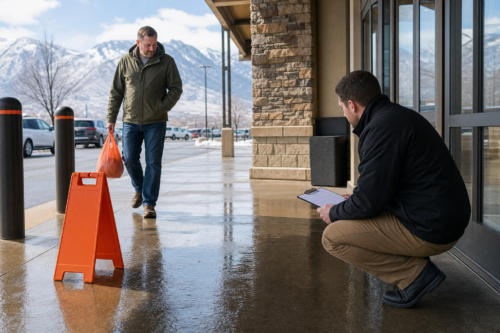
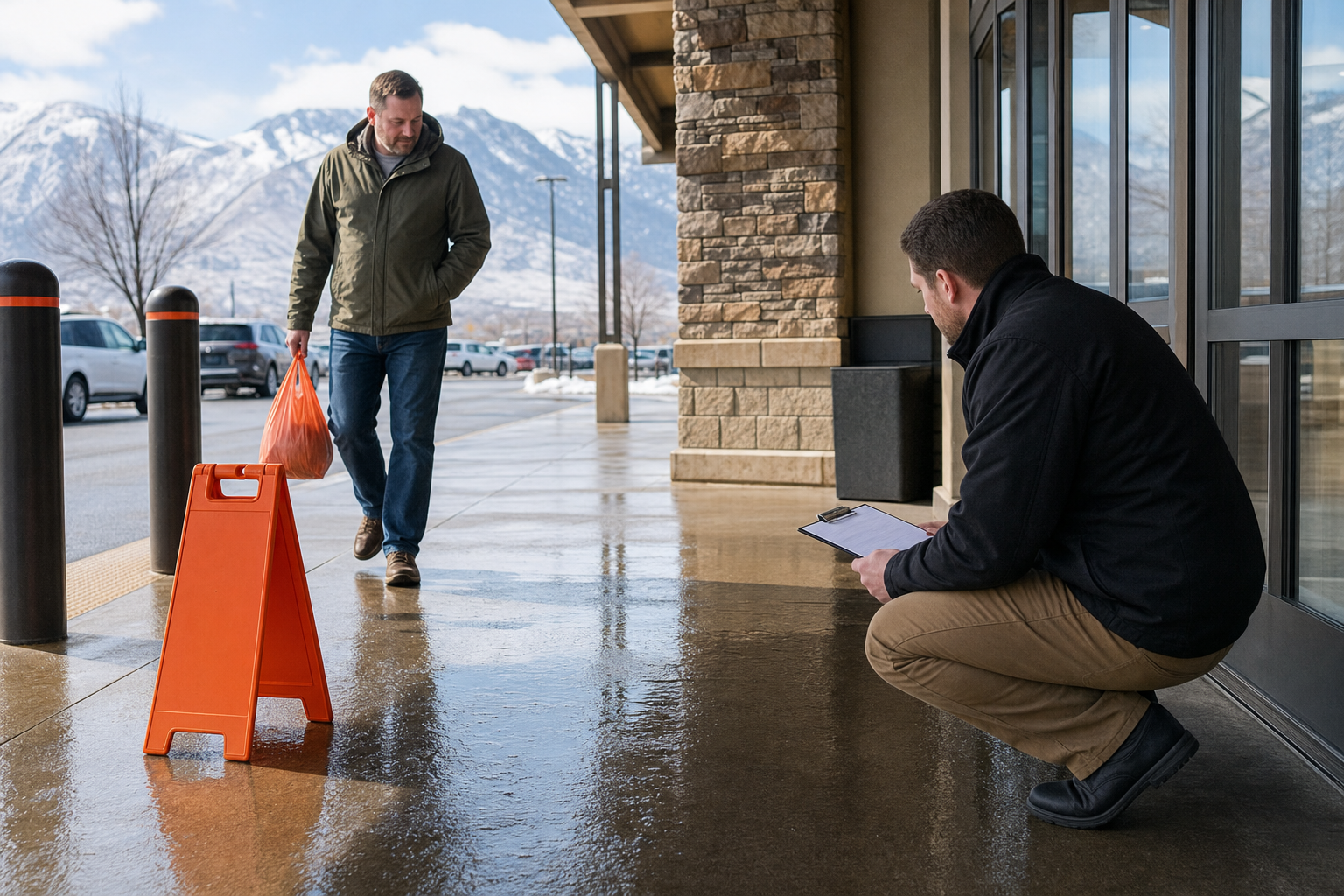
For example, imagine a customer slips on water near a store entrance. The case may depend on how long the water was there, whether employees saw it, whether the store had an inspection routine, and whether a warning sign gave people a safe path around it.
The same idea applies to a broken stair. A long-standing defect may support an inference that the owner knew about it or should have found it. A fresh spill may require stronger proof about time and notice.
Premises liability can cover more than slip-and-fall accidents. Claims may involve poor lighting, missing handrails, unsafe stairs, defective floors, falling objects, fires, swimming pools, animals, inadequate security, or construction hazards. The facts change from case to case, but the legal questions stay similar.
An invitee is a person on the property for a purpose connected with the property owner’s business. That status can affect the level of care the owner must provide.
If you want to see how these claims fit within Utah personal injury law, our Utah premises liability attorneys page explains the claim in plain language. A review of the facts should happen early, while photos, records, and witness details are still available.
How Visitor Status Affects a Property Owner’s Duty in Utah
What is premises liability in Utah without looking at visitor status? The answer is incomplete. Utah law has traditionally grouped visitors into three main classes, and each class can change the owner’s duty.
Invitees
An invitee enters for a purpose tied to the owner’s business or public use of the property. A shopper in a grocery store is a common example. So is a customer at a restaurant or a patient visiting a clinic.
Owners generally owe invitees the highest level of care. That can include inspecting areas open to customers, finding hazards through reasonable care, fixing unsafe conditions, and warning about dangers that are not obvious.
This does not mean a business must guarantee a perfect floor at every moment. Stores deal with changing conditions. A spill may happen seconds before an accident. The issue is whether the store had a fair chance to discover and correct the danger.
Licensees
A licensee has permission to enter but is there mainly for the visitor’s own purpose. A social guest at a private home is a familiar example.
Owners generally must not willfully or wantonly injure licensees. They also may need to warn about known dangers that the visitor is unlikely to discover. The owner usually does not have the same duty to inspect for hazards they did not know about.
That difference can matter. If a homeowner knows a porch step is loose, staying silent may create a problem. If the homeowner had no reason to know about a hidden defect, the analysis may be harder.
Trespassers
A trespasser enters without permission or a legal right to be there. The owner’s ordinary duty is much narrower. An owner generally may not willfully injure a trespasser.
Special rules can apply in some situations, especially where children may be drawn to an artificial danger. The exact facts matter, so a label alone should not end the discussion.
Visitor status is also fact-specific. A person may enter a business as a customer, then move into a restricted employee area. A delivery worker may have permission to enter one part of a building but not another. The purpose and scope of the .
We also look at control. A lease may place maintenance duties on a landlord, tenant, or property manager. A contractor may control a work zone. An HOA may control a shared walkway. The party with control over the specific hazard may be central to the claim.
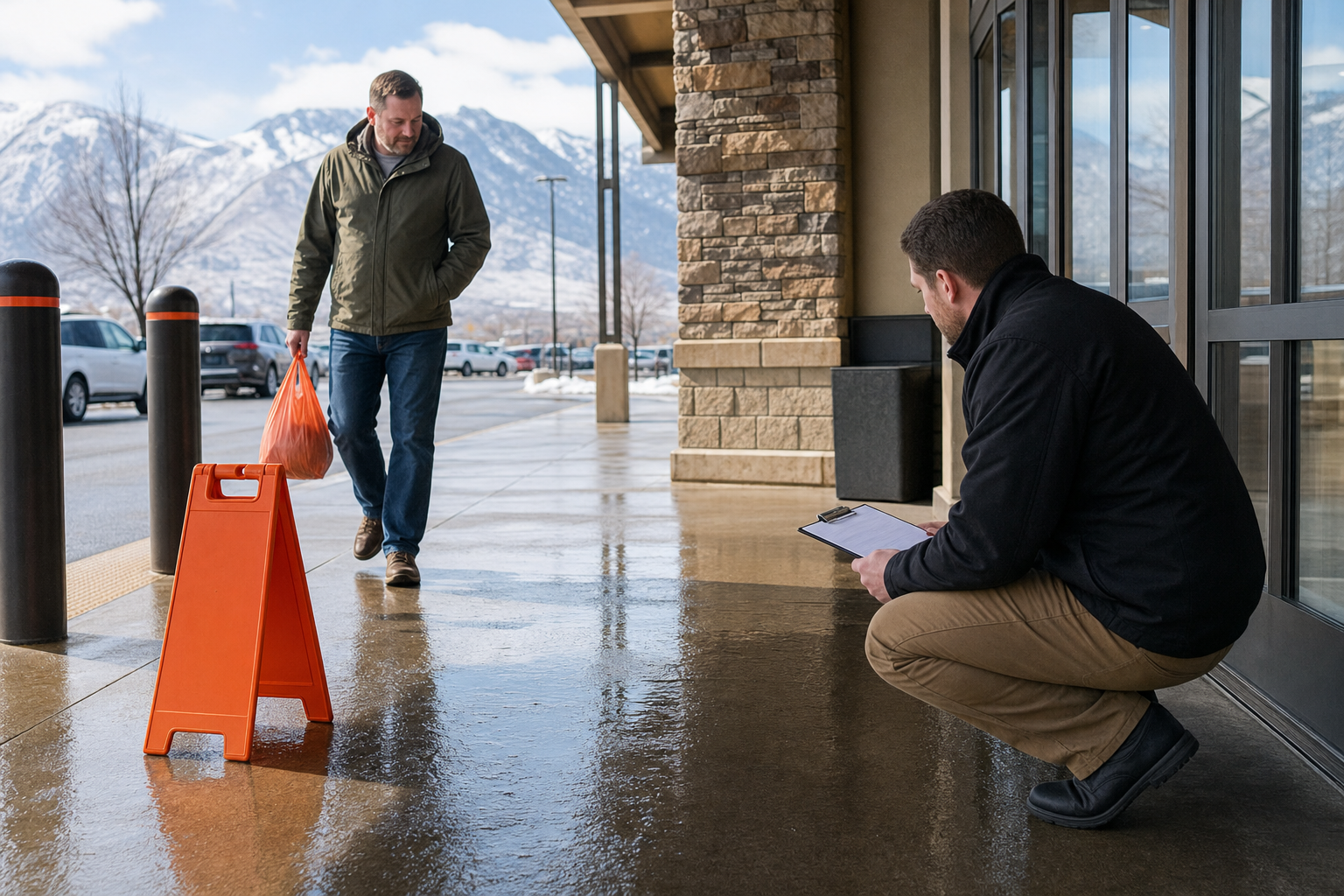
LeBaron & Jensen, P.C. reviews these details before drawing conclusions. A person hurt on property may feel certain that the owner is responsible, or certain that the visitor is to blame. Both assumptions can be wrong.
Notice of a Hazard: Actual, Constructive, and Implied Knowledge
Notice is often the hardest part of a premises liability claim. It asks whether the owner knew about the dangerous condition or should have known about it.
Actual notice
Actual notice means the owner or an employee knew about the hazard. A worker may have seen the spill. A customer may have reported it. A maintenance record may show that staff knew a stair tread was loose.
Direct proof helps, but it is not always available. Employees may disagree about what they saw. A business may deny receiving a complaint. Surveillance footage may be deleted before anyone asks the owner to preserve it.
Constructive notice
Constructive notice means the owner should have known about the condition through reasonable care. A hazard may have lasted long enough that a reasonable inspection would have found it.
Time is often central. A puddle that appeared moments before a fall presents a different issue than a spill left in a busy aisle while employees passed nearby. There is no magic number of minutes that decides every case.
Courts may consider the hazard’s size, location, appearance, cause, foot traffic, inspection practices, and the conduct of employees. A broken tile that existed for weeks raises a different notice question than rainwater tracked inside during a storm.
Implied knowledge
Implied knowledge is a way of describing what the facts suggest the owner knew or should have known. It may come from repeated complaints, prior similar incidents, work orders, or a condition that was plainly visible to staff.
Evidence may include:
- Security video showing the hazard and nearby employees.
- Inspection or sweep logs.
- Incident reports and customer complaints.
- Repair requests and maintenance work orders.
- Photos that show the condition and surrounding area.
- Statements from witnesses, workers, or first responders.
A warning sign can help the owner, but it does not end the case. The sign may have appeared after the hazard existed for too long. It may have blocked one route without protecting another. It may also have warned about a condition while the owner failed to correct an unreasonable danger.
Utah’s open-and-obvious rule creates another trap. A visible spill may reduce a person’s recovery if they failed to avoid it. It does not always erase the owner’s possible responsibility. We must examine whether the hazard was truly visible, whether it could be avoided, and how much fault belongs to each side.
Preserve evidence quickly. Take photos from several angles. Write down where you were walking and what you saw. Keep shoes and clothing if they show what happened. Ask for an incident report, but do not assume the property owner will keep every record without a formal request.
A claim can weaken when a person waits months to record the scene. The floor may be repaired. The lighting may change. Video may no longer exist. Early action does not guarantee a case, but delay can remove proof.
Permanent and Temporary Hazards That Can Lead to a Claim
Permanent and temporary hazards raise different notice questions in premises liability cases. A permanent defect may support an inference that the owner had enough time to discover it. A temporary condition often requires proof about when it appeared.
Permanent hazards
Permanent hazards exist as part of the property or remain for a long period. Examples include a broken stair tread, uneven walkway, missing handrail, defective floor surface, poor lighting, or a damaged pool deck.
These conditions may be easier to tie to notice. If a stair has been broken for weeks, the owner may have had time to inspect it, repair it, restrict access, or warn visitors. Records can show who knew about the defect and who had authority to fix it.
Control still matters. A landlord may own the building while a tenant controls the sales floor. A property manager may handle repairs. A contractor may have caused the defect. The right defendant depends on the facts and the legal duties involved.
Temporary hazards
Temporary hazards arise and disappear. Common examples include liquid spills, food on a floor, tracked-in snow, loose merchandise, leaking equipment, or a recently mopped surface.
These cases often turn on timing. If a spill happened moments before the fall, proving constructive notice may be difficult. If the spill remained while staff walked past it, the notice argument becomes stronger.
Snow and ice cases have their own details. A property owner may need a reasonable chance to clear fresh snow after a storm. That does not excuse an ignored patch that remained after prior weather or formed because of a known drainage problem.
Other dangerous conditions
Premises liability may also involve:
- Unmarked changes in floor height.
- Loose rugs or mats.
- Defective elevators or escalators.
- Unsecured shelves or falling objects.
- Unsafe swimming pool areas.
- Broken fences or gates.
- Inadequate lighting near steps or entrances.
- Animals that were not properly controlled.
- Security failures in areas where a foreseeable risk existed.
The hazard must connect to the injury. A building may have several defects, but the case needs proof about which condition caused the accident.
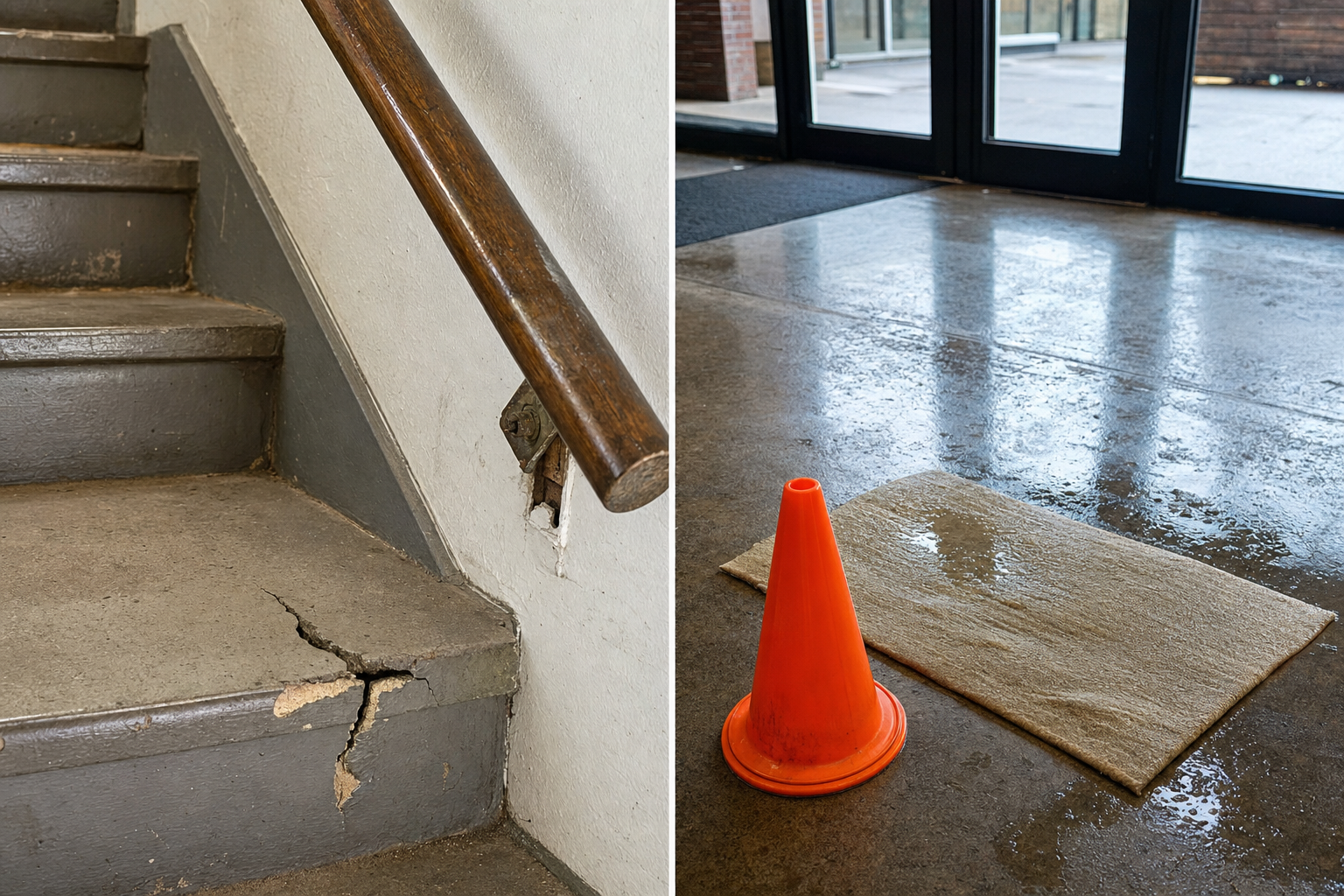
Our team at LeBaron & Jensen, P.C. looks at the scene, the ownership records, and the maintenance trail. The goal is to understand what happened before deciding whether a claim may support a fair settlement.
Common Defenses: Open and Obvious Hazards, Comparative Fault, and Gross Negligence
Property owners often raise defenses in premises liability cases. A defense does not prove that the claim fails. It identifies a fact or legal rule the owner believes limits responsibility.
Open and obvious hazards
The open-and-obvious defense argues that an ordinary person could see the condition and avoid it. A large object in a clear walkway may fit that argument more easily than a shallow change in floor height hidden by poor lighting.
Utah does not treat every visible hazard as an automatic bar to recovery. The condition may still have caused unreasonable risk. The person’s decision to continue may count as comparative fault rather than ending the claim.
Context matters. A person may see a puddle but have no safe route around it. A warning may be blocked. A customer may look toward a shelf while pushing a cart. A hazard may be visible from one angle but hidden from the direction of travel.
Comparative fault
Comparative fault assigns a percentage of responsibility to each party. If an injured person is partly at fault, the damages may be reduced by that share.
Utah uses a 50 percent bar described in Utah law. A claimant who is less than 50 percent at fault may still recover, subject to the other elements of the claim. If the claimant is 50 percent or more at fault, recovery may be barred.
That makes small facts important. Were you watching where you walked? Was the area crowded? Did the owner provide a safe route? Did poor lighting hide the condition? Did an employee direct you toward the hazard?
We should not assume that an accident means zero fault by the visitor. We also should not assume that a visitor’s mistake excuses every failure by the property owner.
Gross negligence
Gross negligence describes conduct that shows reckless disregard for safety. Ignoring a known hazard after repeated warnings may support this argument. It is more serious than ordinary carelessness.
Gross negligence can matter when a defendant relies on a waiver or argues that the visitor accepted a risk. Waivers may also receive different treatment depending on the activity and the wording used.
Special property rules
Some properties involve special rules. Utah limits certain claims involving land opened for free public recreation, subject to statutory exceptions.
These defenses are technical. A property owner may raise several at once. We test each one against the photos, records, witness accounts, and applicable law rather than accepting the first explanation offered.
Proving a Premises Liability Claim and Understanding Utah’s Deadline
Proving premises liability requires more than showing that you fell. We need evidence that identifies the hazard, connects it to the defendant, shows notice, and documents the injury.
Evidence that may help
Start with the scene. Take photos and video if you can do so safely. Capture the hazard from your view before the fall, then show the distance to entrances, registers, lights, signs, or employees.
Write down the date, time, location, weather, and people who saw the event. Memories fade fast. A short note made the same day may preserve details that later become unclear.
Medical records help show the injury and treatment. Keep bills, work-loss records, discharge papers, prescriptions, and follow-up instructions. Tell medical providers what happened, but avoid guessing about facts you do not know.
We may also seek records from the property owner. Those records can include surveillance video, inspection logs, incident reports, maintenance requests, employee statements, and repair documents. A preservation letter can tell the owner not to delete relevant evidence.
How the claim may move forward
A case may begin with an investigation and an insurance claim. The insurer may ask for a recorded statement, medical records, photographs, or a description of the accident.
Do not rush to accept a settlement before you understand the injury. Some conditions worsen over time. A quick payment may not cover later treatment, lost income, or lasting limits.
Settlement talks may follow a demand supported by evidence. If the parties cannot agree, a lawsuit may be filed. Litigation can involve written discovery, depositions, expert review, motions, mediation, and trial.
Not every claim needs a lawsuit. Not every offer is fair. The right choice depends on the strength of the proof, the injury, the available insurance, the defenses, and the deadline.
Utah filing deadlines
Research for Utah premises claims identifies a general four-year deadline for a personal injury lawsuit, measured from the injury date. Different rules may apply to wrongful death, minors, delayed discovery, contractual claims, or other special situations.
Government defendants require special care. A claim involving a city, county, state agency, public sidewalk, or other government property may require a Notice of Claim within one year. That notice requirement is separate from the ordinary lawsuit deadline.
Do not wait for the last month. The correct defendant may not be clear. Records may take time to obtain. Medical treatment may still be ongoing. A lawyer may need time to investigate before choosing the right filing path.
LeBaron & Jensen, P.C. can review the timing and evidence in a Utah injury matter. We take the stress off your plate by helping organize the facts before you make a decision about settlement or litigation.
A deadline is not a reason to panic, but it is a reason to act. If you are unsure whether the property was private or government-owned, investigate that point quickly.
Frequently Asked Questions About Premises Liability
What is premises liability?
Premises liability is a personal injury claim based on an unsafe condition on someone else’s property. The injured person usually must show a duty of care, a breach of that duty, a connection between the breach and the accident, and actual harm. The owner’s responsibility can depend on visitor status and notice of the hazard.
Can I sue if I fell on someone else’s property in Utah?
You may have a claim if an unsafe condition caused your fall and the property owner or another responsible party knew or should have known about it. Falling alone does not establish liability. Photos, witness accounts, inspection records, medical records, and proof of notice may decide whether the claim can move forward.
Does an open and obvious hazard defeat a Utah claim?
An open and obvious hazard does not always defeat a Utah premises liability claim. The owner may argue that you should have seen and avoided the condition. Utah’s comparative-fault approach may reduce damages based on your share of fault, but recovery may remain possible when your fault is below the legal bar.
How long do I have to file a premises liability claim in Utah?
The general deadline identified for a Utah personal injury premises claim is four years from the injury date. Government claims can require a Notice of Claim within one year. Exceptions and special rules may change the result, so do not rely on a general deadline without checking the property owner and claim type.
What evidence helps prove a premises liability case?
Useful evidence may include scene photos, witness names, medical records, incident reports, surveillance footage, inspection logs, repair requests, and proof of lost income. Preserve the scene quickly because video and business records may be deleted. A written account made soon after the accident can also help preserve key details.
Conclusion
Utah premises liability claims turn on duty, notice, fault, causation, and proof of harm. Preserve evidence and check deadlines before speaking with an insurer or accepting a settlement. If you want help assessing the next step, contact LeBaron & Jensen, P.C. through its website or review the firm’s Utah premises liability resources.