
Table of Contents
Utah’s helmet rules are more detailed than many riders expect. Age, vehicle type, passenger status, and a narrow exemption can change the answer. We recommend checking each fact before you ride, then speaking with LeBaron & Jensen, P.C. if a citation or crash has already happened.
Step 1: Identify the Vehicle, Rider, and Circumstances
Helmet laws in Utah start with the vehicle, not the ticket. Write down what you were riding, who was operating it, the rider’s age, and where the incident occurred.
That first step sounds basic. It can change the legal analysis. A motorcycle passenger may face a different rule than an adult motorcycle operator. A motorized scooter may fall under a different penalty structure than an electric assisted bicycle. An enclosed cab can also affect whether a helmet is required.
Record the facts before you rely on a general rule
Gather these details while they’re fresh:
- The vehicle’s exact type and power source.
- The rider’s age at the time of the stop or crash.
- Whether the rider was operating the vehicle or riding as a passenger.
- Whether the vehicle had an enclosed cab.
- The posted speed limit and road type.
- Whether the ride was part of a permitted parade or event.
- Whether a physician statement, religious affidavit, or safety-course record exists.
Don’t call every two-wheeled vehicle a motorcycle. Utah rules can treat motorcycles, motorized scooters, electric assisted bicycles, and high-power electric devices differently. The vehicle’s speed and design may matter more than what people call it in daily speech.
The rider’s age matters just as much. Research on Utah law identifies a helmet requirement for motorcycle riders under 18. That means an adult rider may not face the same requirement as a teenager on a similar vehicle.
Passengers need their own review. A passenger is not automatically covered by the operator’s status. Research materials identify a helmet requirement for motorcycle passengers, so record whether anyone was riding behind the operator.
Utah has many scenic roads and trail areas, but the setting doesn’t answer the legal question by itself. A ride near a national park, a neighborhood, or a private event still needs a vehicle-by-vehicle review. Riding destinations vary across the state, but scenery doesn’t replace the traffic rule that applies to the vehicle.
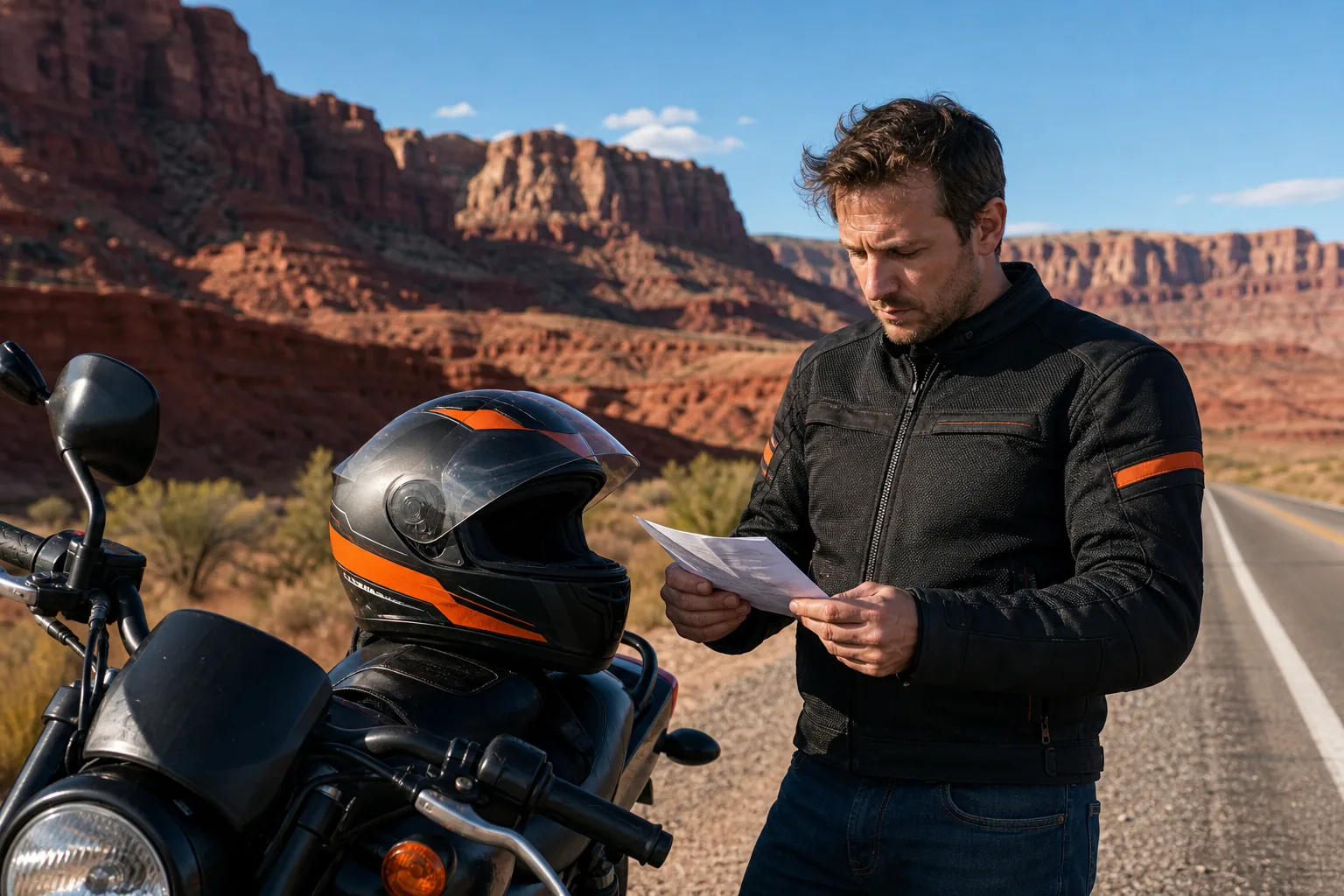
Keep the citation, crash report, registration record, photographs, and any witness names together. If the vehicle was modified, preserve records showing what changed. Those details may help explain why an officer classified the vehicle in a particular way.
A personal injury case may require review of facts beyond the citation. A helmet issue may affect part of a claim, but it doesn’t automatically answer who caused the collision.
Step 2: Confirm Whether Utah Requires a Helmet
Once you know the vehicle and rider, apply the applicable helmet requirement that matches those facts. Don’t rely on the common claim that Utah has no helmet law.
The available research points to a layered system. Some rules focus on riders below a certain age. Other rules address passengers, vehicle types, exemptions, or a helmet-related fine waiver for older operators. The answer can change when one fact changes.
The table is a screening tool, not a substitute for the current statute. Research materials report different fine amounts for different vehicle classes. One source reports a first motorcycle offense at $50. Another reports motorcycle and motorized scooter penalties in the $75 to $150 range. That conflict is a warning to check the citation and the current law before assuming the amount.
Some research also identifies a $25 fine for electric assisted bicycles and motor-assisted scooters. It reports a separate $110 fine for certain high-power electric devices. These figures may depend on the device, the rider’s age, and the specific section used by the officer.
Adults may also see a helmet-related financial incentive in the law. Research describes an $8 waiver for operators age 21 or older who wear a helmet. Because the sources describe penalties differently, treat that figure as a point to verify, not as a promise about every ticket.
When reading the citation, compare the vehicle description with the statute section listed on the form. Check the rider’s age. Then check whether the citation alleges operation, passenger conduct, or another violation.
Helmet use also matters apart from the ticket. Motorcycle helmets are protective headgear designed for motorcycle riders. Wearing one is a sound safety choice even when a narrow exception may apply.
Step 3: Check and Document Any Available Exemption
Helmet exemptions in Utah are narrow, and most require proof. Find the record before you claim the exception.
Research materials identify several possible exemptions. They don’t all apply to every vehicle or rider. Some depend on age. Others depend on documentation, vehicle history, or the event itself.
Medical exemption
A medical exemption may apply when a qualified physician certifies that helmet use would worsen a medical condition. A written statement matters. A verbal explanation at the roadside may not be enough.
Ask the physician’s office for a clear statement that addresses the condition and the effect of helmet use. Keep the original in a safe place. Carry a copy only if it won’t be damaged or lost.
Religious exemption
A religious exemption may require proof that helmet use conflicts with a sincerely held religious belief. Research identifies an affidavit plus supporting religious documentation as part of that process.
Don’t assume a personal preference qualifies. The wording and proof requirements matter. If an officer rejects the claim, preserve the documents and the exact reason given.
Vintage motorcycle exemption
A vintage motorcycle exemption may apply to a vehicle made before 1978 that isn’t used for regular commuting. Research also identifies proof of registration and vehicle age as required records.
Keep the registration, title information, and any manufacturer record together. A motorcycle’s appearance alone won’t prove its manufacture date. Regular work travel may also create a problem for this exception.
Safety course and event exemptions
Research identifies a conditional exemption for a rider age 18 or older who completed a DPS-approved motorcycle safety course. It also identifies a possible exemption for a motorcycle used in an organized event with proper permits.
For either exception, save the completion certificate or event permit. Check the dates. Confirm that the course or event fits the rule being cited.
Enclosed cab exception
An enclosed cab may provide an exemption for listed vehicles. The key question is whether the rider was truly inside an enclosed cab when the rule applied.
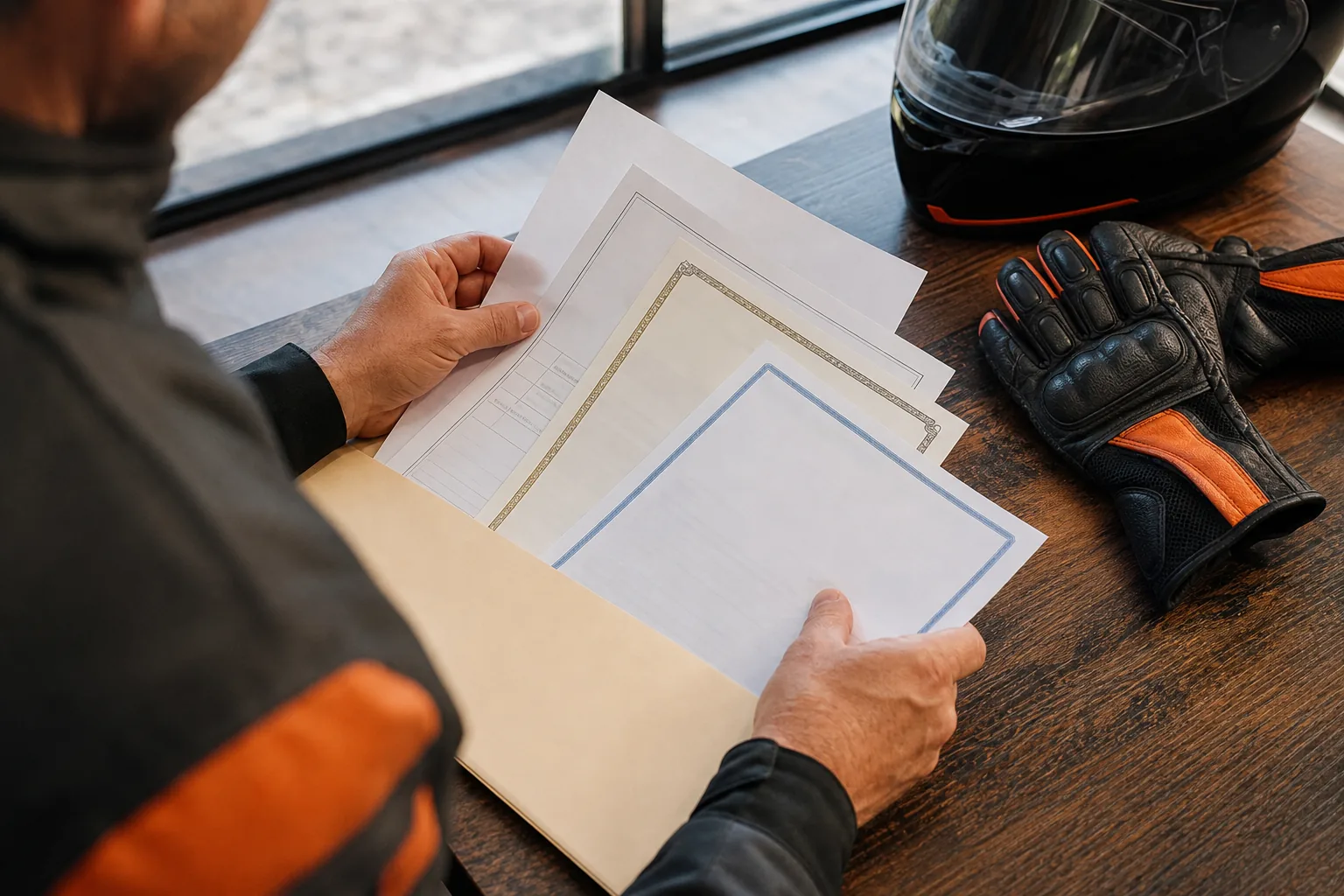
Take photos of each document and store them securely. Keep the originals. If you received a ticket, attach a short timeline showing when each document was issued and what the officer reviewed.
At LeBaron & Jensen, P.C., we can help separate a valid exemption issue from a broader injury claim. We understand how stressful a citation feels after a crash. The paperwork should support your position, not become another source of confusion.
Step 4: Protect Your Rights After a Utah Motorcycle Crash
A helmet citation doesn’t decide who caused a Utah motorcycle crash. Protect your health first, then preserve the facts.
Get medical care promptly, even if the pain seems manageable. Head injuries, road rash, fractures, and internal injuries may not be clear at the scene. Tell the medical provider what happened and describe every symptom.
Take these steps after the crash
- Move to safety if you can do so without worsening an injury.
- Report the crash to the proper authorities.
- Exchange required information with the other driver.
- Photograph the scene, vehicle damage, road marks, and visible injuries.
- Save your helmet, riding gear, and damaged parts.
- Keep medical bills, work records, prescriptions, and insurance letters.
- Avoid guessing about fault when speaking with an insurer.
Don’t throw away a damaged helmet. Don’t wash or repair riding gear before documenting it. Those items may help show the force of the impact and the injuries that followed.
Utah personal injury claims may involve negligence, which means another person’s failure to use reasonable care. A helmet issue may become part of the defense, but it doesn’t erase evidence that another driver ran a light, crossed a lane, or struck you from behind.
For a clearer record, write a timeline. Start with the trip. Note the road, traffic, weather, speed, lane position, impact, emergency response, and medical care. Add the date you received the citation and the exact wording on it.
We often tell injured clients to avoid posting crash photos or opinions online. An insurer may use a short post without the surrounding facts. Let the medical record and preserved evidence speak first.
Our team at LeBaron & Jensen, P.C. handles personal injury matters for people facing the pressure of treatment, insurance claims, and lost work. Our Utah motorcycle accident resource explains safety steps and common issues riders face after a collision.
Contact us through the firm’s website if you need help reviewing the citation or injury claim. We can explain the next step, assess the available evidence, and help take the stress off your plate while you focus on recovery.
A fair settlement depends on proof. Start preserving that proof now.
FAQ About Helmet Laws Utah
Does Utah require motorcycle riders to wear helmets?
Utah has helmet requirements that depend on facts such as age, vehicle type, and passenger status. Research identifies mandatory rules for some younger motorcycle riders and passengers, plus conditional exemptions for certain adults. Since sources report different rules and penalties, check the current statute and the exact citation before relying on a general summary.
Can adults ride a motorcycle without a helmet in Utah?
Some adults may qualify for a conditional exception, but adults shouldn’t assume helmets are optional in every situation. Research identifies a possible safety-course exception for riders age 18 or older, along with medical, vintage, religious, event, and enclosed-cab exceptions. Each has limits. Keep proof with your records and verify the rule that applies.
What is the fine for not wearing a helmet in Utah?
The fine depends on the vehicle and citation. Research reports penalties ranging from $50 for a first motorcycle offense to $75–$150 for motorcycles and motorized scooters. Read the citation and confirm the current amount before paying or contesting it.
Does a helmet violation reduce a motorcycle injury claim?
A helmet violation may become an issue in a personal injury claim, but it doesn’t automatically eliminate the claim. The facts still include who caused the crash, what injuries occurred, and whether the missing helmet contributed to a specific injury. Preserve medical records and crash evidence, then ask LeBaron & Jensen, P.C. to review the full situation.
Do motorcycle passengers have to wear helmets in Utah?
Research identifies a helmet requirement for motorcycle passengers. The passenger’s age and the vehicle’s classification may still matter. If a passenger was injured, save the citation, medical records, photographs, and witness details. A lawyer can assess the helmet issue alongside the driver’s conduct and the passenger’s injury claim.
Conclusion
Don’t guess at Utah’s helmet rules based on age or vehicle appearance. Match the vehicle, rider, passenger status, and exemption documents to the citation. If a crash caused injury, contact LeBaron & Jensen, P.C. through its website and preserve your records before speaking in detail with an insurer.