

Table of Contents
Proving fault after an injury takes more than showing that someone made a mistake. In Utah, you must connect four legal elements to reliable proof, keep your share of fault below 50%, and file before the deadline. We’ll show you how to build that proof and when LeBaron & Jensen, P.C. can take the stress off your plate.
Step 1: Identify the Four Elements of Negligence
To understand how to prove negligence in a personal injury case Utah law requires four pieces: duty, breach, causation, and damages. If one piece is missing, the claim may fail even when the accident caused serious harm.
Duty means the other person had a legal obligation to act with reasonable care. Drivers must follow traffic rules and watch for hazards. A property owner may need to address a dangerous condition that could hurt visitors.
Breach means the person failed to meet that duty. Texting behind the wheel, running a red light, or driving while impaired may show a breach. A wet floor left without a warning may support a premises claim.
Causation links the breach to the injury. You must show that the harm would not have happened without the conduct. You must also show that the injury was a close enough result for the law to place responsibility on the defendant.
Damages are the losses caused by the injury. They may include medical care, lost income, property damage, and pain. In a civil case, the plaintiff normally has the burden of proving the claim with admissible evidence. You can review general legal terms in the online glossary.
Utah also recognizes negligence per se in some cases. That means breaking a safety law may establish the duty and breach parts when the law protects people like you and the violation caused your injury. A speeding violation in a school zone, for example, may simplify the fault analysis. It does not remove the need to prove causation or damages.

Step 2: Gather Evidence of Duty and Breach
When you ask how to prove negligence in a personal injury case Utah attorneys start with the conduct that led to the event. Begin gathering proof as soon as you can. Road conditions change. Security video can be erased. Witnesses may forget what they saw.
Get a copy of the police or accident report. Check whether it records the location, statements, citations, weather, road conditions, and the officer’s diagram. A report is useful, but it isn’t always the final word. It may leave out key facts or repeat an incorrect account.
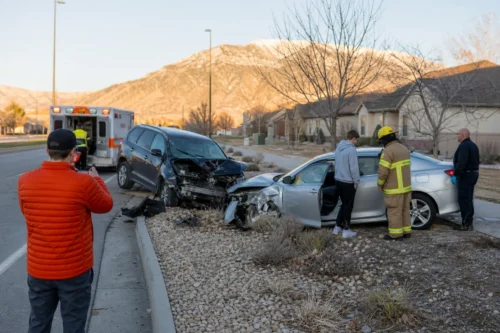
Save every photo and video from the scene. Take wide shots that show the layout. Then keep close shots of vehicle damage, skid marks, broken signs, poor lighting, ice, spills, or other hazards. Keep the original files when possible because file details may help show when the images were taken.
Write down what happened while your memory is fresh. Use a simple timeline. Record where each person stood or drove, what you saw before impact, and what happened right after. Don’t guess at details. Mark uncertain points as uncertain.
Ask witnesses for their names and contact details. Avoid telling them what to say. A short, neutral account is more useful than a statement shaped to fit your claim. If a business or home may have camera footage, send a written request to preserve it.
Look for records that show a rule was broken. These may include a traffic citation, phone records, vehicle data, employment records, inspection documents, or property maintenance logs. We may also use an accident reconstruction professional when the path of travel or timing is disputed.
Don’t argue with the other driver or post about the accident online. Admissions can be taken out of context. Photos and records usually carry more weight than an angry exchange.
Step 3: Connect the Negligent Conduct to Your Injuries
Fault alone doesn’t prove an injury claim. To prove negligence in a personal injury case Utah law also requires a clear link between the conduct and the harm.
Seek medical care promptly after the event. Tell the provider what happened and describe every symptom, even if it seems minor. Some injuries appear later, but a long gap in treatment gives an insurer a reason to argue that something else caused the condition.
Keep the medical record trail together. Save emergency records, imaging results, prescriptions, therapy notes, work restrictions, and specialist opinions. Follow the care plan or ask the provider to explain why you cannot follow it. Do not stop treatment simply because the insurer asks for a recorded statement.
Pre-existing conditions need careful handling. An earlier neck problem does not automatically defeat a claim. The issue may be whether the accident worsened it, caused a new condition, or increased the care you need. Your medical history must be compared with your symptoms before and after the event.
Medical causation can become the main dispute. The defense may say a procedure was unnecessary or that the injury came from a later event. A treating provider or another qualified expert may need to explain the diagnosis, the timing, and the expected future care.
Build a simple cause chain:
- The defendant took a specific action or failed to act.
- That conduct caused the collision or dangerous event.
- The event produced a diagnosed injury.
- The injury led to the losses described in your records.
For example, a distracted driver may fail to stop, strike your vehicle, and cause a shoulder injury. The records should connect the crash to the diagnosis, treatment, limits, and expected recovery.
LeBaron & Jensen, P.C. reviews the full chain instead of treating the police report or one medical bill as the whole case. If the insurer disputes the link, we can identify the missing proof before settlement talks go too far. You can also learn more about a personal injury lawyer Utah families may consult after an accident.
Step 4: Document Economic and Noneconomic Damages
A strong liability case can still produce a poor result if the losses are unclear. When proving negligence in a personal injury case Utah claimants should track damages from the first day of treatment.
Economic damages have a dollar value. Keep itemized bills for emergency care, hospital stays, imaging, medication, therapy, equipment, and later treatment. Record mileage and other out-of-pocket costs when they relate to medical care. Keep both the bill and proof of payment if available.
Lost income needs its own file. Save pay stubs, tax records, leave records, work restrictions, and employer statements. If the injury affects your future work, the claim may need proof of reduced capacity rather than only the wages already missed.
Do not overlook property loss. Vehicle repairs, a total-loss valuation, damaged clothing, and other accident-related expenses may belong in the claim. Keep estimates, receipts, and photos. Avoid throwing away damaged items before they are documented.
Noneconomic damages cover harm that does not come with a simple invoice. Pain, emotional distress, sleep problems, lost enjoyment, and limits on family life may matter. Keep a short daily log. Write down the pain level, activities you could not do, sleep disruption, and effects on work or relationships.
A journal should be accurate, not dramatic. Specific details help. “Could not lift my child for three weeks” tells a clearer story than “I felt terrible.” Statements from family members may also show changes they saw after the injury.
Future losses require care. A doctor may need to explain future treatment. A work expert may need to explain reduced earning capacity. Avoid settling before you understand the likely course of care, because a signed release usually ends the claim for later losses.
Medical providers may have reimbursement rights after a settlement. Health insurers or benefit plans may seek repayment for bills they paid. We account for those claims while working toward a fair settlement, rather than treating the settlement figure as the amount you will keep.
Medical records are often the backbone of this part of a case. If you need an evaluation or treatment record, confirm the provider’s services before relying on any online listing, such as an online provider listing.
Step 5: Address Comparative Fault and Protect the Claim
Utah can reduce your recovery when your conduct contributed to the injury. The state uses modified comparative fault. You may recover when your fault is below 50%, but your award is reduced by your percentage of fault.
Suppose a fact finder assigns you 20% fault. Your award would be reduced by that percentage. If the fact finder assigns you 50% fault, you recover nothing under the threshold described in Utah Code section 78B-5-818.
Insurers often raise fault arguments early. They may point to speed, following distance, a missed warning, phone use, footwear, or a delay in medical care. Don’t ignore these claims. Gather facts that answer them.
- Save photos that show traffic controls and sight lines.
- Keep witness accounts about what each person did.
- Follow medical instructions and explain any treatment gap.
- Give the insurer a careful account rather than a rushed recorded statement.
Fault can involve more than one defendant. A driver, employer, property owner, contractor, or government entity may each raise separate issues. The facts must show what each party did and how that conduct contributed to the harm.
Protect the filing deadline too. Utah law generally provides four years for a personal injury lawsuit, but exceptions can change the result. Claims involving a government entity may have shorter notice rules. Wrongful death and other claim types can follow different deadlines.
Review the applicable limitations provision, then have a lawyer apply the correct deadline to your facts.
Don’t wait until the deadline is close. Evidence review, medical records, expert opinions, insurance negotiations, and filing preparation all take time. LeBaron & Jensen, P.C. can review the facts, identify fault arguments, and help protect your right to seek a fair settlement.

FAQ: Proving Negligence in a Utah Personal Injury Case
What are the four elements of negligence in Utah?
The four elements are duty, breach, causation, and damages. To prove negligence in a personal injury case Utah law requires evidence that the defendant owed reasonable care, failed to provide it, caused the injury, and left you with compensable losses. Missing one element can defeat the claim.
What evidence proves negligence after a Utah car accident?
Police reports, photos, witness statements, medical records, traffic citations, and vehicle damage can help prove negligence after a Utah crash. The best evidence depends on the dispute. A reconstruction opinion may help when drivers give different accounts or the impact pattern does not clearly show what happened.
Can a traffic ticket prove negligence in Utah?
A traffic ticket may support negligence per se when the violated law protects people like the injured person and the violation caused the harm. It can help establish duty and breach, but it does not automatically prove causation or damages. The remaining parts of the injury claim still need proof.
How does comparative fault affect a Utah injury claim?
Comparative fault reduces your recovery by your assigned share of responsibility. Utah generally bars recovery when your fault reaches 50% or more. The award may be reduced in proportion to your assigned share of fault. Insurers may raise fault arguments even when the other person clearly caused the event.
How long do I have to file a Utah personal injury lawsuit?
Utah generally allows four years for a personal injury lawsuit, but the correct deadline can change with the claim type and defendant. Government claims may have shorter notice requirements. Because an expired deadline can end the case, ask a Utah injury lawyer to check the date before discussing settlement.
Conclusion
Start with the four elements, then gather proof that links the defendant’s conduct to your injuries and losses. Preserve records, address comparative fault, and check the deadline now. If you want help assessing the evidence, LeBaron & Jensen, P.C. can review your situation and discuss the next step without adding more pressure to an already difficult time.