
Table of Contents
Knowing how to prove a slip and fall injury takes more than a single photo. In Utah, you must show what caused the fall, why the property owner was responsible, and how the fall caused your harm. The steps below can help you preserve proof before it disappears and protect your chance of a fair settlement.
We reviewed 6 competing online guides on proving a slip and fall injury, from firms based in New Jersey, Florida, Colorado, and Texas. None of the 6 distinguished actual notice from constructive notice, the standard that decides whether a property owner is liable. None described preserving security video before routine overwrite schedules erase it, and none mentioned keeping clothing or shoes as evidence. Only 1 of the 6, a Colorado firm, explained how a comparative fault percentage reduces a settlement award.
Step 1: Record Exactly What Happened at the Scene
To prove a slip and fall injury, start with a clear record of the event. Details fade fast, while the hazard may be cleaned, moved, or repaired within minutes.
If you can move safely, write down the exact date, time, and place of the fall. Include the store name, address, floor, aisle, entrance, stairwell, sidewalk, or parking area. Note what you were doing just before you fell and the direction your body moved.
Describe the mechanism of the fall in plain words. For example, you might write, “My right foot slipped on clear liquid near the checkout. There was no warning sign. I fell backward and struck my hip and head.” Avoid guesses about who caused the hazard. Record what you saw and felt.
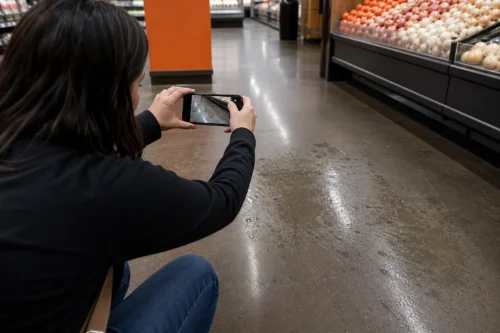
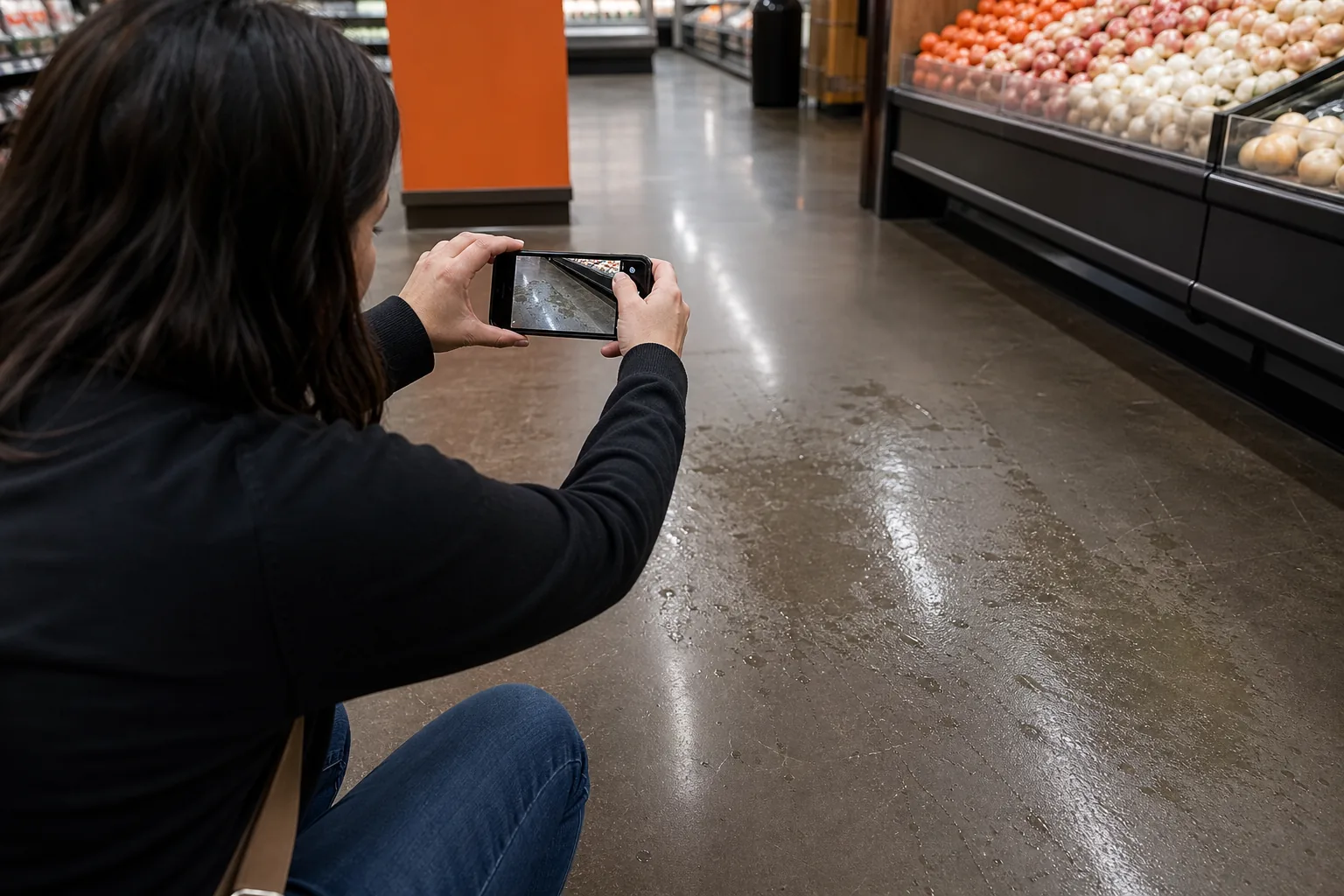
Photograph the condition before anyone changes it. Take wide shots that show the surrounding area. Then take close shots of the spill, broken surface, uneven step, debris, ice, poor lighting, or missing warning sign. Include an object for scale when safe, such as a coin or ruler. Do not alter the hazard before taking pictures.
Ask the manager or property representative to make a written incident report. Request a copy before you leave. If staff refuse, write down the person’s name, title, and the time you reported the fall. Send a short written follow-up that states the date, location, hazard, and injury.
Do not apologize or say you were careless. A frightened person may say, “I should have watched where I was going,” without knowing all the facts. That statement can later be used to shift blame.
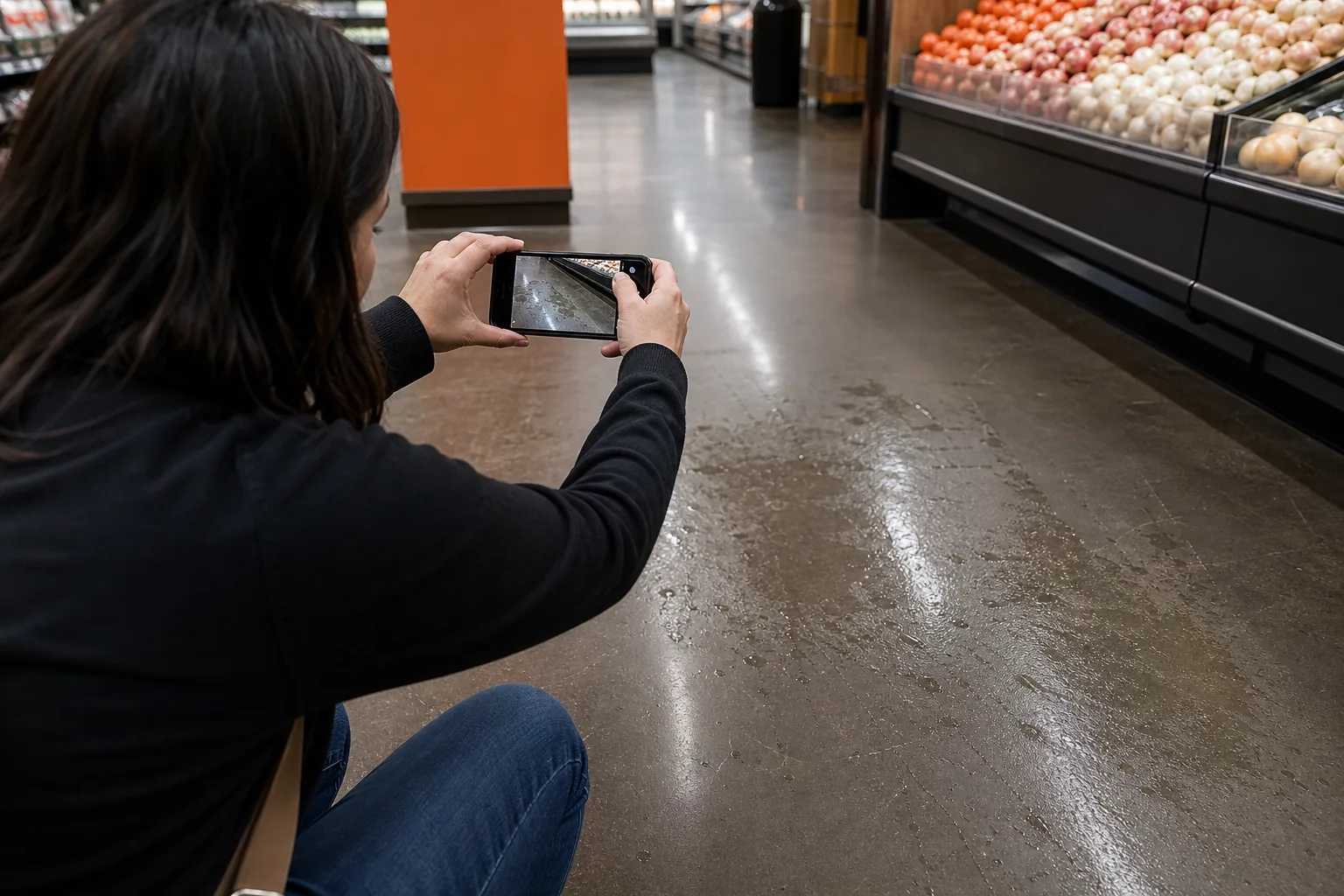
Step 2: Preserve Photos, Witness Accounts, and Other Evidence
Photos alone may not prove a slip and fall injury. Preserve every piece of evidence that can confirm the hazard existed and show what happened next.
Start with witnesses. Ask for each person’s full name and preferred contact method. Write down where the person stood and what they saw. A witness may have noticed the spill before your fall, seen an employee walk past it, or observed that no warning sign was present.
Ask witnesses if they will provide a short written account. They should use their own words and state only what they personally observed. Do not coach anyone or ask them to guess how long the hazard existed. Save the statement with the date it was written.
Preserve security video quickly. Stores, apartment buildings, offices, and parking facilities may overwrite footage on a routine schedule. Send a written preservation request that identifies the date, time, location, and camera angles that may show the fall. Keep a copy of the request and proof that you sent it.
Keep the clothing and shoes you wore at the time. Do not wash or discard them until we have assessed whether they may help explain the incident. Save photographs of bruising, swelling, cuts, casts, and other visible injuries. Take follow-up photos as your condition changes.
Make one digital folder for the claim. Add the incident report, photos, witness details, emails, video requests, medical records, bills, and work records. Name files with the date and a short description. Back up the folder in a second location.
Social media deserves care. Do not post about the fall, your activities, or your recovery. Do not delete old posts without legal advice. Deleting material after a claim begins can raise questions about what was removed and why.
For a restaurant fall, the proof may include a cleaning log, employee statement, missing mat, or report of an earlier spill. Our guide on evidence needed to prove negligence in a restaurant slip-and-fall case explains how those records fit together.
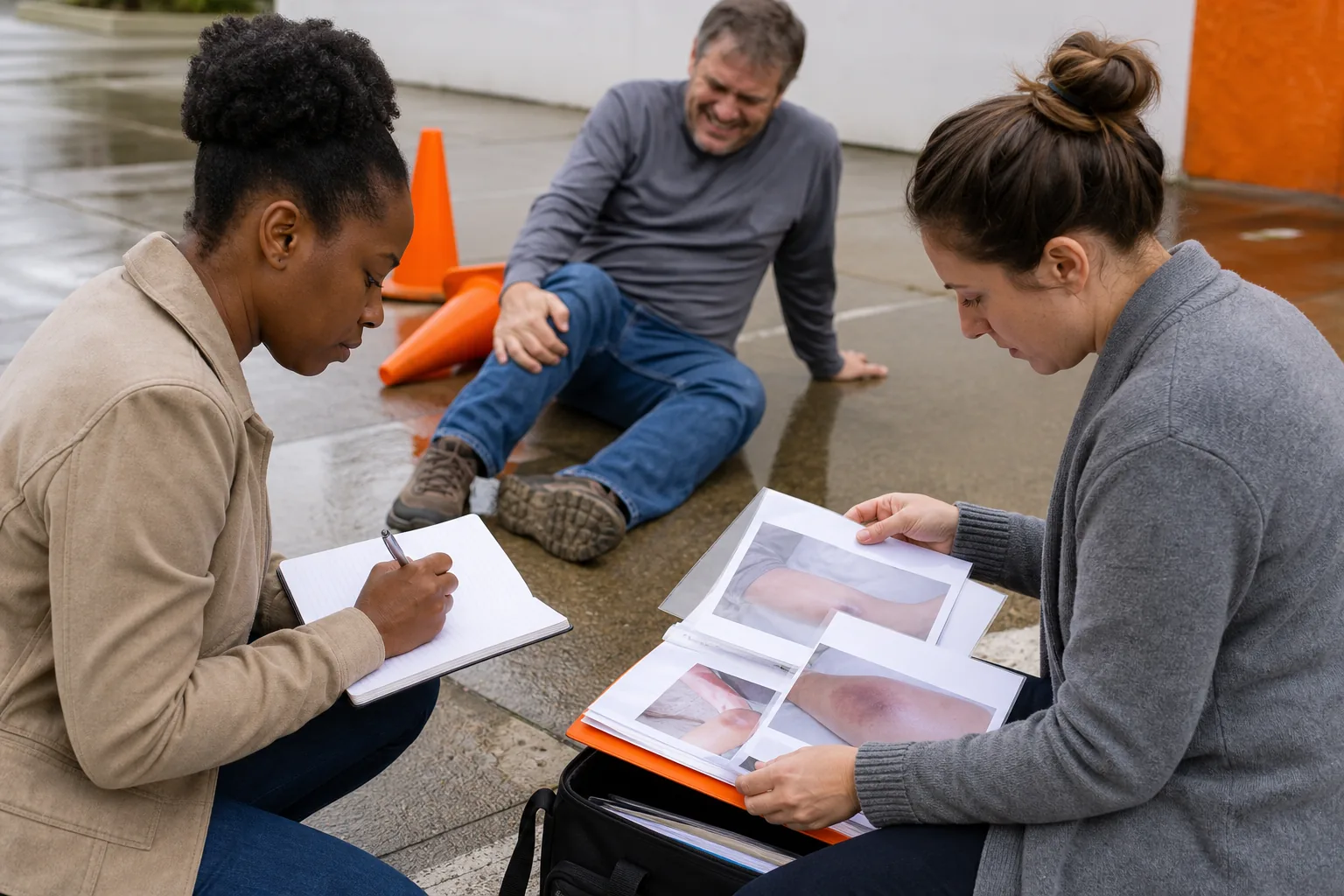
Pro Tip: Keep the original photo files. Screenshots and edited images may lose useful information about when and how they were taken.
Step 3: Obtain Medical Proof Linking the Injury to the Fall
Medical proof connects the fall to your injury. It also shows the care you needed and the costs that followed.
Seek medical attention as soon as you reasonably can. Go to an emergency department for serious symptoms. Contact a healthcare provider for less urgent injuries. A prompt record can establish when you first reported pain and what the provider found.
Tell the provider exactly how the fall happened. Say which body parts hit the floor or another object. Explain every symptom, even if it seems minor. Mention pain that appears later. Head injuries, back problems, and soft-tissue injuries may become clearer over time.
Do not minimize your condition because you feel embarrassed or worried about the cost. Do not exaggerate it either. Accurate reporting gives your medical team the information needed to treat you and gives your claim a reliable record.
Request and keep copies of the records that relate to the fall:
- Emergency room or hospital reports.
- Imaging results, such as X-rays or other scans.
- Diagnostic test results.
- Doctor and specialist notes.
- Physical therapy records.
- Prescriptions and treatment plans.
- Medical bills and payment records.
Follow the treatment plan unless a provider tells you to change it. If you miss an appointment, record the reason and reschedule. Long gaps in care can give an insurer an argument that the injury healed or came from another cause.
Track how the injury affects daily life. Write down missed work, reduced hours, help needed at home, sleep problems, and activities you can no longer do. Keep wage records and receipts for travel, medicine, equipment, and other accident-related costs.
Medical records do not prove property negligence by themselves. They help prove causation, which is the link between the hazard, the fall, and the harm. We use that timeline when we evaluate a personal injury claim at LeBaron & Jensen, P.C.
Step 4: Prove the Property Owner Knew or Should Have Known About the Hazard
Proving a slip and fall injury also means proving notice. You generally must show the owner knew about the dangerous condition or should have found it through reasonable care.
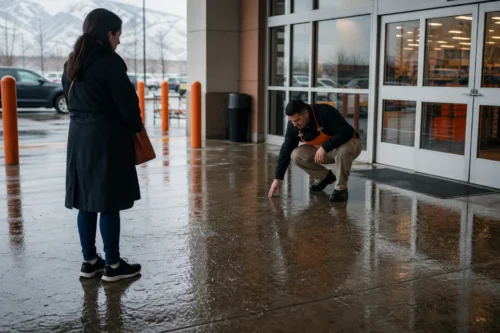
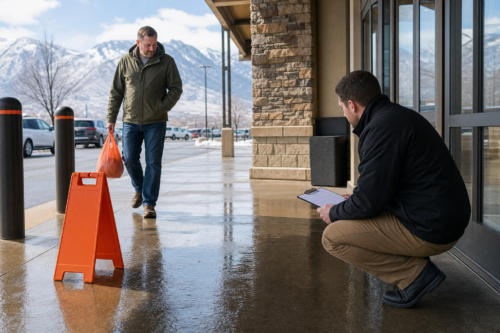
Actual notice means someone connected to the property knew about the hazard. An employee may have seen a spill, received a complaint, or created the condition while cleaning. A prior email, store report, or witness statement may support that point.
Constructive notice means the hazard existed long enough that a reasonable inspection should have found it. The exact time may be hard to prove. Look for clues such as dried liquid, footprints, cart marks, dirty ice, repeated complaints, or a long-standing broken surface.
Permanent conditions can raise a different issue. A broken stair, cracked pavement, loose handrail, or poor lighting may have existed for weeks or months. Maintenance records and repair requests can show whether the owner knew about the problem.
Send a written request to preserve incident reports, inspection logs, cleaning schedules, repair records, employee messages, and video. The owner may hold this evidence. You may not receive it without a formal demand or the discovery process in a lawsuit.
An insurer may argue that you were distracted, wore unsafe shoes, ignored a sign, or should have seen the condition. Those arguments do not decide the case by themselves. We examine the lighting, the warning, the condition’s location, and what a reasonable visitor could see.
The property owner’s duty can also depend on why you were there. A customer may receive different legal treatment from a trespasser. That is one reason a Utah premises-liability review should happen early.
Step 5: Build the Claim and Get Utah Legal Guidance
A strong claim tells one consistent story. It identifies the hazard, shows the owner’s failure, links the fall to the injury, and calculates the loss.
Start with a timeline. Put the fall at the top. Add the first report, medical visits, tests, treatment, missed work, follow-up care, and contact from any insurer. Match each event with a supporting document.
Separate damages into two groups. Economic damages include medical costs, lost income, and future treatment needs. Noneconomic damages include pain, emotional distress, and the loss of activities you once enjoyed.
Do not accept a settlement before you understand your future care. A quick check may reveal an injury that needs months of therapy. A doctor may also need more time to assess whether the condition will affect work or daily life.
Be careful with insurance adjusters. Give basic facts about where and when the fall happened. Do not guess about fault or promise that you are fully recovered. Do not give a recorded statement or sign a release before receiving legal advice.
Utah filing deadlines depend on the facts. A claim involving government property may have special notice rules. The general civil filing period is set by statute. Do not rely on a general deadline without checking the property owner and claim type.
The scene evidence, medical record, notice issue, and comparative-fault risk should be considered together. That keeps one missing piece from weakening the whole claim. We can also handle claim communications while you focus on treatment.
Before meeting with a lawyer, gather your incident report, photos, witness information, medical records, bills, wage records, and insurer letters. If you do not have every item, meet anyway. Evidence can still be requested and developed later.
Legal guidance is especially useful when the owner denies the hazard, video is missing, several parties control the property, or your injuries affect your work. We understand how disruptive a fall can be. Our job is to take the legal stress off your plate while we work toward a fair settlement.
Frequently Asked Questions
What is the most important evidence in a slip and fall case?
Photos or video of the hazard are often the most important starting evidence, but no single item proves every case. You also need witness information, a prompt medical record, an incident report, and proof of the owner’s notice. Together, these records show what existed, what happened, who may be responsible, and how the fall affected you.
How do I prove a fall caused my injury?
You prove the connection with prompt medical care and consistent records. Tell the provider how you fell and describe every symptom. Keep test results, treatment notes, bills, and follow-up records. A timeline that starts at the scene and continues through care can answer an insurer’s claim that your injury came from an earlier event.
What if there were no witnesses to my slip and fall?
You may still have a claim without an eyewitness. Use scene photos, surveillance footage, incident reports, medical records, clothing, and maintenance logs. Your own account matters, especially when it stays consistent. A lawyer may also identify people who saw the hazard before or after the fall, even if they did not see the exact moment.
Can I recover if I was partly at fault in Utah?
You may recover if your assigned fault is below 50 percent under Utah’s comparative fault statute, but your award can be reduced by your percentage of fault. The property owner may argue that you ignored a warning or failed to watch your path. Preserve evidence about lighting, signs, visibility, and the hazard’s location so that fault is assessed on the full record.
Should I speak with the property owner’s insurance company?
You should report the fall, but speak carefully with the insurer. Give basic facts and avoid guesses about fault, recovery, or future treatment. Do not give a recorded statement or sign a release before legal review. LeBaron & Jensen, P.C. can help protect your position while the claim is investigated.
Conclusion: How to Prove a Slip and Fall Injury in Utah
Prove the case through a clear chain of evidence, starting at the scene and continuing through medical care and owner notice. Preserve what you have today, then speak with LeBaron & Jensen, P.C. before discussing a settlement or signing insurer documents. Early review can help protect your evidence and your next legal step.