

Table of Contents
A truck crash can leave you hurt, shaken, and unsure what to do next. In Utah, the first minutes can affect safety, medical proof, and evidence that may disappear fast.
Follow these seven steps in order when you can. If your injuries prevent you from doing them, focus on emergency care first. We can help with the rest.
Step 1: Get to Safety and Call 911
After a truck crash, your first job is to prevent another collision. Move only if you can do so safely, then get emergency help on the way.
Turn on your hazard lights. If your vehicle still moves and no one needs immediate care inside it, pull to a safe place away from traffic. Do not stand between vehicles or walk into an active lane.
If you have reflective triangles or flares, place them where approaching drivers can see them. Stay behind a barrier when one is available. A large truck may block your view of traffic, and other drivers may not see you until it is too late.
Call 911 as soon as possible. Tell the dispatcher where the crash happened, how many vehicles are involved, and whether anyone appears trapped or badly hurt. Give the nearest mile marker, exit, cross street, or landmark if you know it.
Ask for police and medical responders even when the crash seems minor. A truck collision can cause injuries that are not clear at the scene. The police report may also record road conditions, vehicle positions, witness names, and statements made soon after the impact.
Do not argue with the truck driver. Do not admit fault. Avoid saying that you feel fine because pain can appear later. Give a clear account of what you saw, but say when you do not remember something.
General after-accident guidance also stresses reporting the crash and exchanging information. Follow the officer’s directions, but do not let anyone pressure you into guessing about speed, distance, or fault.
If you cannot move because of pain, wait for responders. Your safety comes before photographs, insurance details, or legal paperwork.
Once the scene is safe, ask the officer how to obtain the report. Write down the agency name and the report number if one is available. That small detail can save time later.
We understand that this first step can feel chaotic. Make one choice at a time. Safety first, then medical care.

Step 2: Get Medical Care and Follow the Treatment Plan
Medical care should start as soon as possible after a truck crash. Even if you can walk away, ask a medical professional to check you.
Adrenaline can hide pain. Head, neck, back, and internal injuries may not show right away. A medical visit gives you care for the injury and a dated record of what you reported after the collision.
Tell the provider about every symptom, even if it seems small. Mention headaches, dizziness, numbness, ringing in your ears, trouble sleeping, mood changes, or pain that gets worse with movement. Do not downplay symptoms because you feel pressure to return to work.
Follow the treatment plan you receive. Take medicine as directed. Attend follow-up visits. Ask questions when an exercise or work limit is unclear. If you cannot attend an appointment, contact the office and ask how to reschedule.
Keep your medical papers in one place. Save bills, receipts, prescriptions, discharge instructions, work restrictions, and mileage records for medical visits. A simple folder on your phone or in a paper file can prevent lost information.
Tell your doctor what daily tasks you cannot do. For example, you may struggle to lift a child, sit through a work shift, sleep through the night, or drive. Those details help show how the injury affects your life.
Do not stop treatment because an insurance adjuster says the claim is under review. The adjuster does not decide what care you need. Speak with your medical provider about treatment, then keep your legal team informed.
If you were working when the crash happened, notify your employer through the pro. Commercial carriers may have separate safety and testing duties after a crash. That process can involve the driver and carrier even when the injured person is another motorist.
Medical care also matters when you were a passenger or a family member is injured. Keep track of who took the injured person to appointments and what care was needed at home.
There is no prize for pushing through severe pain. Your health comes first, and a clear treatment record can protect your personal injury claim later.
Step 3: Document the Crash and Preserve Evidence
Good evidence can disappear within hours. If you are able, document the truck crash before the scene changes.
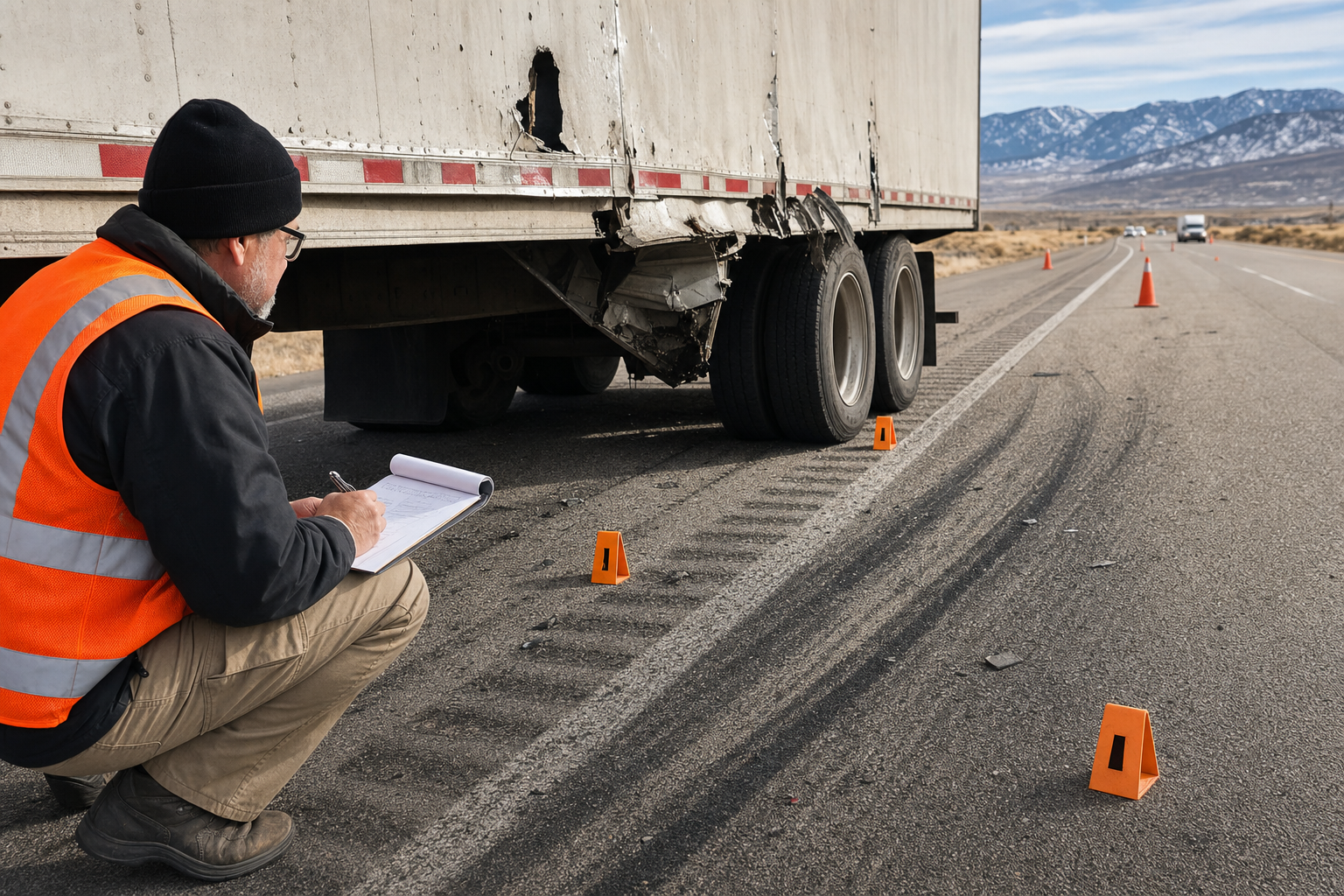
Take wide photographs first. Show the lane layout, traffic signals, road surface, shoulder, nearby signs, weather, and the position of each vehicle. Then take closer photographs of vehicle damage, tire marks, debris, broken parts, and visible injuries.
Do not move into traffic for a better picture. Use zoom when needed. Ask another person to photograph areas you cannot reach safely.
Take short videos that show the full scene. Slowly record the road in both directions. Capture the truck’s trailer, cab, tires, lights, mirrors, load, and any visible markings. Avoid editing the files. Keep the original versions with their date and time information.
Write down what you remember before your memory shifts. Record the time, direction of travel, lane position, weather, traffic flow, and what happened just before impact. Note what you heard, such as braking, a horn, or a tire blowout.
Ask witnesses for their names and contact details. Do not ask them to improve your side. Simply ask what they saw and whether they are willing to speak with the police or a lawyer later.
Save dashcam footage right away. Many systems overwrite old video when the storage card fills. Copy the file to two safe places. Keep the original card if possible.
Save texts, emails, photographs, repair estimates, and messages about the crash. Do not delete social posts about the event after the fact. Speak with a lawyer before posting anything else about the collision.
Guidance about what to do after a semi-truck accident can remind you to record the scene, injuries, road conditions, and vehicle damage. That advice fits a simple rule: preserve what you can before weather, traffic, towing, or repairs erase it.
Keep the damaged vehicle in its post-crash condition until it has been documented, when safety and storage allow. Do not authorize repairs before photographs and an inspection unless the vehicle must be fixed for safety.
Ask the tow yard where the vehicle went. Write down its name and address. Tell your insurer and lawyer where the vehicle is stored. A truck accident investigation may need to compare damage patterns between the truck and your vehicle.
Preserve physical items too. Keep a damaged helmet, child seat, clothing, or vehicle part in a safe place. Do not clean or repair an item that may show how the impact happened.
Truck cases often include electronic evidence. A truck may contain an event data recorder, electronic logging data, camera footage, or other records. Data can be overwritten or lost when a vehicle moves through repair, storage, or sale. Ask LeBaron & Jensen, P.C. about sending a preservation notice before that happens.
Step 4: Report the Crash and Notify Insurers Carefully
Report the crash through the right channels, but keep your statements short and factual. Early reports help preserve a record without forcing you to make legal conclusions.
Start with the police report from Step 1. Request a copy when it becomes available. Read it for basic errors, such as the wrong lane, vehicle, date, or contact detail. If you find a mistake, ask the agency how to submit a correction or supplement.
Notify your own auto insurer promptly under your policy terms. Give the basic facts: when and where the crash occurred, the vehicles involved, and whether you received medical care. Ask for the claim number and the adjuster’s contact information.
You do not need to give a recorded statement before you understand your injuries and legal rights. You can say that you are still receiving care and will provide factual information after speaking with counsel. Never guess when an adjuster asks what happened.
Do not sign a broad medical release without reviewing it. An insurer may ask for records that have little connection to the collision. A release can also raise privacy concerns or create disputes about which records matter.
Do not accept a quick settlement while your treatment is still unfolding. A settlement usually ends the claim covered by the agreement. Once signed, you may lose the ability to seek more money for later-discovered harm.
Keep a claim log. Record the date of each call, the person’s name, the claim number, and what was discussed. Save letters and emails as PDF files. If a person makes a promise, ask for it in writing.
Truck crashes can involve several insurers. The truck driver may have one policy. The carrier, owner, broker, or cargo party may have another relationship to the claim. Do not assume the first insurer that contacts you represents every responsible party.
If you drove a company vehicle, follow your employer’s reporting policy. Do not alter work records or discuss the crash in group messages beyond what your employer requires. Keep your own copy of reports you submit.
We take the stress off your plate by helping organize these communications. LeBaron & Jensen, P.C. can review an insurer’s request before you respond, which gives you a chance to protect your claim without refusing reasonable cooperation.
Step 5: Identify Truck-Specific Evidence and Potentially Responsible Parties
Truck cases need more than a basic driver statement. The truck’s records may show what happened before the impact and who had control over the risk.
Start with the people and businesses tied to the trip. The possible parties may include:
- The truck driver, if careless driving or a rule violation contributed to the crash.
- The motor carrier, if hiring, supervision, training, scheduling, or maintenance played a role.
- The vehicle owner or maintenance provider, if a mechanical problem caused or worsened the impact.
- A shipper or cargo party, if an unsafe load shifted, fell, or changed the truck’s handling.
- A broker or other company, when its role in the shipment creates a legal issue.
These are possibilities, not conclusions. Liability depends on the facts, the contracts, the evidence, and Utah law.
Ask your lawyer to seek records that may include driver qualification files, inspection records, repair files, dispatch messages, route data, hours-of-service records, cargo documents, and onboard camera footage. The right request depends on the crash.
Pay attention to the truck’s condition. Photograph worn tires, broken lights, damaged straps, missing guards, open doors, or a load that appears shifted. Do not touch the truck or cargo. Tell the responding officer what you noticed.
Electronic data needs fast attention. A preservation letter, sometimes called a spoliation letter, tells a party to keep records that may relate to the claim. It may cover event data, video, GPS records, driver messages, inspection logs, and maintenance files.
Federal rules can also create tight post-crash testing duties for commercial drivers. The research behind this checklist identifies alcohol testing within two hours and controlled-substance testing within 32 hours in relevant situations, with separate stopping points when testing is delayed. Those deadlines concern carriers and drivers, but the records may matter to an injured person.
Do not try to obtain private carrier records by confronting the driver. Let a lawyer send a focused request or preservation letter. That protects the evidence and keeps you away from a tense exchange.
Carriers may also have to keep an accident register for three years. That kind of record can help identify the carrier’s internal account of the event, although it does not prove fault by itself.
Keep the truck’s company name, unit number, trailer number, license plate, and any bill-of-lading information. A photograph may capture details you did not notice at the scene.
Step 6: Protect Your Utah Claim and Speak With a Truck Accident Lawyer
A truck injury claim can involve serious medical needs and several layers of responsibility. Get legal advice early, before evidence moves and before an insurer frames the facts for you.
Utah deadlines depend on the parties and the type of claim. A claim involving a government vehicle or public entity can have a notice deadline that differs from a claim against a private carrier.
Ask a lawyer to identify the correct filing and notice dates for your claim. Put those dates on a written calendar. Do not rely on an adjuster’s promise that the claim will remain open.
At a first meeting, bring what you have. Useful items include:
- The police report or report number.
- Photographs and video from the scene.
- Witness names and contact details.
- Medical records, bills, and work restrictions.
- Insurance letters, claim numbers, and recorded-statement requests.
- Your own written account of the crash.
- Vehicle repair records and towing information.
You do not need a perfect file before seeking help. Tell the lawyer what is missing. An attorney can often request records that you cannot obtain alone.
Ask clear questions about the plan. Who will investigate the truck? How will medical bills be handled? What evidence should you preserve? What should you do if an adjuster calls? What costs may come out of a settlement?
A personal injury lawyer may investigate negligence, which means a failure to use reasonable care. The lawyer may also examine comparative fault, medical causation, lost income, future care, property damage, and pain-related harm.
Be honest about your medical history and the crash. If you had an earlier injury, disclose it. A lawyer can address the facts directly. Hidden information can damage trust and weaken your position later.
Be careful on social media. Do not post photos of activities that contradict your reported limits. Do not discuss blame, settlement value, or private medical details. Adjusters and defense lawyers may review public posts.
Property damage can create its own dispute. If your vehicle may be a total loss, save the insurer’s valuation and comparable-vehicle report. A vehicle valuation tool may help you understand the starting point of an actual cash value review, but it does not replace a lawyer’s analysis of the full claim.
LeBaron & Jensen, P.C. focuses on Utah personal injury matters and can help you understand the next legal step. We do not expect you to know every rule while recovering. Bring the facts you have, and we will help sort the rest.
FAQ
What should I do immediately after a truck accident?
Immediately after a truck accident, get to a safe place if you can and call 911. Ask for police and medical help, then avoid admitting fault or guessing about the crash. Once you are safe, seek medical care, save photos and records, notify your insurer, and speak with a Utah truck accident lawyer before signing a settlement.
Should I go to the doctor after a truck accident if I feel fine?
Yes, you should get a medical evaluation after a truck accident even when you feel fine. Adrenaline can hide pain, and some injuries appear later. Tell the provider what happened and describe every symptom. Follow the treatment plan and keep the records, bills, and work limits connected to your care.
How long do I have to file a truck accident claim in Utah?
The deadline depends on who caused the crash and what type of claim you have. Claims involving a government vehicle or entity may require an earlier notice. Private claims follow different rules. Speak with a Utah lawyer quickly because waiting can cause lost evidence or a missed filing deadline.
What evidence is important in a truck accident case?
Important evidence after a truck accident can include scene photos, dashcam files, medical records, witness details, vehicle damage, police reports, and insurance letters. Truck-specific records may include inspection files, maintenance history, driver logs, dispatch messages, cargo documents, and onboard video. Ask counsel to send a preservation notice before data is overwritten.
Should I talk to the truck company’s insurance adjuster?
You should report the crash as your policy requires, but consider speaking with a lawyer before giving a recorded statement or signing a release. The truck company’s adjuster may focus on facts that reduce payment. Give basic facts, avoid guesses, and do not accept a settlement before your treatment and losses are understood.
Conclusion
After a truck crash, protect your health first, then protect the record of what happened. Save evidence, keep every medical and insurance document, and ask LeBaron & Jensen, P.C. to review your situation before a deadline or lost data limits your options. Your next step is simple: gather the records you have and arrange a legal consultation.