
Table of Contents
A peaceful Uber or Lyft trip can turn into a painful fight over fault, insurance, and medical bills in seconds. We help injured people sort out those problems without adding more stress. Start with these five steps, then speak with a Utah rideshare accident lawyer before accepting money or giving a recorded statement.
Step 1: Get Medical Care and Document the Utah Rideshare Crash
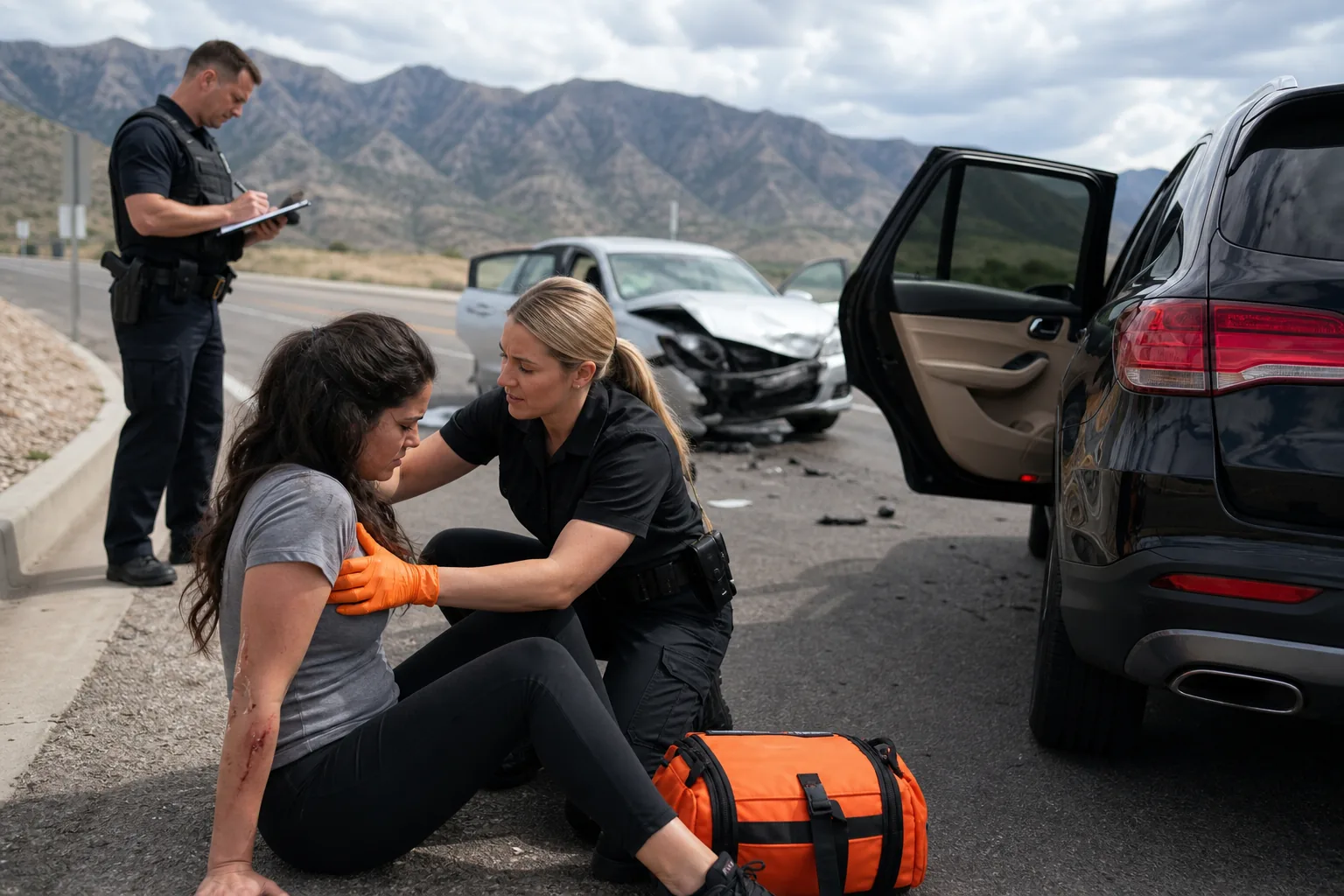
A crash can leave you hurt and unsure what to do next. Your first job is to protect your health and preserve facts that may support your claim.
Call emergency services if anyone needs urgent care. If you can safely move, get away from traffic and wait in a safe place. Ask for an ambulance when you have severe pain, trouble breathing, heavy bleeding, confusion, weakness, or possible head or spine injuries.
Get medical care as soon as you can, even if you think your injuries are minor. Whiplash, concussions, back injuries, and internal trauma may not feel severe right away. Tell the provider that a vehicle crash caused the symptoms.
Follow the treatment plan. Keep each appointment or explain why you cannot attend. Gaps in care can give an insurer an argument that your injuries improved or came from another event.
Utah drivers must report qualifying crashes to law enforcement. The safest move is to ask the investigating officer how the report will be made and how you can obtain it. Do not argue about fault at the scene. Give clear facts instead.
If you can do so safely, take photos of the vehicles, road, traffic controls, weather, visible injuries, and nearby businesses. Photograph damage before repairs begin. Save screenshots of your trip receipt, driver information, route, and any message from the rideshare app.
Write down what happened while your memory is fresh. Include the time, location, direction of travel, impact point, witness names, and what each driver said. Your notes may help when details become harder to recall.
Notify the rideshare company through its app. Keep the message brief and factual. Do not guess about your injuries or say that you feel fine when you have not been examined.
Our team at LeBaron & Jensen, P.C.’s rideshare app accident resource explains the early steps that can protect a passenger or another road user. We can also help organize records after you contact us.
Keep every bill, prescription receipt, mileage record, work note, and insurance letter. A claim is easier to review when the records show what happened from the first day forward.
Step 2: Identify Liability During Each Rideshare Driving Period
A rideshare accident lawyer in Utah must first identify what the driver was doing in the app. That detail can change which insurance policy applies.
Rideshare driving usually falls into four periods. The driver may be offline, online and waiting, driving to pick up a rider, or carrying a rider. Ask for screenshots or app records that show the driver’s status at the crash time.
| Driving period | What to check | Why the period matters |
|---|---|---|
| Offline | The driver was not logged into the app. | The driver’s personal policy may be the main starting point, subject to its terms. |
| Online and waiting | The driver was available but had not accepted a trip. | A rideshare company’s limited contingent coverage may apply, but the exact terms need review. |
| En route to a pickup | The driver accepted a request and was heading to the rider. | Company coverage may differ from the waiting period. |
| Carrying a rider | The rider was in the vehicle during the trip. | This is often the clearest rideshare coverage period, but fault still must be proven. |
This table is a starting point, not a coverage decision. Policy language, state rules, the driver’s conduct, and the facts of the crash can change the result.
Liability means legal responsibility for the harm. The rideshare driver may be liable if careless driving caused the collision. A third-party driver may be responsible if that driver ran a light, changed lanes without care, or struck the rideshare vehicle.
The rideshare company may become part of the claim through its insurance arrangement or through a dispute about the driver’s work status. Many drivers are treated as independent contractors. That label does not decide every issue by itself.
We look at the full chain. That can include app logs, dashcam footage, witness accounts, vehicle data, police findings, and medical records. We also examine whether another party, such as a vehicle owner or road contractor, contributed to the crash when the facts support that theory.
Utah’s Transportation Network Company Act includes rules for rideshare companies and their insurance duties. Read the current statutory language in Utah Code Section 13-51-108 before relying on a general online summary. The statute is only one part of the analysis.
Regional facts can matter too. A crash on the I-15 corridor may involve high speeds and several vehicles. A collision in Provo, Salt Lake City, or Southern Utah may involve different witnesses, road designs, and court locations. Location does not decide fault, but it can affect how we gather evidence.
Do not assume the person who hit you is the only possible source of recovery. A careful liability review can reveal more than one policy or responsible party.
Step 3: Check Uber, Lyft, and Personal Insurance Coverage
Insurance is often the hardest part of a rideshare injury claim. We map each possible policy before discussing a fair settlement.
Start by identifying every person and company connected to the crash. Write down the rideshare driver’s name, vehicle details, app status, and insurer if the officer or driver provided that information. Also collect the other driver’s insurance details.
Uber and Lyft use app-based coverage periods. The available protection may change when the driver is offline, waiting for a request, traveling to a pickup, or carrying a passenger. Do not assume the largest policy applies simply because the vehicle displayed a rideshare decal.
The driver’s personal policy may contain a rideshare exclusion. An exclusion is contract language that removes coverage for certain driving activity. This creates a coverage gap when the driver was working but the company policy does not provide the protection you expected.
Ask for policy information in writing. Save every claim number and adjuster email. If an insurer says another policy must pay first, request that position in writing. Do not fill gaps with guesses.
Passengers usually have a claim against the driver who caused the crash, the other driver, or both, depending on the evidence. A passenger’s own auto policy may also provide uninsured or underinsured motorist protection in some situations. The policy should not be assumed to apply.
Medical payments may begin before fault is settled if a policy includes that coverage. Health insurance may also pay treatment bills. Using available medical coverage does not automatically end your injury claim, but liens and reimbursement rights may affect the final amount.
Report the claim to the rideshare company, but keep the report factual. You can state that a crash occurred, where it happened, and that you are seeking medical care. You do not need to give a full recorded interview before getting legal advice.

The policy language should be compared with the driver’s app status and the crash facts. That process helps us challenge a carrier that tries to shift responsibility to another insurer without a sound basis.
Utah rideshare firms show a wide information gap. The five reviewed entries did not disclose rideshare-specific years of experience or average settlement amounts. Only two disclosed a fee structure. That means you should ask direct questions instead of relying on polished promises.
- Which policy is being investigated?
- What app period did the driver occupy?
- Does a personal-policy exclusion apply?
- Are medical bills being paid now?
- Will the insurer accept fault, or is it disputing liability?
Coverage is a legal question tied to facts. A quick review with LeBaron & Jensen, P.C. can help you understand which insurer should receive the claim and what information should be preserved.
Step 4: Calculate Injuries, Damages, and Utah Filing Deadlines
A rideshare injury claim must show more than vehicle damage. We build the damages picture around your health, work, and daily life.
Economic damages are financial losses that can be measured. Keep records for:
- Emergency care, follow-up visits, therapy, prescriptions, and medical equipment.
- Future treatment that a provider reasonably expects you will need.
- Wages lost during recovery.
- Reduced earning ability if the injury limits your work later.
- Transportation costs linked to medical care.
Non-economic damages cover harm that does not come with a simple receipt. Pain, sleep loss, anxiety, reduced mobility, and the loss of normal activities may support compensation. Your medical notes and your own day-to-day record can help show how those problems affect you.
Injuries vary by crash. A concussion may affect focus and work. A broken bone may require surgery and months of therapy. A back injury may limit lifting, sitting, driving, or sleep. The value of a claim depends on the evidence, prognosis, fault, insurance, and other facts.
Do not predict a final amount after the first appointment. Some injuries need time before a doctor can give a reliable outlook. Settling too soon may leave future care outside the claim.
Utah deadlines also matter. A general personal injury action is often subject to a three-year limit under Utah law, but exceptions can shorten or change the period. Claims involving a government body may have special notice rules. A death claim has its own issues.
Review the current text of Utah Code Section 78B-2-307 with a lawyer who can apply it to your facts. The date of the crash is only one detail. The defendant, claim type, age of the injured person, and government involvement may also matter.
We place the deadline on the case calendar as soon as we receive the basic facts. That does not mean filing suit immediately. It means protecting your right to investigate, negotiate, and file if needed.
Keep a daily symptom log for the first several weeks. Record pain levels in plain words, tasks you cannot do, sleep problems, missed shifts, and changes in mood. Do not exaggerate. Accuracy is more useful than dramatic language.
Family members may provide helpful observations. A spouse or coworker can describe missed work, changes in routine, or limits that medical records do not capture. Their accounts should stay factual and specific.
A fair settlement should account for known losses and supported future harm. We take the stress off your plate by building that record before making a demand.
Step 5: Deal With Adjusters and Choose a Utah Rideshare Accident Lawyer
Adjusters may contact you before you understand your injuries or the coverage layers. A rideshare accident lawyer in Utah can take over those conversations while you focus on recovery.
You can give basic facts after the crash. Share the date, location, vehicles, and whether you received medical care. Avoid guessing about speed, distance, fault, or your final recovery.
Do not sign a broad medical release without review. Do not accept a quick settlement before you know the treatment outlook. Do not post photos or comments about the crash on social media. Even an innocent post may be taken out of context.
A recorded statement can lock in an answer before all evidence is available. You can tell the adjuster that you are seeking legal advice before providing one. Stay polite. Do not argue.
Ask every lawyer you interview how the firm handles app records, policy exclusions, passenger claims, and disputes between insurers. Ask who will manage your file. Ask how often the firm reports case progress.
Fees deserve a clear answer too. Many injury firms use contingency agreements, which usually means the fee is tied to a recovery instead of an upfront hourly bill. The written agreement should explain the percentage, case costs, medical liens, and what happens if there is no recovery.
Creekside Legal described a contingency fee with a smaller percentage than most Utah firms. Handy & Handy stated that clients pay no fee unless they win. Those statements do not tell you every contract term, so read the agreement closely.
The same review found that four of five entries described a target audience. Most focused on individual riders. One included drivers and independent contractors, while another included injured passengers, drivers, and third parties. Ask whether the firm has a plan for your role in the crash.
LeBaron & Jensen, P.C. focuses on personal injury matters for people and families in Utah. We examine fault, coverage, damages, and deadlines as one connected problem. Our goal is a fair settlement that reflects your rightfully deserved compensation, not a rushed payment that leaves major losses behind.
We cannot promise a result or a settlement amount. No responsible lawyer can. We can explain the strengths and risks of your claim after reviewing the facts.
When you speak with our team, bring the crash report if you have it. Bring the claim letters, medical records, wage information, and photos. If you do not have everything, do not wait to ask for help. We can tell you what matters first.
A free initial consultation is common in personal injury practice, but confirm the terms before sharing sensitive records. Choose the lawyer who gives you a clear plan and answers difficult questions without promising a number.
Frequently Asked Questions
Do I need a rideshare accident lawyer in Utah after a crash?
You may benefit from a rideshare accident lawyer in Utah when injuries, disputed fault, or several insurance policies are involved. These claims can depend on the driver’s app status and a personal-policy exclusion. A lawyer can preserve evidence, deal with adjusters, and assess settlement value while you follow your medical plan.
Who pays for injuries in an Uber or Lyft accident?
The responsible driver’s insurance usually starts the analysis, but the rideshare company’s policy may apply during certain app periods. A third-party driver’s insurer may also be involved. Your own uninsured or underinsured coverage could matter in some cases. The answer depends on fault, app status, policy terms, and the type of claim.
What should I say to a rideshare insurance adjuster?
Give basic facts about when and where the crash happened, then explain that you are receiving medical care. Avoid guessing about fault or saying that you have fully recovered. Do not give a recorded statement or sign a broad release before legal review. A rideshare accident lawyer can handle detailed discussions with the carrier.
How long do I have to file a Utah rideshare injury claim?
Utah’s general personal injury deadline is often three years, but exceptions can change the time limit. Government claims, minors, wrongful death, and special defendants may involve different rules. Do not wait until the deadline is close. A lawyer should review the crash date and claim type before you rely on any general time period.
How much is a rideshare accident settlement worth?
No fixed settlement amount applies to every rideshare crash. The result depends on injury severity, treatment, future care, lost income, pain, fault, available coverage, and the quality of the evidence. The firms reviewed for this topic did not publish average rideshare settlement amounts. Be cautious of anyone who promises a number before reviewing your case.
Conclusion
Protect your health first, save every crash record, and avoid settling before your injuries and coverage are clear. LeBaron & Jensen, P.C. can review the facts with you and explain the next step. Get started by gathering your crash report, medical records, insurance letters, and app details for an initial case review.