
Table of Contents
A crash can leave you hurt, worried, and unsure which form comes first. We understand how hard that feels. This guide explains the Utah accident claim process, the records to gather, insurance steps, key deadlines, and when legal help can take the stress off your plate.
Step 1: Report the Utah Crash and Request the Official Accident Report
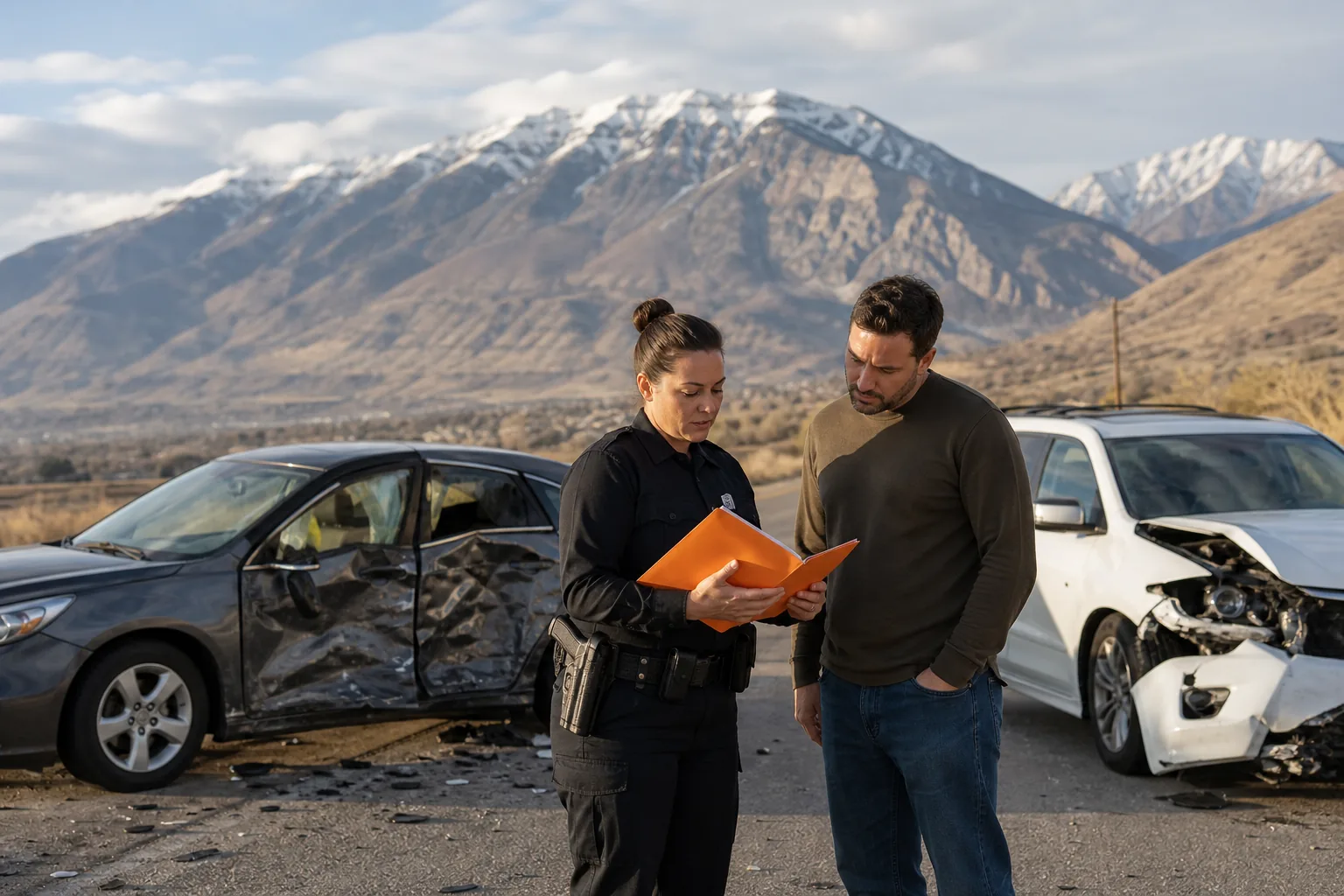
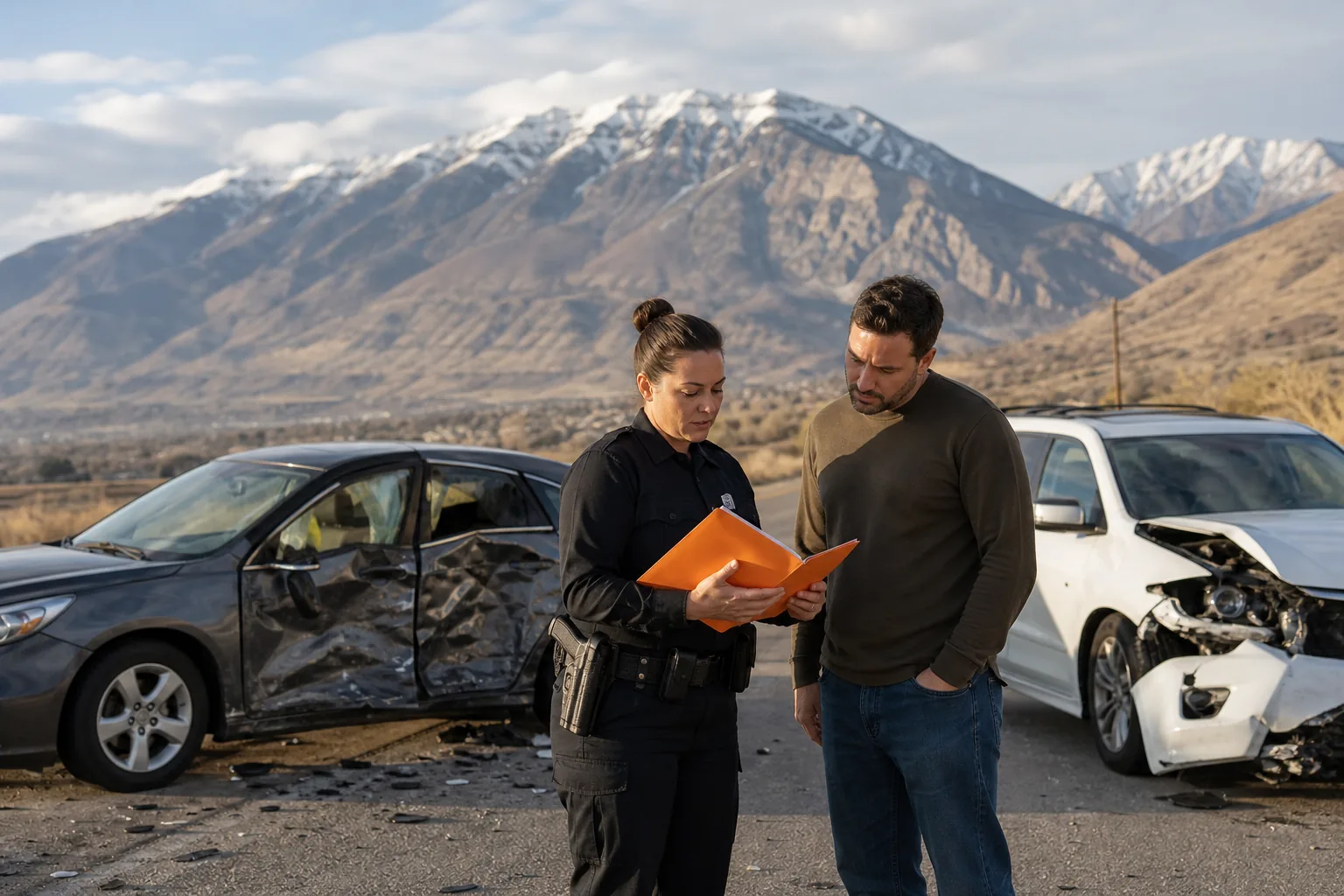
The first step in any Utah car accident claim is to report the crash. A police report gives your claim a dated record of what happened.
If officers did not come to the scene, contact the police agency that covers the crash location. Ask how to make an official report or obtain a copy of the report already filed. Keep the report number with your claim papers.
Give the officer facts you know. Explain where the crash happened and describe any pain or injury. Avoid guessing about speed, fault, or how serious your injuries will be. Symptoms can grow after the first day.
You may also need to report the crash to your employer. Do this if the accident affects your work schedule or happened during work duties. Ask your employer to document missed time and any work limits.
Request the official accident report as soon as it becomes available. Insurance adjusters often ask for it. We also request reports when we represent a client, then compare the report with photos, witness accounts, and medical records.
The basic purpose of a police report is to record an incident for later review. It is useful evidence, but it does not decide every question in a civil claim.
Step 2: Gather Evidence and Complete the Required Claim Forms
Car accident claim forms in Utah work best when the records behind them tell one clear story. Start your file early, while details are fresh.
Save photos of the vehicles from several angles. Photograph the road, signs, lane marks, traffic lights, and any nearby property damage. If you return later, try to visit at a similar time of day. Light and traffic patterns can change what a camera shows.
Write down the names and contact details of witnesses. Note what each person saw without asking them to take sides. Save dashcam footage before it gets overwritten. Ask nearby businesses or homes to preserve video if a camera may have captured the crash.
Your medical file matters too. Keep visit summaries, bills, prescriptions, test results, and work restrictions. Follow the treatment plan given by your medical provider. A long gap in care can let an insurer argue that later symptoms came from something else.
Track financial losses in a simple log. Record each missed shift, reduced hour, and unpaid benefit. Keep pay records that show what you normally earn. If your injury forces you to pay for help at home, save those receipts and note the task you could not do.
Common forms may include an insurer’s accident notice, a property-damage claim form, a medical payment form, or a release. The exact packet depends on the carrier and the type of loss. Read every release before signing it. A broad release may affect injury rights that you have not yet understood.
For a third-party claim, the Utah Insurance Department describes the process of presenting a claim against the other driver’s insurer. Use the carrier’s requested form, but keep a complete copy of everything you send.
We help clients sort these records into a timeline. That makes it easier to link the crash to the treatment, the missed work, and the changes in daily life.
Step 3: Submit the Claim and Handle PIP, UM, and UIM Insurance Coverage
Submit the claim to the right insurer after you have gathered the first set of records. In Utah, your own policy may help pay initial injury costs through personal injury protection, also called PIP.
Utah policies generally include at least $3,000 in PIP coverage. PIP can help with medical expenses after a crash. Depending on the policy, it may also help with lost wages or household services. Check your declarations page for the exact limits and terms.
PIP can apply even when you caused the crash. It is separate from the question of who caused the collision. Your own insurer may later seek repayment from the at-fault carrier when another driver caused the loss.
Send the first notice of claim in the way your policy requires. Some insurers accept online notice. Others request a written form, a recorded statement, or supporting records. Give accurate facts. Do not guess about long-term recovery or sign a final release before you know the full effect of the injury.
Uninsured motorist coverage may apply when the at-fault driver has no insurance. Underinsured motorist coverage may apply when that driver has some insurance, but the limits cannot cover the loss. Review your policy before assuming those benefits exist or asking for a specific amount.
Insurance adjusters may ask for a statement soon after the crash. You can provide basic facts without offering a full opinion on fault or future damages. If the claim involves lasting injury, LeBaron & Jensen, P.C. can communicate with the insurer and help protect the value of a fair settlement.
Medical care comes first. A physician-led practice such as a physician-led practice may help someone seeking ongoing medical strategy, training, or nutrition during recovery. That type of health support does not replace legal advice, but consistent care can help document how an injury affects you.
Step 4: Prove Fault, Calculate Damages, and Meet Utah’s Three-Year Deadline
A strong claim must connect the other driver’s conduct to your injury and financial loss. Utah uses comparative negligence, so your share of fault can reduce recovery.
In a disputed case, the person bringing the claim has the burden of proof. You generally need evidence that the other driver acted negligently, that the conduct caused the crash, and that the crash caused your damages.
Suppose a jury finds the other driver 70 percent responsible. Your damages could be reduced by your 30 percent share. If you are 50 percent or more at fault, Utah’s rule can prevent recovery. That makes extra proof important in a case where both drivers blame each other.
Useful fault evidence may include:
- Traffic-camera or business video.
- Independent witness statements.
- Vehicle damage and crash-scene photos.
- Police findings and roadway measurements.
- Phone, vehicle, or visibility evidence when relevant.
Damages can include medical bills, lost wages, property loss, pain, and reduced quality of life. A serious injury may also involve future treatment or future limits on work. Do not set a final value before doctors can explain whether more care is likely.
Health insurance write-offs can affect the final settlement math. A provider’s contract may reduce what health insurance pays, while the claim still considers the original medical charge. Any repayment claim by the health plan must be reviewed before money is distributed.
There is no single average settlement for every crash. Injury severity, treatment, lost income, fault, future care, and available insurance all change the result. We build the demand from the records rather than a guess.
For many personal injury claims, Utah’s limitations period is three years from the accident date. A settlement discussion does not automatically protect that deadline. Review the date with counsel early, especially if the insurer delays its response. Our Utah car accident claim deadline guide explains the timing issues that can affect a filing.

Time limits can change in special cases. A government vehicle, a deceased claimant, a minor, or a different type of claim may trigger separate rules. Do not wait for the last month to ask what applies.
Step 5: Use the Correct Utah Procedure for Government, Employer, or Disputed Claims
Some claims need more than a standard insurer form. The defendant’s identity can change the first filing step.
Government vehicles and public agencies
If a government agency or employee caused the crash, a notice of claim may be required within six months. That notice is separate from the later lawsuit deadline. It should identify the event, the loss, and the person or agency involved.
Transit crashes need special care. A claim involving the Utah Transit Authority may require a Notice of Claim for injury or property damage. Use the agency’s current instructions and keep proof of delivery. A normal auto-insurance form may not satisfy a public-entity notice rule.
Work-related crashes
Tell your employer or human resources department if the crash happened during work or caused missed work. The Utah Labor Commission has forms for some employment-related disputes, but those forms are not a substitute for an auto liability claim. The correct path depends on your job, the vehicle, and the injury.
Small claims, mediation, and arbitration
Small claims court may fit a limited dispute, but court rules still control service, evidence, and damages.
Arbitration is different from a trial. Parties may use an arbitrator to review records and decide the dispute through a less formal process. A written decision may follow. In some cases, a party can seek a new trial in district court, called a de novo appeal.
Arbitration may fit a case with clear records and a moderate dispute. It may be a poor fit for severe injuries, complex future losses, or a case that needs broad witness testimony. The general definition of arbitration helps explain why an arbitrator’s process differs from a jury trial, but your agreement controls.
At LeBaron & Jensen, P.C., claim-path review, evidence preservation, and insurer communication are options when representation makes sense.
Utah Car Accident Claim Forms FAQ
What forms do I need after a car accident in Utah?
You may need a police accident report, an insurer’s accident notice, a property-damage form, medical payment paperwork, and wage-loss records. The exact forms depend on the insurer and claim type. A government or transit claim may require a separate notice. Keep copies before submitting anything, especially a release.
How long do I have to file a car accident claim in Utah?
Many Utah personal injury claims have a three-year filing deadline from the accident date. Government claims can require a notice within six months. Insurance negotiations do not always stop the legal clock. Have the date and claim type reviewed early, because a missed deadline can bar an otherwise valid case.
Does Utah PIP pay my medical bills after a crash?
Utah PIP can help pay initial medical costs after a crash, subject to your policy limit and terms. Utah policies generally include at least $3,000 in PIP coverage. PIP may apply even when you caused the accident. It does not replace a claim against a negligent driver when another person caused your injuries.
What if both drivers are partly at fault in Utah?
Utah can reduce damages based on each person’s share of fault. If you are 50 percent or more responsible, recovery may be barred under the state’s comparative negligence rule. The claimant must prove the other driver’s fault and connect that fault to the injury. Photos, witnesses, video, and medical records can help.
Should I sign the insurance company’s settlement form?
Do not sign a final settlement release until you understand every claim it closes. The form may cover future medical care, lost wages, or related claims that are not obvious from the first page. Ask what the payment includes and whether health-plan repayment rights remain. Legal review is wise when injuries continue.
Conclusion
Start with the police report, then build a dated file for treatment, lost income, property damage, and insurance coverage. If the injury is serious, fault is disputed, or a government vehicle is involved, contact LeBaron & Jensen, P.C. before signing a release or letting a deadline pass. We can review the paperwork and help you choose the next step toward a fair settlement.