
Table of Contents
A Utah car accident claim can fail even when the other driver seems clearly at fault. You must prove duty, breach, causation, and damages while staying below Utah’s 50% fault limit. You also must meet Personal Injury Protection rules and filing deadlines. We’ll walk through each step so you can protect your claim and seek a fair settlement.
Step 1: Collect and Preserve Evidence From the Crash
Proving negligence after a Utah crash starts with evidence that fixes the facts in place. Photos, witness accounts, medical records, and the police report can support each part of your claim.
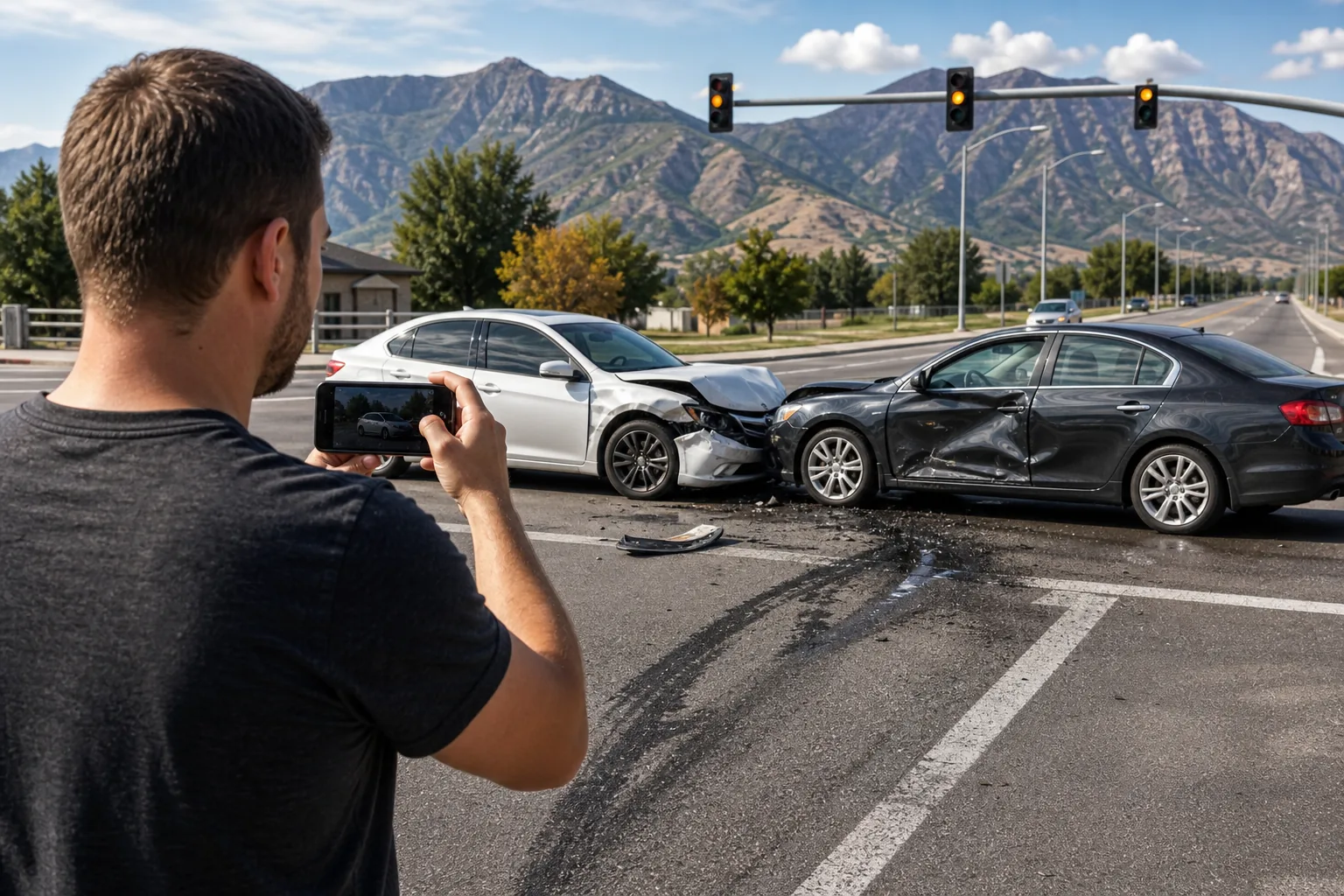
If you can do so safely, photograph the vehicles before they move. Capture the damage from several angles. Take pictures of skid marks, traffic lights, lane lines, weather, road defects, and nearby signs. A short video can show the full scene better than one photo.
Ask witnesses for their names and contact details. Write down what they saw while the event is fresh. Do not ask them to guess who was legally at fault. Their plain account of the light change, vehicle speed, or lane movement is more useful.
Report an injury crash when required and request the report number. A report may record driver statements, scene conditions, and the officer’s observations. If no officer responds, your claim is not automatically lost. You’ll need stronger supporting proof instead.
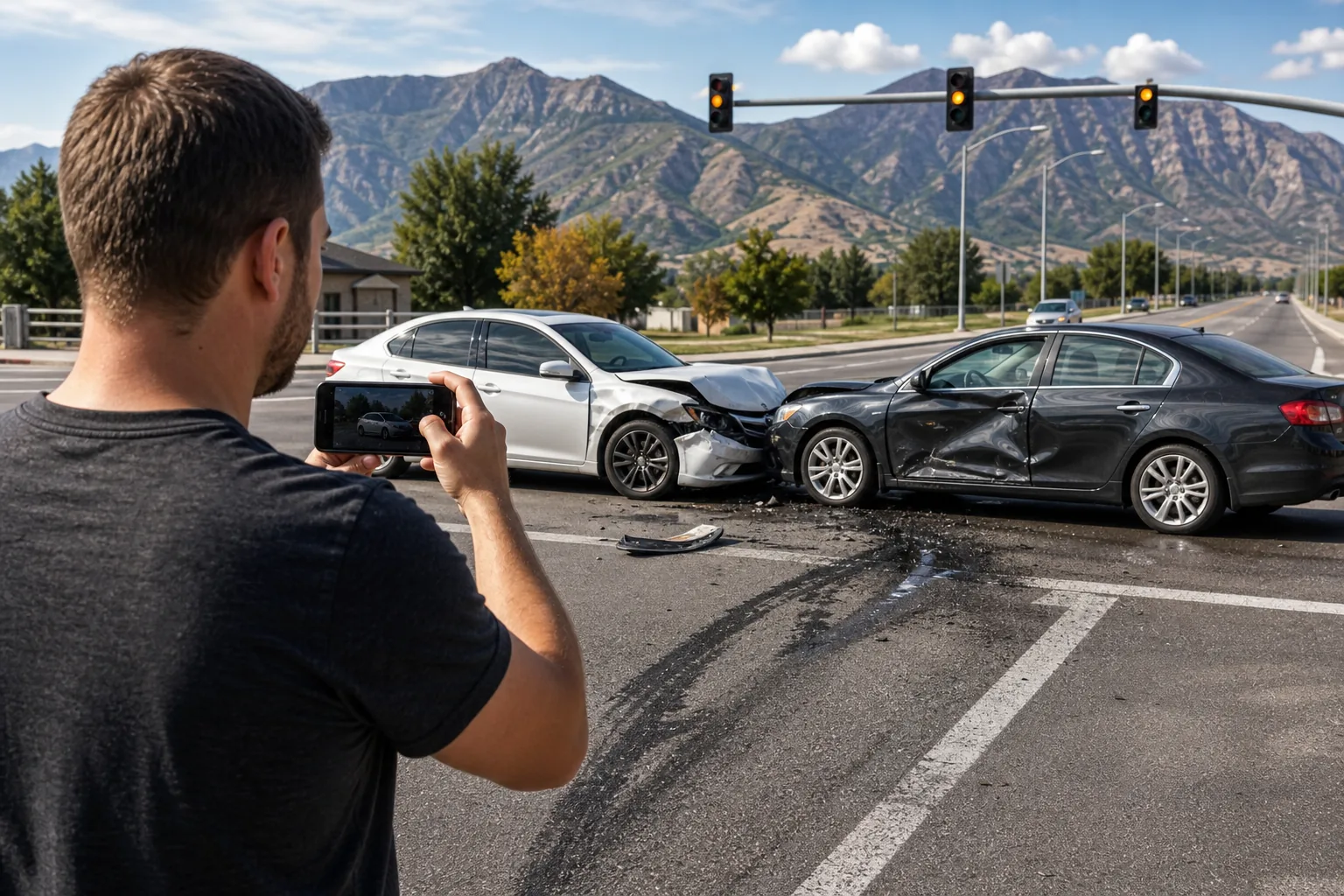
Save every document in one folder. Keep repair estimates, insurance letters, medical bills, appointment notes, and messages about the crash. Do not edit photos or delete messages, even if they seem unhelpful.
Medical care also helps connect the crash to your injuries. Follow the treatment plan and tell each provider when symptoms began. Our team at LeBaron & Jensen, P.C. can help organize evidence before key records or video disappear.
Step 2: Show the Other Driver Owed You a Duty of Care
The first legal question in how to prove negligence in a car accident Utah residents face is duty. A driver who uses Utah roads must act with the care a reasonable driver would use in similar conditions.
This duty does not require perfect driving. It does require attention to traffic, road conditions, nearby people, and other vehicles. A driver should keep a proper lookout and respond to hazards in time.
In most ordinary crash claims, duty is easier to show than breach. The person behind the wheel had control of a vehicle and owed others a duty to avoid unreasonable danger. The dispute usually centers on what that person did next.
Think of duty as the starting rule. It asks what safe conduct the law expects before you examine the driver’s specific actions. General negligence is often described as a failure to use reasonable care.
Build this part of the claim with facts tied to the road. A police report may show the crash location or driver statements. Photos can show lane placement or a blocked view. A witness may explain what a reasonable driver could see.
The duty may look different in a special setting. A driver approaching a crosswalk faces different risks than a driver on a clear highway. A driver moving through a parking lot still must watch for people and vehicles.
We at LeBaron & Jensen, P.C. separate the broad duty from the specific conduct at issue. That keeps the claim focused. It also prevents an insurer from turning a simple duty question into a debate about your character or driving history.
Step 3: Prove the Driver Breached That Duty
A breach means the driver failed to act as a reasonable driver would have acted. This is where your evidence must show a careless act or omission, not just the fact that a collision occurred.
Start with the driver’s conduct. Possible examples include following too closely, drifting across a lane, failing to yield, turning without a safe gap, or driving while distracted. Only use facts you can support. Do not claim speeding unless the evidence backs it up.
Match each claim to proof:
- Traffic signals and lane lines may support a failure-to-yield claim.
- Vehicle damage and skid marks may show the direction and force of impact.
- Witness statements may describe a phone in the driver’s hand or a late stop.
- Video may show the driver’s movement seconds before impact.
- The police report may preserve statements made soon after the crash.
Look for evidence that existed before the crash disappears. Nearby businesses may overwrite camera footage. Vehicles may be repaired. Witnesses may forget details. Ask an attorney about preservation steps if a video, vehicle part, or electronic record may matter.
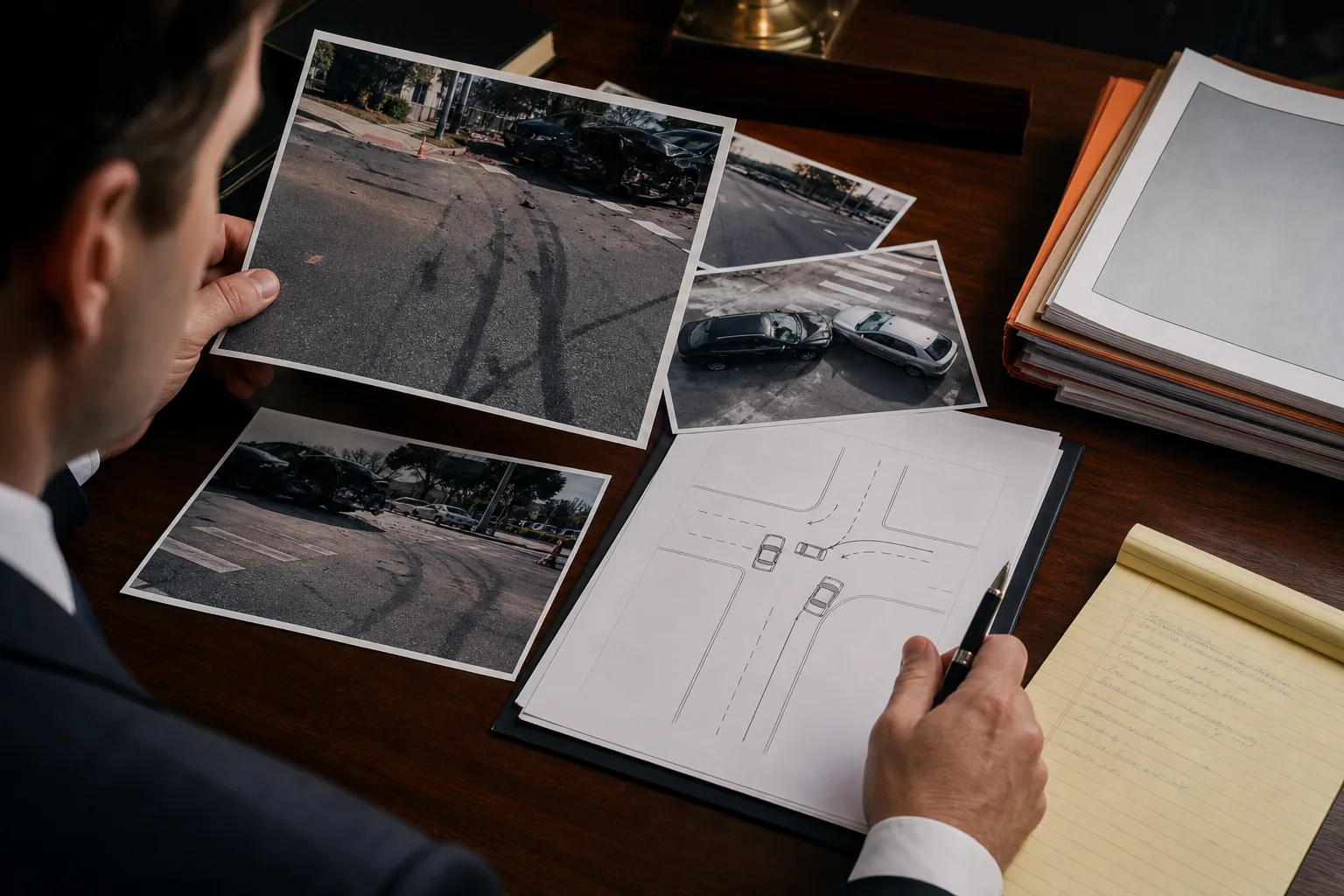
Utah’s PIP system can affect the value of this analysis. Review the applicable insurance rules before evaluating the claim.
That review does not erase the need to prove breach. It means you should consider the applicable insurance requirements early, before assuming damages are available. We’ll also review whether the insurer is using your statements to shift blame.
Step 4: Link the Breach Directly to the Collision and Injuries
Causation connects the driver’s breach to your crash and losses. To prove negligence, you must show that the careless act caused the collision and that the collision caused your injuries or property damage.
Build a clear timeline. State what happened before impact, where the vehicles struck, what symptoms appeared, and what treatment followed. Keep the order simple. A clear timeline gives an adjuster or judge fewer gaps to question.
Use the scene evidence first. Damage patterns may support the direction of impact. Photos or video may show that the other vehicle entered your lane. The police report may preserve the first accounts from both drivers.
Then connect the physical event to medical proof. Tell your doctor about the collision and all symptoms. Keep records of diagnoses, referrals, therapy, prescriptions, and work limits. If you had an earlier condition, do not hide it. Explain what changed after the crash.
Insurers often argue that a delay in treatment proves the crash did not cause the injury. That argument is not always fair, but a long gap can make proof harder. If pain appears later, seek medical advice and record when it started.
Property damage needs its own link. Keep repair estimates and photographs. If the vehicle is declared a total loss, save the valuation documents. Do not discard damaged parts before asking whether they should be preserved.
LeBaron & Jensen, P.C. can compare the crash facts with the medical record and identify gaps before settlement talks begin. A claim is stronger when the same story appears in the report, photos, treatment notes, and wage records.
Step 5: Document Economic and Non-Economic Damages
Damages show what the accident cost you. Economic damages cover direct financial losses. Non-economic damages address the personal effects of the injury, but Utah’s PIP rules may limit when those damages are available.
Build an economic loss file as bills arrive. Include:
- Emergency care and follow-up treatment.
- Diagnostic tests, therapy, and medication costs.
- Vehicle repair or replacement records.
- Travel costs tied to medical care.
- Pay records showing missed work.
Ask your employer for a written record of missed time and lost pay. If you are self-employed, preserve invoices, work logs, and tax records that show the effect on income. Do not estimate a loss from memory when a document can prove it.
Non-economic damages may include pain, sleep loss, fear, limits on daily activity, and distress. Keep a short symptom journal. Record the task you could not do, the treatment that caused discomfort, or the way the injury changed home life.
Medical bills can become hard to track when several providers are involved. Information about billing systems used by medical practices may help explain the value of organized billing records when accident care is reviewed.
Do not sign a full release before you understand future care. Some injuries need more treatment after a settlement. We can review the records and help assess a fair settlement based on documented losses, not a quick guess.
Step 6: Account for Shared Fault and Utah Filing Deadlines
Utah car accident negligence claims can fail when a person ignores shared fault or waits too long to act. Utah uses modified comparative negligence. You may recover if your fault is less than 50%, but your award is reduced by your percentage of fault.
Imagine total damages and a finding that you were partly at fault. The award would be reduced by that share. If your fault reaches 50% or more, the research rule described for Utah prevents recovery under this standard.
Do not admit fault at the scene. Give accurate facts, but avoid guessing about speed, distance, or who had the right of way. Do not post crash details online. An insurer may use a short statement or photo without the full context.
Next, track the filing deadline. The general periods described for Utah claims are four years for personal injury and three years for property damage. Exceptions can change the analysis. A deadline can also arrive while treatment or insurance talks are still ongoing.
Mark the crash date and get legal advice early. Review the Utah car accident claim deadline guide and the different time rules for injury and property claims. Filing a claim with an insurer does not always protect a lawsuit deadline.
There is another insurance-coverage issue: A person may have medical care and still face limits on general damages if the statutory requirements are not met. Insurance coverage, fault arguments, and deadlines should be reviewed together because one issue can affect the others.
At LeBaron & Jensen, P.C., we take the stress off your plate by building a dated claim file. The file should show what happened, why the other driver breached a duty, how the crash caused harm, and what you lost.
FAQ: Proving Negligence After a Utah Car Accident
What do I have to prove in a Utah car accident case?
You must prove duty, breach, causation, and damages. The other driver owed you reasonable care, failed to meet that duty, caused the crash, and caused actual losses. Photos, witness accounts, medical records, repair records, and the police report can support those points. Utah’s fault rule and PIP limits may also affect recovery.
Can I recover if I was partly at fault?
You may recover if your share of fault is below 50%. Utah’s modified comparative negligence rule reduces compensation by your assigned fault percentage. If an insurer says you caused most of the crash, ask what evidence supports that position. Do not accept a fault percentage before reviewing the scene proof and witness accounts.
Can I sue without a police report in Utah?
Yes, you may still pursue a claim without a police report. The missing report makes proof harder because the insurer has more room to dispute the facts. Use photos, video, witness statements, medical records, repair estimates, and prompt treatment to build the record. Speak with LeBaron & Jensen, P.C. before giving a recorded statement.
What is the deadline for a Utah car accident claim?
The general periods are four years for personal injury claims and three years for property damage claims. Those periods may have exceptions, and an insurance claim does not necessarily extend a lawsuit deadline. Put the crash date on your calendar and seek advice well before the limit. Waiting can also make video and witness evidence harder to find.
When can I claim pain and suffering in Utah?
You may need to meet Utah’s PIP injury threshold before seeking general damages such as pain and suffering. The listed conditions include death, dismemberment, permanent disability, a bone fracture, or medical expenses above $3,000. The facts of your injury and treatment matter. Have the threshold reviewed before relying on a general damages estimate.
Conclusion
Start preserving evidence now, keep your medical and wage records in one file, and avoid recorded insurer statements until you understand the risks. If fault, causation, PIP rules, or a filing deadline is unclear, contact LeBaron & Jensen, P.C. for a case review. We’ll help you understand your options and take the stress off your plate.