
Table of Contents
A rideshare crash in Utah can leave you asking one hard question: who pays? The answer changes with the driver’s app status, the people involved, and the insurance in force that day. We explain the coverage periods, protect key evidence, and show how to start the right claim.
Step 1: Get Medical Care, Report the Crash, and Preserve Evidence
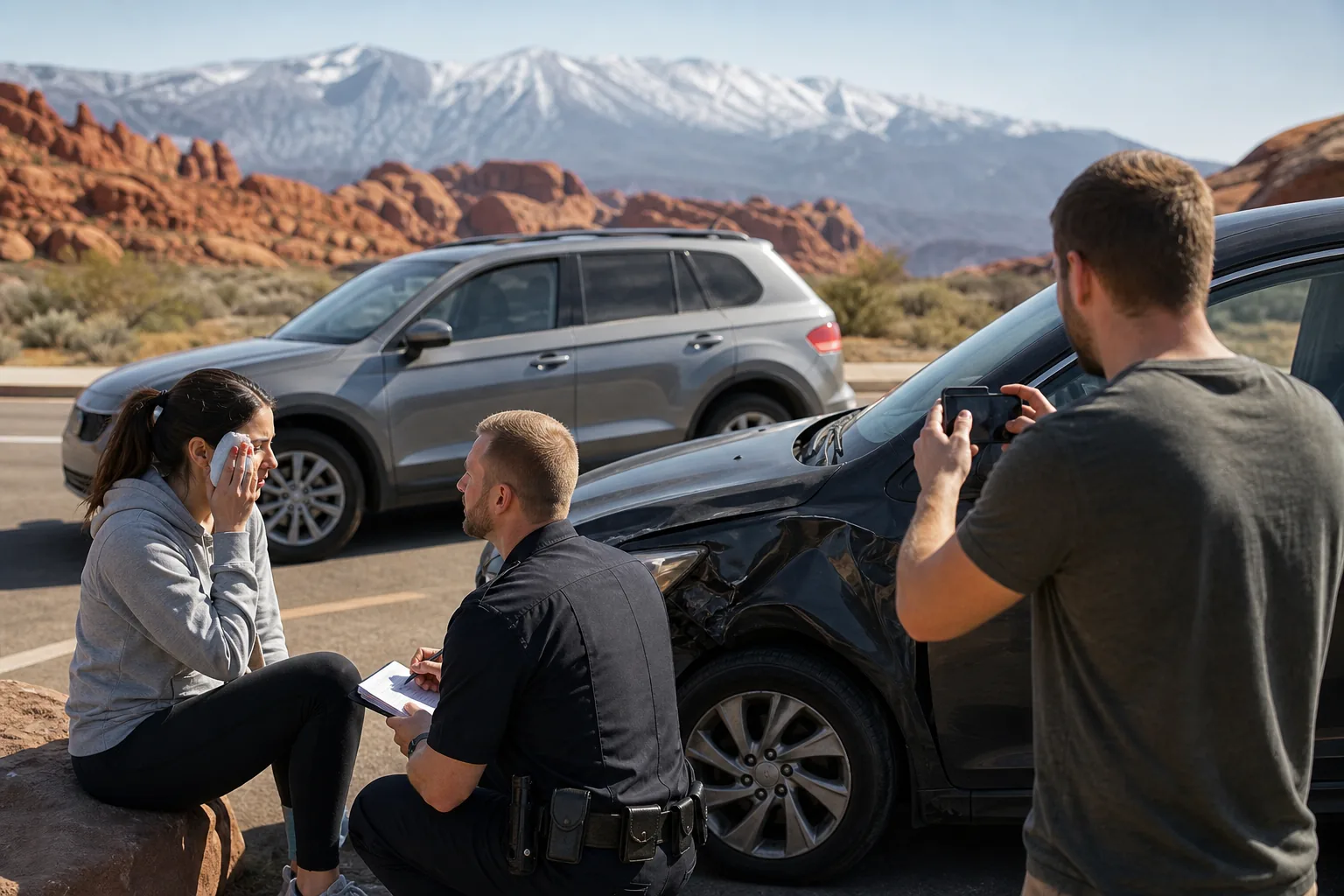
Rideshare driver liability in Utah starts with the crash scene, not the insurance adjuster. Your first job is to protect your health and preserve facts before they fade.
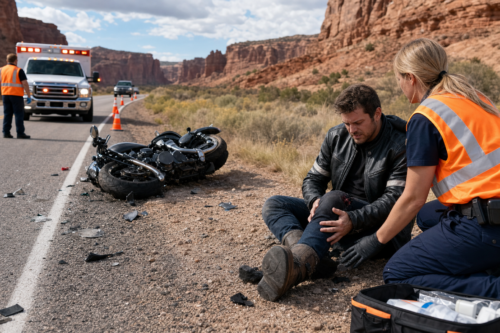
Call emergency services when anyone may be hurt. Ask for medical care even if pain seems mild. Whiplash, concussion symptoms, back injuries, broken bones, and internal trauma may not show at once. A prompt medical record connects your symptoms to the collision.
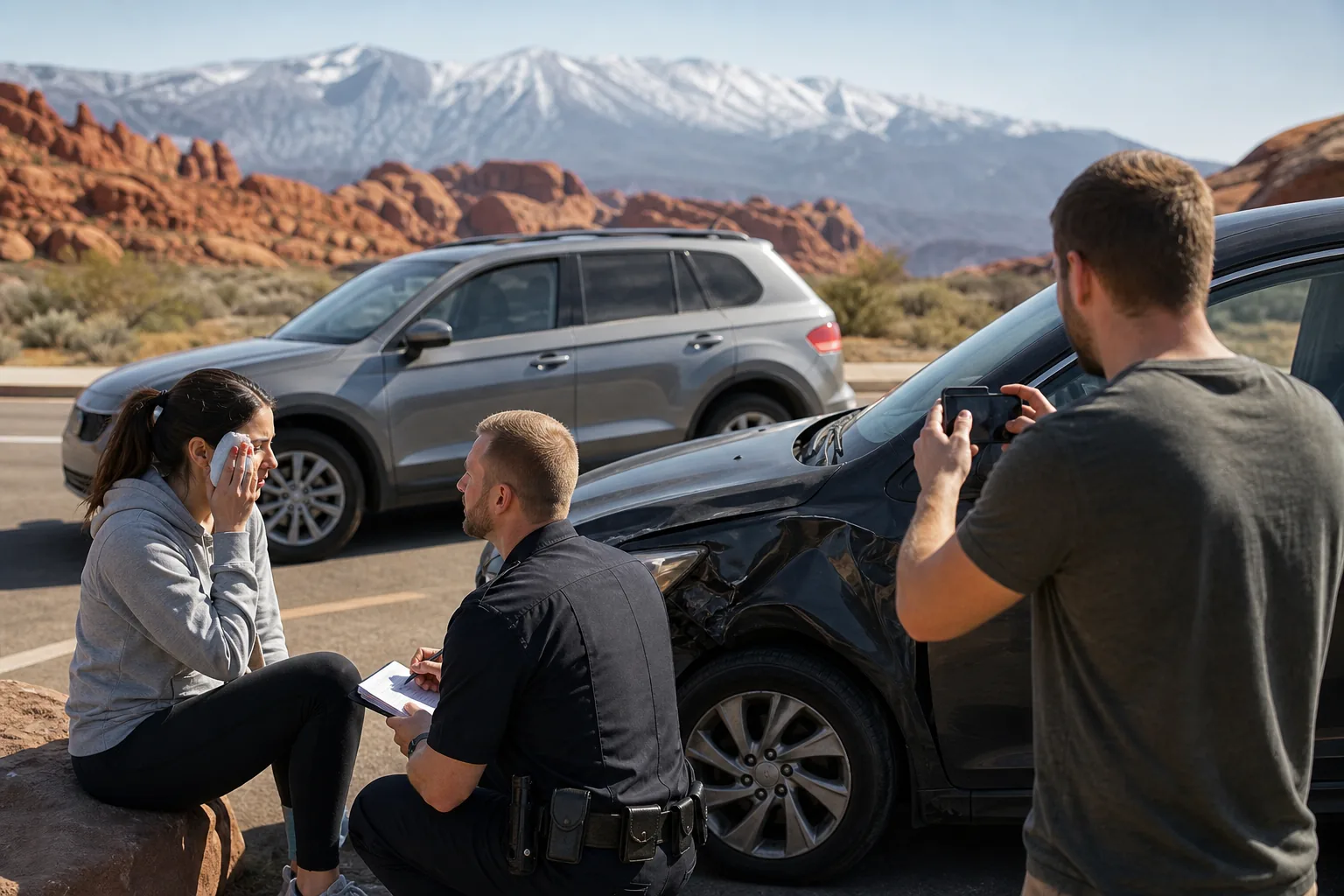
Report the crash to law enforcement. Give a clear account, but don’t guess about speed, fault, or the driver’s app status. Request the report number and keep it with your claim papers.
If you’re safe enough, take wide photos of the road and vehicles first. Then photograph damage, skid marks, traffic signs, lane markings, weather, and visible injuries. Don’t move evidence unless safety requires it.
Get the other driver’s name, insurance details, plate number, and contact information. If you were a passenger, save the trip receipt and note the pickup and drop-off points. Tell the rideshare company through its app. Save the confirmation screen.
Dash-cam footage can answer the question that competing stories cannot. Preserve the original file, including footage from before and after impact. Don’t edit it or post it online. Ask witnesses for a short written account while the event remains fresh.
Utah’s rules also require rideshare records to be retained for at least two years. Drivers should keep trip times, pickup and drop-off locations, fees, and vehicle-use details. Those records may show whether the app was off, waiting, en route, or carrying a passenger.
The applicable law provides a legal framework for driver records and insurance duties. We can also send a preservation request when trip data, app logs, or video may sit with another party.
Step 2: Determine Which of Utah’s Rideshare Coverage Periods Applies
Insurance is the center of rideshare driver liability in Utah. The same vehicle may have very different coverage depending on what the driver was doing seconds before impact.
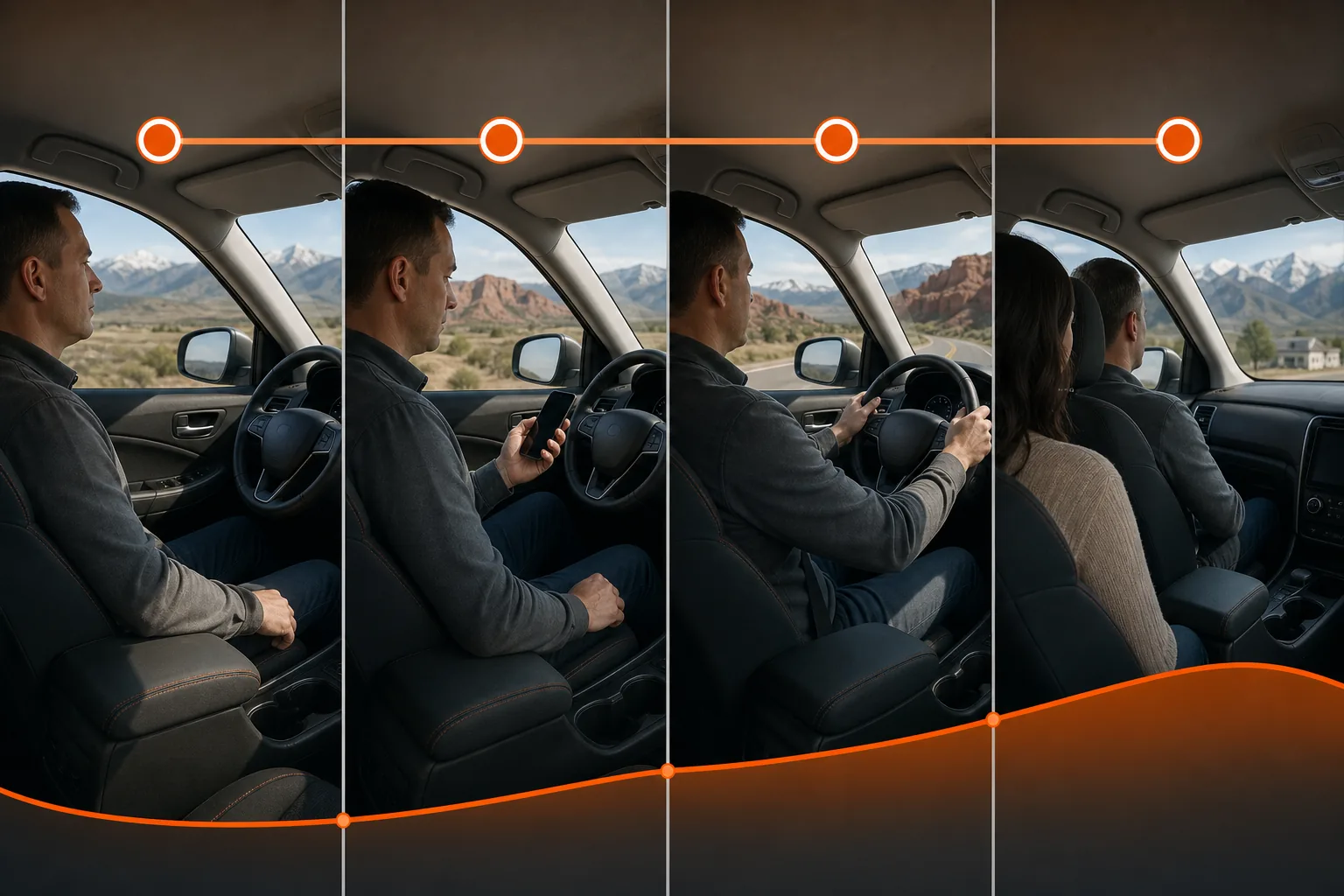
Utah rideshare rules divide the driver’s work into four useful periods. Period 0 means the driver is offline. Period 1 means the app is on, but no ride has been accepted. Period 2 begins after the driver accepts a ride and is traveling to the passenger. Period 3 covers the passenger’s ride until that passenger exits.
Periods 2 and 3 fall within the definition of a prearranged ride. They usually carry the highest commercial liability limit. Period 1 has a much lower contingent limit, while Period 0 generally depends on the driver’s personal auto policy.
| Period | Driver’s status | Coverage issue to verify | Claim evidence |
|---|---|---|---|
| 0 | Offline | Personal auto policy is usually the first source | App status, personal policy, vehicle-use records |
| 1 | Online and waiting | $50,000 per person, $100,000 per crash, and $30,000 for property damage | App activity log and time of acceptance |
| 2 | Ride accepted, traveling to pickup | Prearranged-ride coverage, generally up to $1,000,000 in liability coverage | Acceptance time, route, pickup details |
| 3 | Passenger inside, ride underway | Prearranged-ride coverage, generally up to $1,000,000 in liability coverage | Trip receipt, passenger account, drop-off time |
The coverage gap is easy to miss. Review insurance provisions when evaluating the driver’s status. A driver may have a million-dollar policy during an active ride, yet only the lower Period 1 protection while waiting for a request.
Ask for the app activity record, not just a driver’s statement. The exact time matters. A ride accepted moments before a collision may move the claim into Period 2. A driver who had logged off may place the claim in Period 0.
Drivers should tell their personal insurer that the vehicle is used for rideshare work. Many personal policies exclude losses tied to transportation network services. Personal policies may permit that exclusion. A rideshare endorsement or separate policy may close some of that gap, but the terms must be checked before a crash.
Uninsured and underinsured motorist coverage also deserves review. It may help when the at-fault driver has no insurance, carries too little, or flees. If a personal policy lapses, the transportation network company may provide certain coverage from the first dollar of a claim. That protection still needs to be confirmed against the facts.
Coverage questions are often disputed when the app record is missing. Preserve screenshots, receipts, emails, and account notices. For drivers, keep required vehicle-use records for the full retention period rather than relying on the app to store them forever.
Step 3: Identify Every Potentially Liable Party and Calculate Your Damages
Rideshare driver liability in Utah may involve more than the person behind the wheel. We start by listing each person or company whose conduct may have caused the crash.
The driver may be liable for speeding, distraction, unsafe lane changes, impaired driving, fatigue, or another traffic violation. A driver can also face a claim when poor vehicle maintenance contributed to the wreck. The police report helps, but it doesn’t decide every civil claim.
The rideshare company usually labels its drivers independent contractors. That label can limit direct responsibility for a driver’s negligence. It does not erase the company’s duty to maintain the coverage required by Utah law. Facts about screening, app design, dispatch practices, or company conduct may support a direct claim in some cases.
A separate motorist may have caused the impact. That matters when a rideshare passenger is hurt in a two-car crash. The passenger may have a claim against the other motorist, access to rideshare coverage, or both, depending on fault and available limits.
Other possible parties include a vehicle owner, an employer, a repair shop, a parts maker, or a public entity responsible for a dangerous road condition. We don’t assume one policy will cover every loss. We trace the chain of events first.
Utah follows comparative fault rules. In plain terms, a person’s recovery can be reduced by that person’s share of fault. An insurer may ask questions designed to shift blame to you. Give accurate answers, but don’t make a recorded statement before you understand the claim.
Damages include more than the first emergency-room bill. Gather records for:
- Past and expected medical treatment.
- Lost income and reduced ability to work.
- Vehicle damage and related transportation costs.
- Physical pain and limits on daily life.
- Emotional harm tied to the crash.
- Permanent impairment or disfigurement.
For a serious brain, spinal cord, or internal injury, future care may be the largest part of the claim. We ask doctors what treatment may be needed and how the injury affects work. A fair settlement should account for those costs before you sign a release.
Passengers, drivers, pedestrians, cyclists, and occupants of another car may all qualify to bring a claim. The claim belongs to the injured person, or to an authorized representative in some situations. If someone dies, the case may become a wrongful-death claim.
We recommend writing a short damage timeline while events remain clear. Note each appointment, missed shift, new symptom, medication change, and task you can no longer do. Those details can support the records that insurers often treat as abstract numbers.
LeBaron & Jensen, P.C. reviews the whole loss before discussing a settlement. Potential sources of compensation should be evaluated as part of the claim.
Step 4: Investigate Coverage Gaps, Platform Terms, and Utah Crash Patterns
Rideshare driver liability in Utah can turn on documents that never appear in a standard crash file. We look beyond the damage photos and find the records that show the driver’s work status.
Request the driver’s personal declarations page and the rideshare carrier’s claim information. The declarations page shows policy limits and listed drivers. It does not answer every coverage question, so read the exclusions and endorsements too.
Review the current platform terms that applied on the crash date. Online terms may contain arbitration language, indemnity provisions, choice-of-law rules, or claim notice requirements. Arbitration is a process where a private decision-maker hears the dispute. Indemnity can require one party to repay certain losses. Neither clause decides fault by itself.
Drivers should save each terms update instead of tapping through it. A later version may not govern an earlier crash. If the platform seeks reimbursement from a driver, we examine the wording, the alleged breach, and whether the provision applies under Utah law.
Crash location can guide the investigation. The I-15 corridor between Salt Lake City and St. George carries rideshare traffic through places such as Cedar City and southern Utah. A collision near an interchange may call for nearby camera footage, lane-control records, or witness accounts from businesses and other drivers.
That does not mean a road is automatically unsafe or that location proves fault. It gives us a starting point. Route, weather, traffic signals, construction signs, and app directions may be relevant when evaluating the driver’s account.
Public-entity claims need special care.
Don’t wait for an insurer to gather the file. Video can be overwritten. App data can become harder to obtain. Witnesses can move or forget key details. We send targeted requests when the facts point to a third-party record.
Step 5: File the Right Claim Based on Who Was Injured
The correct claim depends on your role in the crash. We match the injured person to the policy, fault theory, and deadline instead of sending the same form to every insurer.
Passenger
A passenger may claim against the rideshare driver’s applicable coverage when the driver caused the crash. If another motorist caused it, that driver’s policy may come first. The passenger may also have access to other coverage depending on the rideshare period and the available limits.
Save the trip receipt, driver profile, route map, and in-app report confirmation. Don’t accept a quick payment before your medical outlook is clear. A release may end the claim before future treatment is known.
Rideshare driver
A driver injured by another motorist may pursue that motorist’s liability coverage. The driver should also check personal medical-payment, uninsured-motorist, and underinsured-motorist benefits. A personal insurer may deny a loss tied to rideshare use if the policy contains an applicable exclusion.
Report the crash under the policy’s notice rules. Tell the insurer the vehicle was being used for rideshare work. Hiding that fact can create a larger coverage dispute later.
Pedestrian, cyclist, or another driver
A person outside the rideshare vehicle can file when the rideshare driver caused the collision. The same period question controls which policy responds. A second at-fault driver may add another claim target.
Family after a death
A wrongful-death claim has a shorter deadline than many injury claims. Research materials identify a two-year period for wrongful death and a four-year period for many injury claims, but the exact rule can change with the facts. We urge families to get legal advice promptly.
LeBaron & Jensen, P.C. can help organize the claim, protect communications with insurers, and seek a fair settlement. Start by saving every document and writing down the crash time, app status, and injury symptoms.
Frequently Asked Questions
Who is liable in a Utah rideshare accident?
Liability may fall on the rideshare driver, another motorist, the rideshare company, or another responsible party. The driver may be liable for negligent conduct. The company must maintain required insurance, while separate facts may support a direct corporate claim. We examine fault, app status, policy language, and third-party conduct before naming the claim targets.
What insurance covers an Uber or Lyft crash in Utah?
The applicable insurance depends on the driver’s period. Personal insurance usually matters while the driver is offline. Waiting-period coverage is lower, with stated limits of $50,000 per person, $100,000 per crash, and $30,000 for property damage. Accepted rides and trips in progress generally involve up to $1 million in liability coverage.
What should I do after a rideshare crash?
Get medical care, report the crash, and preserve evidence first. Take photos when safe. Save trip records, dash-cam files, witness details, and insurer messages. Report the collision through the rideshare app. Avoid guessing about fault or signing a release before you understand your injuries and available coverage.
Can a rideshare driver use personal car insurance after a crash?
Personal car insurance may apply when the driver is offline, but many policies exclude transportation network activity. Utah law permits such exclusions. Drivers should tell their insurer about rideshare use before a crash and ask about a rideshare endorsement, uninsured-motorist coverage, and underinsured-motorist coverage.
How long do I have to file a rideshare injury claim in Utah?
Many Utah injury claims have a four-year limitation period, while wrongful-death claims may have a two-year period. A government claim may require notice within six months. Exceptions can affect the deadline, so don’t treat these periods as permission to wait. Preserve evidence and seek advice soon after the crash.
Conclusion
After a Utah rideshare crash, preserve the trip record and get medical care before negotiating with an insurer. Then have LeBaron & Jensen, P.C. review the app period, coverage gap, fault evidence, and filing deadline. That early review can help protect your right to a fair settlement and the compensation you deserve. If you need broader guidance about pursuing compensation after an injury, review our personal injury law services.