
Table of Contents
A hit-and-run can leave you hurt, confused, and unsure who will pay. You may still have an insurance claim even when the driver gets away. Follow these steps to report the crash, protect your evidence, find available coverage, and avoid mistakes that can reduce a fair settlement.
Step 1: Report the Utah Hit-and-Run and Preserve Evidence
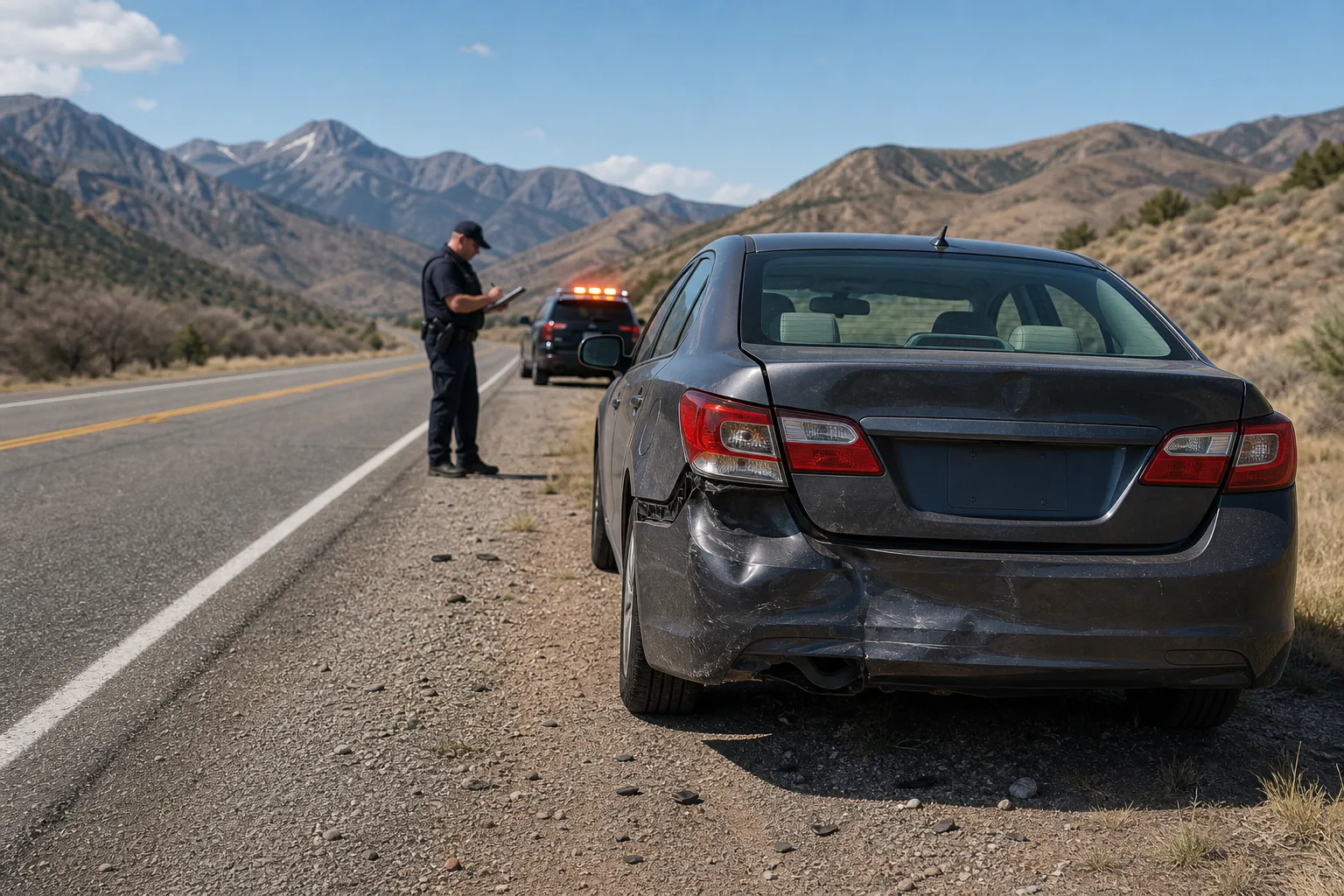
Your first task is safety, medical care, and a clear record of what happened. A police report can help connect the crash to your injuries and insurance claim.
Move out of traffic if you can do so safely. Check yourself and your passengers. If anyone needs urgent care, request emergency help. Do not chase the other vehicle. A pursuit can put you and other drivers in danger.
Give the officer every detail you recall, even if it seems small. Write down the vehicle’s color, body style, damage, direction of travel, plate characters, and the driver’s actions. Tell the officer where your vehicle was struck. Ask how you can obtain the report later.
Take photos before repairs begin. Capture the full scene first. Then photograph the damage from several angles, nearby signs, lane markings, debris, skid marks, and any visible injury. Keep the original files because they may contain useful date and location data.
Look for witnesses before they leave. Ask for names and contact details. Nearby businesses or homes may have cameras, but video can be erased quickly. Note the locations and ask the investigating officer about preservation requests.
Keep damaged clothing or personal items in a safe place. Do not wash away paint transfer or throw out broken parts. These details may help show how the impact occurred.
Our Utah Car Accident Liability Proof Checklist can help you track the records that often get missed after a crash. LeBaron & Jensen, P.C. can also review whether the available proof supports an injury claim.
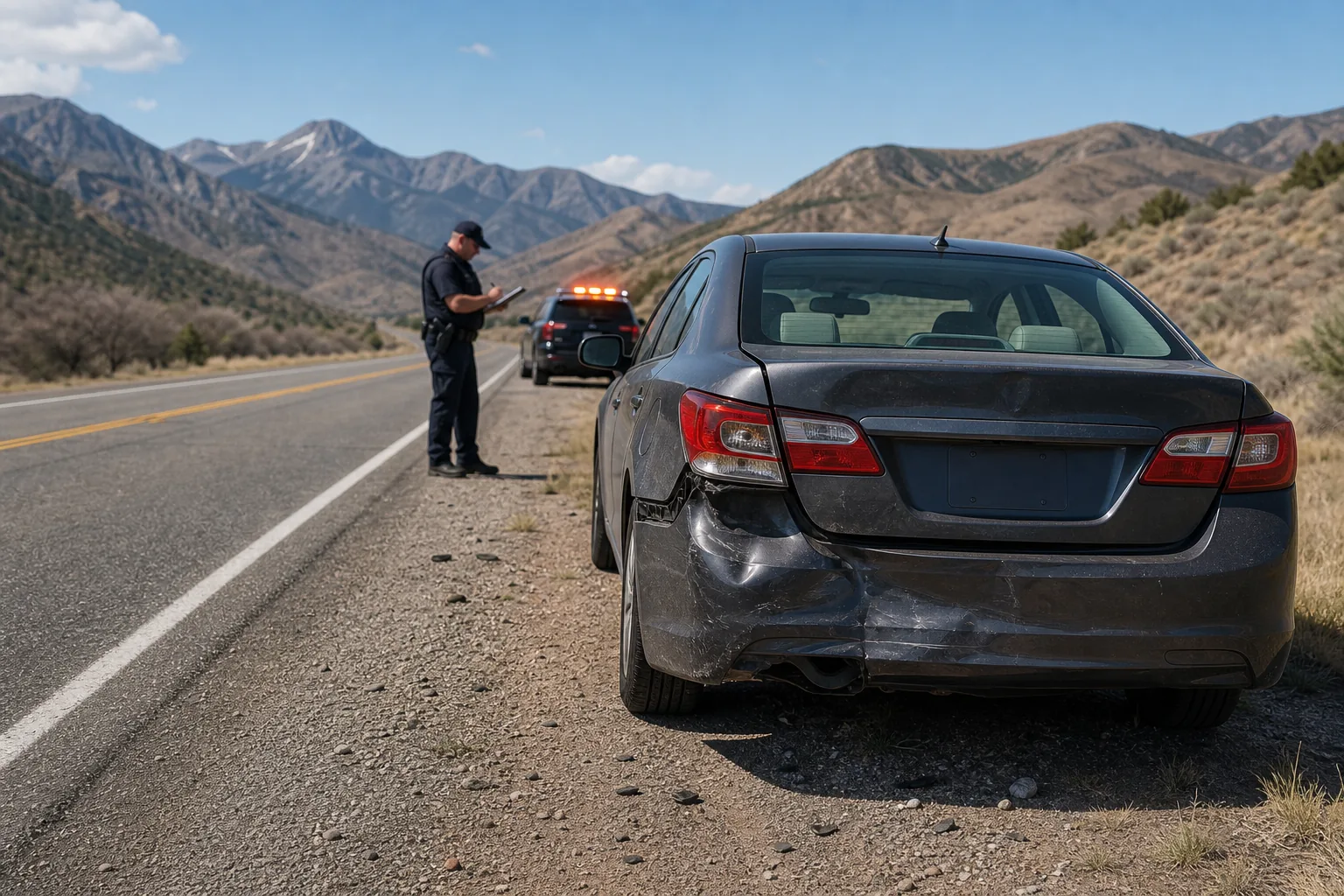
By now you should have: a police report number, scene photos, witness details, and a written account made while your memory is fresh. Preserve everything before speaking at length with an insurer.
Step 2: Notify Your Insurer and Start the Claim
Tell your insurer about the crash as soon as you reasonably can. Early notice starts the claim file and gives the carrier a chance to inspect damage or seek more information.
Use the claim process listed on your policy or insurer’s website. Explain that the other driver left the scene. Give the date, place, police agency, report number, and a short description of the impact. State whether you received medical care.
Keep your first report factual. Do not guess your speed, the other driver’s reason for leaving, or the long-term effect of an injury. Say, “I’m still being evaluated,” when you do not know the answer.
Ask the adjuster which coverage is being reviewed. The answer may include personal injury protection, often called PIP, medical payments coverage, collision coverage, or uninsured-motorist coverage. Your policy language controls. Coverage can also depend on the facts and the type of loss.
Ask for the claim number and the adjuster’s preferred method of contact. Save emails and letters. After a phone call, write down the date, the person you spoke with, and what was discussed.
Do not give a recorded statement before you understand the questions. A recorded statement can become part of the claim file. It may contain harmless mistakes caused by pain, stress, or incomplete information.
Insurance rules can differ by state and policy. Crash-safety guidance stresses prompt attention to crash safety and reporting. For your claim, ask for written confirmation of what the insurer needs next.
We understand how hard it is to manage forms while you hurt. LeBaron & Jensen, P.C. can communicate with the insurer and help keep the claim focused on the facts. That can take the stress off your plate while treatment continues.
Do not wait for the insurer to tell you every deadline. Claim notice rules, lawsuit deadlines, and policy conditions are separate issues. Put each date on a calendar and get legal advice when the facts are serious.
Step 3: Check PIP, Uninsured-Motorist, and Other Available Coverage
When the driver remains unknown, your own policy may be the main path to payment. Review each possible coverage instead of assuming the claim ends with the missing driver.
PIP may help with covered medical expenses after a Utah crash. It may also involve rules about who receives payment and what documents the insurer needs. Send bills and treatment records through the process your policy requires.
Uninsured-motorist coverage may apply when a hit-and-run driver cannot be identified. The exact terms matter. Some policies require prompt notice to the carrier or police report. Others contain conditions about physical contact, proof of the crash, or cooperation with an investigation.
Collision coverage may address damage to your vehicle, subject to the deductible and policy terms. Property damage payment is separate from an injury claim. Settling the vehicle damage does not always resolve bodily injury losses, but read any release before signing.
Health insurance may pay some treatment costs while the claim is pending. Keep track of deductibles, copays, bills, and balances. If another insurer pays medical costs, a reimbursement claim may later arise. That claim is often called subrogation.
Ask the adjuster to identify every coverage under review. Request the relevant policy pages if you do not have them. A declarations page shows limits, but the full policy contains definitions, exclusions, conditions, and claim duties.
Policy terms can be hard to read under pressure. Personal injury protection is commonly defined as first-party coverage for certain injury losses, but the policy and Utah law determine what your coverage actually pays.
Do not choose a coverage path based only on the first answer you hear. A lawyer can compare the policy terms with the crash facts and protect your right to pursue a fair settlement.
Step 4: Document Injuries, Treatment, Lost Income, and Ongoing Losses
Your medical record gives the injury claim its timeline. Start with the first visit and keep every later appointment, referral, test, and treatment note.
Follow medical instructions. Tell each provider how the crash happened and which symptoms began afterward. Be accurate. Do not exaggerate, but do not leave out pain because you feel embarrassed or rushed.
Keep a simple daily symptom log. Record pain levels, sleep problems, limits on movement, missed work, and tasks you cannot do. A short entry can show how an injury affects normal life over time.
Save bills and insurance statements. Keep receipts for prescribed items, travel to treatment, parking, and other accident-related costs. Ask providers for itemized bills when a statement does not explain the charge.
Lost income needs proof. Ask your employer for dates missed and wage information. If you work for yourself, preserve canceled jobs, invoices, prior income records, and schedules that show the loss. Future income claims need careful support, especially when the injury affects your ability to do the same work.
Family members may notice limits you miss. Their observations can help explain changes in sleep, mood, mobility, or household tasks. Keep those accounts truthful and specific.
Do not post crash details or injury claims on social media. Photos and comments can be taken out of context. Tell your lawyer about posts that already exist before deleting anything.
LeBaron & Jensen, P.C. reviews the medical and financial record as a whole. That helps separate short-term bills from lasting losses and supports a demand for your rightfully deserved compensation.
Some injuries become clearer only after days or weeks. Do not promise that you are fully recovered before your doctors can assess the condition. A quick payment may look helpful now but leave future treatment unpaid.
Step 5: Respond to the Insurer and Protect Your Legal Options
An adjuster may sound helpful, but the insurer still has its own financial interests. Review requests and settlement papers with care.
Answer reasonable questions about the crash. Keep answers short and truthful. If a question asks for a legal conclusion, such as who was negligent, explain that you are not prepared to decide that without advice.
Do not sign a broad release before you know what it covers. A release may end claims for injuries, vehicle damage, medical costs, and future losses. The heading alone does not tell you the full effect.
Ask how the insurer calculated its offer. Compare the figure with your medical bills, wage loss, property damage, pain, and expected care. If treatment continues, say so in writing.
Keep a claim file. Use one folder for the police report, policy, claim letters, bills, medical records, wage proof, photos, and notes. Record every offer and deadline. A clean file makes it easier to spot missing payments or shifting explanations.
Utah deadlines can depend on the type of claim, the defendant, the policy, and other facts. Do not assume that reporting the crash preserves every legal right. A lawsuit may have a different deadline than an insurance claim.
We recommend getting legal advice before signing a settlement if you have serious injury, lasting symptoms, disputed fault, or a coverage denial. LeBaron & Jensen, P.C. can assess the available proof, deal with insurer communications, and pursue a fair settlement when the claim warrants it.

Research into Utah firms shows a sharp transparency gap. The materials reviewed for this topic found that Personal Injury Legal Services reports a $100,000 average settlement for hit-and-run claims, while other surveyed firms mainly describe free consultations or contingency fees without publishing comparable outcome figures. A reported average is not a promise. Your result depends on injury, coverage, proof, and the facts of your case.
If the insurer denies coverage, request the denial in writing. Then save the policy language the insurer relied on. That document can matter more than a phone explanation.
FAQ
Can I file an insurance claim if the hit-and-run driver was not found?
Yes, you may still file a claim through your own insurance policy after a hit-and-run in Utah. Potential coverage can include PIP, uninsured-motorist coverage, collision coverage, or medical payments coverage. The policy controls. Report the crash promptly, obtain the police report, and ask the insurer to identify each coverage it will review.
Does Utah PIP cover injuries after a hit and run?
Utah PIP may cover certain crash-related medical expenses after a hit-and-run, depending on your policy and the claim facts. PIP is usually a first-party benefit, meaning you seek it from your own insurer. Keep medical bills and treatment records. Ask the carrier about required forms, limits, and claim deadlines.
Should I give the insurance company a recorded statement?
You should be careful with a recorded statement after a hit-and-run insurance claim. The insurer may ask for one while you are still in pain or before the injury picture is clear. Answer basic claim questions truthfully, but consider speaking with LeBaron & Jensen, P.C. before giving a detailed statement.
What evidence helps a Utah hit-and-run injury claim?
Useful evidence includes the police report, scene photos, vehicle damage, witness information, nearby video, medical records, bills, wage documents, and claim communications. Your written symptom log can also help. Preserve original files and keep copies. Evidence should show both how the crash happened and how it affected your life.
How long do I have to file a hit-and-run claim in Utah?
The time limit depends on the legal claim, the parties involved, the insurance policy, and special facts. The deadline for notifying an insurer may differ from the deadline for filing a lawsuit. Do not rely on a general internet estimate. Have the dates reviewed early, especially if injuries or a death occurred.
Conclusion
Report the crash, protect the evidence, and review every available coverage before accepting payment. If your injuries are serious or the insurer disputes the claim, contact LeBaron & Jensen, P.C. for a case review. Bring your policy, police report, medical records, bills, and claim letters so we can help you choose the next step.